All species › Tubenoses › Petrels and shearwaters › Soft-Plumaged Petrel
Soft-Plumaged Petrel | Pterodroma mollis
Donsstormvogel | Petrel Collar Gris
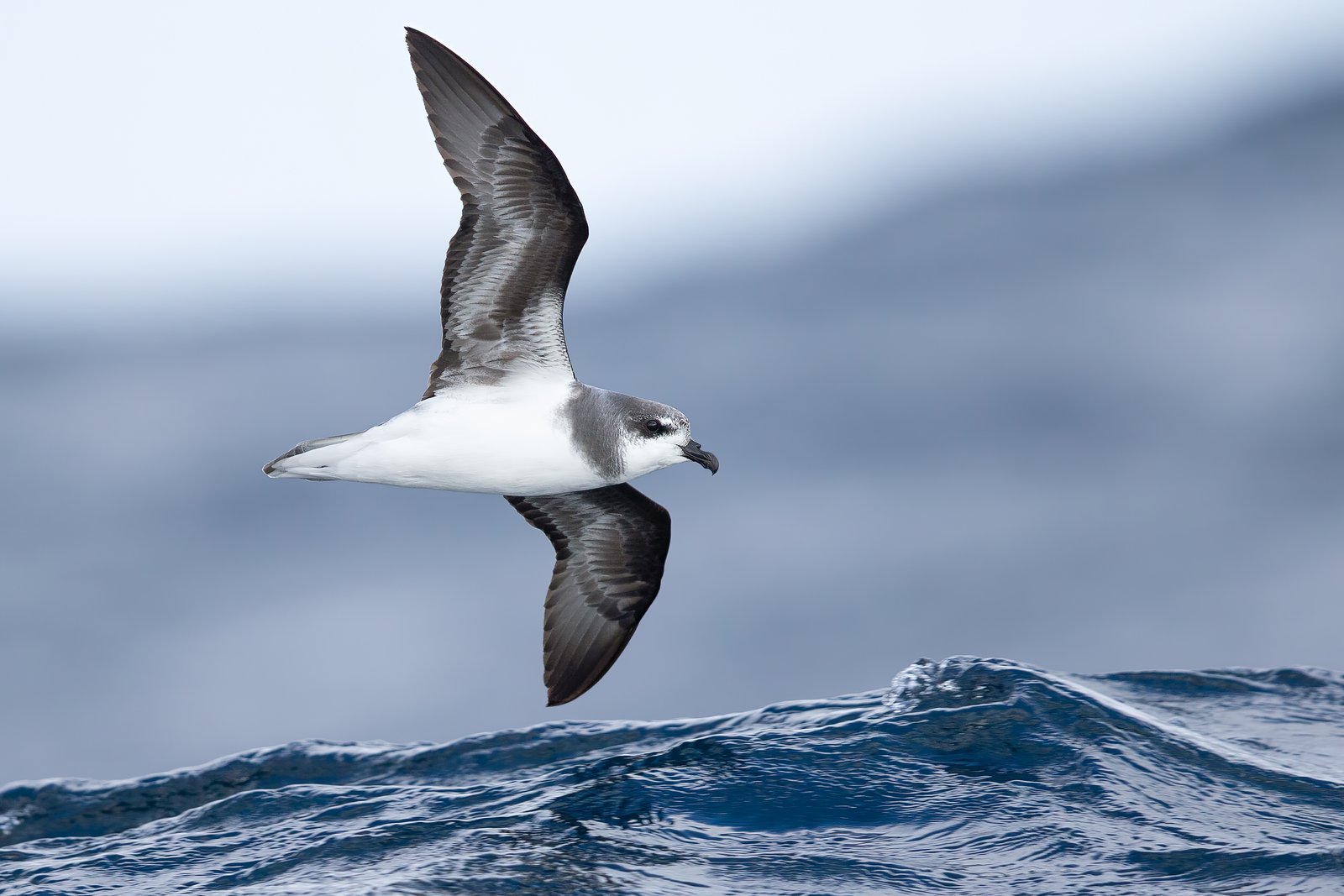
The Soft-Plumaged Petrel is the most frequently seen Pterodroma in southern Africa: a grey-and-white petrel with a dark underwing and a grey breast band that swings over the waves in fast, high arcs. It breeds on the Prince Edward Islands and is seen on almost every pelagic trip out of Cape Town outside winter.
Voice
Silent at sea. At the breeding sites at night a high, plaintive wailing and a drawn-out, moaning ooo-ee, in flight and from the burrows.
Recording: David Boyle — CC BY-NC-SA 4.0 · shortened to the first 60 s, mono · xeno-canto
Identification
About 34 cm, slim, with long, angled wings and a short, stout black bill. The upperparts are dark slate-grey with a faint dark M-pattern across the wings and a slightly paler rump. The underparts are white, with a grey breast band that may be complete or broken, and a dark patch around the eye contrasting with a white forehead and throat. The underwing is wholly dark grey, sometimes with a narrow pale line along the coverts. A rare dark morph is almost entirely grey. The legs are flesh-coloured with dark toes. It flies fast and agilely, in high arcs with short bursts of wingbeats.
Confusion species
Atlantic Petrel (Pterodroma incerta) is larger and browner, with a wholly brown head and breast. White-Headed Petrel (Pterodroma lessonii) is larger, with a white head and white tail. Cape Verde Petrel (Pterodroma feae) usually lacks a complete breast band and has a paler, contrasting rump and tail; Barau's Petrel (Pterodroma baraui) has a white underwing. Kerguelen Petrel (Aphrodroma brevirostris) is wholly grey, without a white belly.
Habitat
Deep open ocean in subtropical and subantarctic waters, especially along the edge of the continental shelf and over frontal zones. It feeds mainly on squid, as well as fish and crustaceans, picked from the surface at night and at dusk. It rarely follows ships. It breeds in burrows on vegetated slopes of oceanic islands.
Where the bird is most at home, classified by the vegetation units of southern Africa.
Range and movements
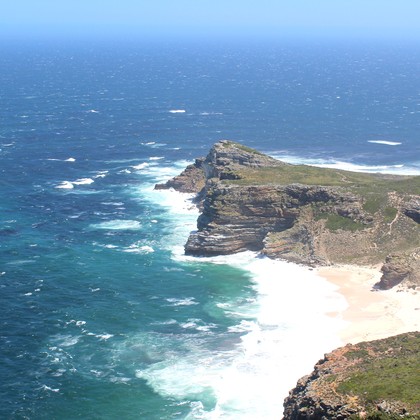
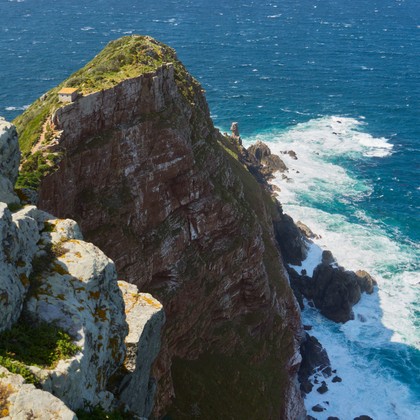
In the region a breeder on Marion and Prince Edward, where birds lay in the austral summer. Off the mainland a fairly common visitor to deep water off the Western and Southern Cape, most numerous from October to April; scarcer off Namibia and in the Agulhas Current as far as KwaZulu-Natal. Beyond the region it breeds on Gough, Tristan da Cunha, the Crozet and Kerguelen islands and the Antipodes, and forages across the whole southern Atlantic and Indian Oceans.
- Resident
- dark = core range, pale = thinly spread
How and when to look
Best on pelagic trips out of Cape Town or Simon's Town between October and April, at the shelf edge some 30–40 nautical miles offshore. It seldom comes to trawlers but often streaks past in the distance; look for a fast grey petrel with a dark underwing and a white belly towering high above the waves.
Conservation status
Not threatened, with a large and probably stable world population. On Marion the species increased after cats were eradicated; the colonies on Gough suffer from predation by introduced mice. Fisheries bycatch appears to matter little for this species.
Scientific name
Pterodroma mollis | (Gould, 1844)
Gould described the species in 1844 as Procellaria mollis; because it was later moved to another genus, the author and year stand in brackets. The genus Pterodroma was introduced in 1856 by Bonaparte. Pterodroma is Greek, from pteron 'wing' and dromos 'runner', after the fast, sweeping flight. mollis is Latin for 'soft' — for the soft, dense plumage. The specimen the first description was based on came from South Atlantic Ocean.