All species › Passerines › Shrikes › Southern Fiscal
Southern Fiscal | Lanius collaris
Zuidelijke gekraagde klauwier | Alcaudón Fiscal Sureño
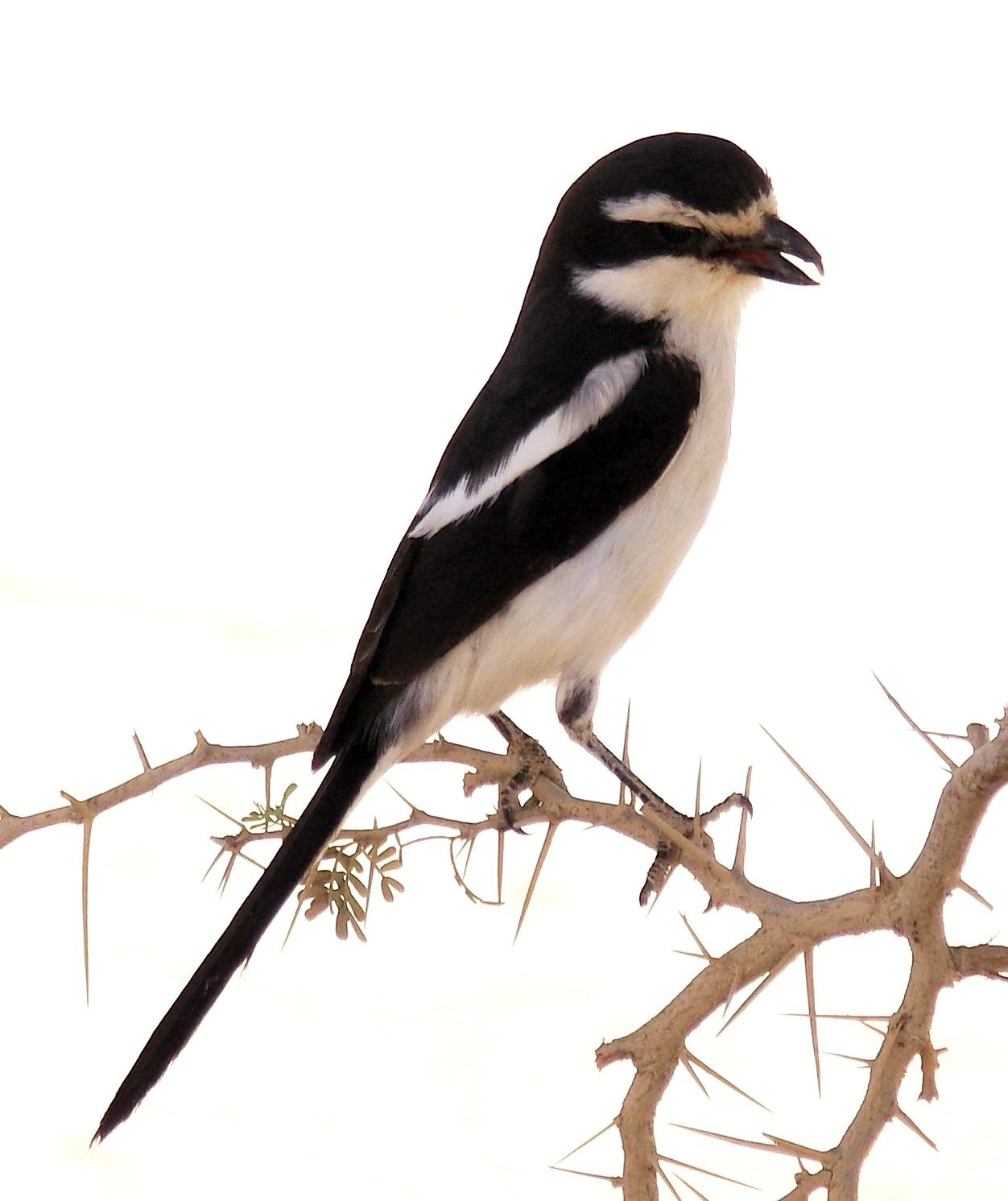
The Southern Fiscal is the best-known shrike of southern Africa: a black-and-white bird sitting upright on a wire, post or bush top, keeping watch over every patch of open ground. Its habit of impaling prey on thorns and barbed wire earned it the Afrikaans names 'Janfiskaal' and 'laksman' (executioner).
Voice
A harsh, rasping chrrr or gercha as an alarm. The song is a varied, sustained series of whistles, grating notes and imitations of other birds.
Recording: Walter Wallner — CC BY-NC-SA 4.0 · converted to mono · xeno-canto
Identification
21–23 cm. The upperparts are black, with white scapulars forming a clear V on the back and a white patch at the base of the primaries. The rump is grey. The underparts are white, sometimes with a grey wash. The tail is long, black with white outer feathers. The bill is heavy, black and hooked. In the west (Namibia, Botswana and the western half of South Africa) birds have a white supercilium; on the Namibian coast they are paler. The female has a rufous patch on the flanks. Juveniles are grey-brown with dense dark barring.
Confusion species
Northern Fiscal Lanius humeralis, in the north of the region, is very similar and is best separated by range. Fiscal Flycatcher Sigelus silens has a thin, straight bill, white patches at the tail base and a white bar on the secondaries, but no white V on the back; it does not impale prey. Magpie Shrike Urolestes melanoleucus is much larger, all black with a very long tail. Southern Boubou Laniarius ferrugineus has a white wing stripe, rufous flanks and lives hidden in thicket.
Habitat
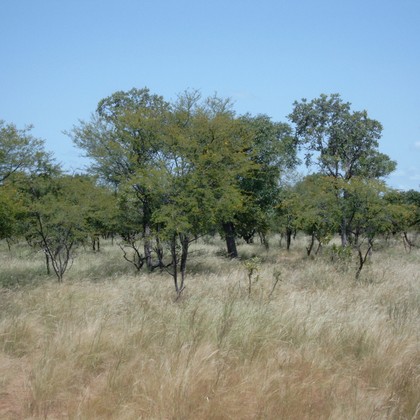
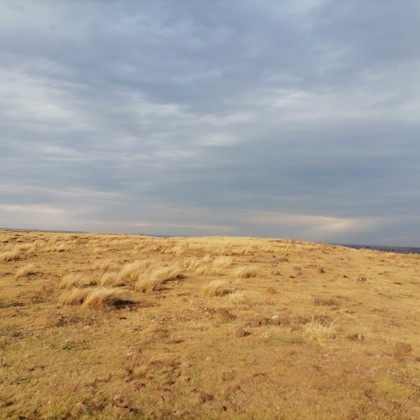
Almost any open landscape with lookouts: grassland, thornveld, Karoo, fynbos, farmland, roadsides, villages, gardens and parks. Absent from dense forest and the barest desert. It hunts from a perch for insects, lizards, small birds and rodents, and stores food on thorns or barbed wire.
Where the bird is most at home, classified by the vegetation units of southern Africa.

Range and movements
Common in South Africa, Lesotho and Eswatini, in Namibia (except the north-east) and in Botswana (mainly the south and west, scarce in the north). In Zimbabwe mainly on the highveld, in Mozambique mainly in the south, and in south-western Angola (Namibe) on the edge of the Namib. Beyond the region only isolated populations in the highlands of Tanzania.
- Resident
- Summer visitor (c. Oct–Mar)
- Winter visitor (c. Apr–Sep)
- Passage (Mar–Apr, Oct–Nov)
- dark = core range, pale = thinly spread
How and when to look
Year-round and seen almost everywhere, from town gardens to the Karoo. A larder of impaled insects or lizards on a thorn bush or barbed wire often betrays a territory. In the west, look for the white supercilium.
Conservation status
Not threatened; very common and increased in many areas thanks to fences, wires and gardens. No large-scale threats are known, though agricultural poisons and traffic cause local losses.
Scientific name
Lanius collaris | Linnaeus, 1766
Linnaeus described the species in 1766 and placed it straight away in the genus where it still stands. The genus Lanius was introduced in 1758 by Linnaeus. Lanius is Latin for 'butcher', from shrikes' habit of impaling prey on thorns and barbed wire. collaris is Latin for 'collared', from collum, 'neck' — for the white band between the black head and back. The specimen the first description was based on came from Cape of Good Hope.