All species › Gamebirds › Pheasants and partridges › Swainson's Spurfowl
Swainson's Spurfowl | Pternistis swainsonii
Swainsons frankolijn | Francolín de Swainson
Swainson's Spurfowl is the bare red-throated spurfowl of open woodland and farmland in the interior. In the early morning the male crows its hoarse call from a termite mound, a post or a low branch, one of the characteristic sounds of the savanna.

Voice
A harsh, hoarse, grating krraaa-krraaa-krraaa, fading in strength, given by the male at dawn and dusk from a lookout. Neighbours answer one another so that the call seems to roll across the veld in the morning. When disturbed a rasping kek-kek.
Recording: Rick Nuttall — CC BY-NC-SA 4.0 · converted to mono · xeno-canto
Identification
About 37 cm, robust. The upperparts are dark brown with black streaks; the underparts are brown with broad dark shaft streaks, without black-and-white scaling or barring. The throat and a ring around the eye are bare and bright red. The bill is dark, blackish with a red base to the lower mandible, and the legs are black to dark brown, a key difference from related species. The male carries spurs; otherwise the sexes are alike. Juveniles show less bare skin and are more finely marked.
Confusion species
Red-Necked Spurfowl also has a bare red throat but a red bill and red legs; the eastern forms also have black-and-white streaked or scaled underparts. Where both occur, bill and leg colour are decisive. Natal and Red-Billed Spurfowls have an orange-red bill and no red throat. Cape Spurfowl, in the south-west, is greyer and lacks bare skin.
Habitat
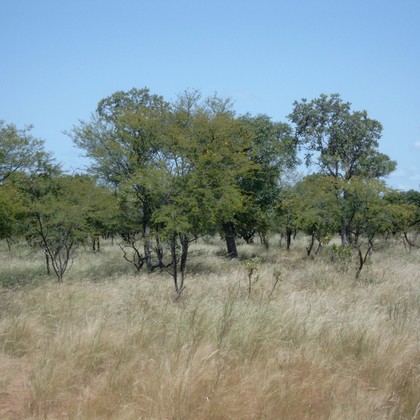
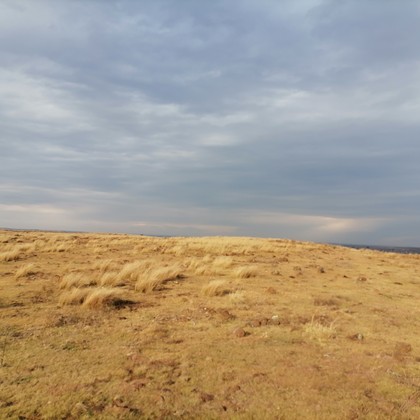
Open woodland and thornveld with a grassy understorey, grassland with scattered bushes, vlei margins and especially farmland, stubble fields and fallow land. It forages in pairs or small groups on the ground for seeds, grain, bulbs, tubers, berries and insects, roosts in trees and needs water nearby.
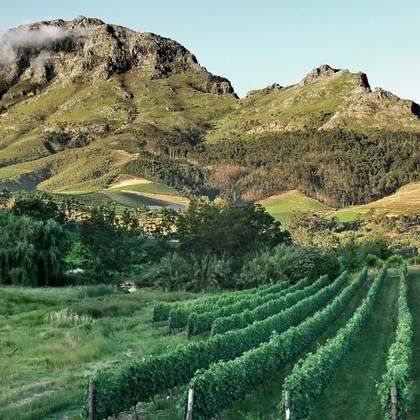
Where the bird is most at home, classified by the vegetation units of southern Africa.
Range and movements
Widespread in the interior: almost all of Zimbabwe and Botswana except the arid south-west, north-eastern Namibia including the Caprivi Strip, southern and central Zambia, south-eastern Angola, western and southern Mozambique and northern South Africa, from Limpopo, Mpumalanga and Gauteng to North West, the Free State and northern KwaZulu-Natal; marginal in Eswatini. Barely beyond the region; a near-endemic of southern Africa.
- Resident
- Summer visitor (c. Oct–Mar)
- Winter visitor (c. Apr–Sep)
- Passage (Mar–Apr, Oct–Nov)
- dark = core range, pale = thinly spread
How and when to look
Drive at sunrise past fields and woodland edges on the Highveld or in the Kruger Park and watch for crowing males on termite mounds. At harvest time, April to June, groups feed on stubble fields and along farm roads. Check bill and legs to separate it from Red-Necked Spurfowl.
Conservation status
Not threatened and common. The species has benefited greatly from the spread of grain farming and has expanded southwards on the Highveld. It is widely hunted as a gamebird; local losses come from poisoned seed grain and from grass mowing during the breeding season.
Scientific name
Pternistis swainsonii | (Smith, 1836)
Smith described the species in 1836 as Perdix Swainsonii; because it was later moved to another genus, the author and year stand in brackets. The genus Pternistis was introduced in 1832 by Wagler. Pternistis comes from Greek pternistēs 'one who strikes with the heel', from pterna 'heel', after the spurs on the legs. swainsonii honours the English naturalist and illustrator William Swainson (1789–1855). The specimen the first description was based on came from western Transvaal (South Africa).