All species › Birds of prey › Hawks, eagles and kites › Western Marsh Harrier
Western Marsh Harrier | Circus aeruginosus
Bruine kiekendief | Aguilucho Lagunero Occidental
The Western Marsh Harrier is the largest and heaviest harrier of the Palearctic. A small number of birds migrate as far as southern Africa, where they hunt over the same reedbeds and vleis as the resident African Marsh Harrier. Anyone hoping to find one here therefore needs to check every brown harrier over the reeds carefully.

Click a thumbnail to switch the photo above.
Voice
Almost silent in the non-breeding range. Occasionally a short, high kyeek when disturbed or a high, plaintive kwee-ah at communal roosts.
Recording: Lars Edenius — CC BY-NC-SA 4.0 · converted to mono · xeno-canto
Identification
48–56 cm, wingspan 115–140 cm. A bulky harrier with broad wings and a fairly long tail, quartering low over reeds and grass with the wings held in a clear V. The male has a brown back and coverts, silver-grey secondaries and tail and black wingtips, so that it looks tricoloured in flight; head and breast are streaked cream. The female is dark chocolate brown with a creamy crown, throat and leading edge to the wing, and a dark eye-stripe. Juveniles resemble the female but are even darker, often with a golden crown and throat and sometimes no pale leading edge. Adults have yellow eyes, juveniles dark ones.
Confusion species
African Marsh Harrier Circus ranivorus is slightly smaller and slimmer, always has clearly barred flight feathers and tail, rufous-brown streaked underparts and a pale patch on the upper breast; it never shows the plain creamy head of a female Western Marsh Harrier. Long-Crested Eagle Lophaetus occipitalis and European Honey Buzzard Pernis apivorus lack the V-shaped glide. The male's grey secondaries sometimes invite confusion with male Pallid Harrier Circus macrourus or Montagu's Harrier Circus pygargus, but these lack the brown back.
Habitat
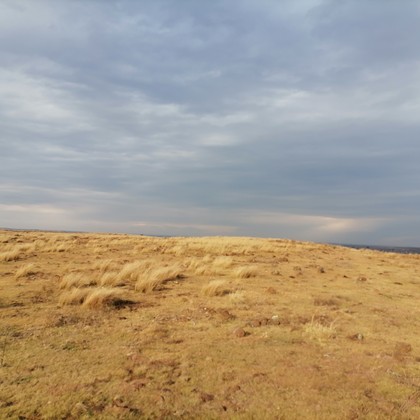
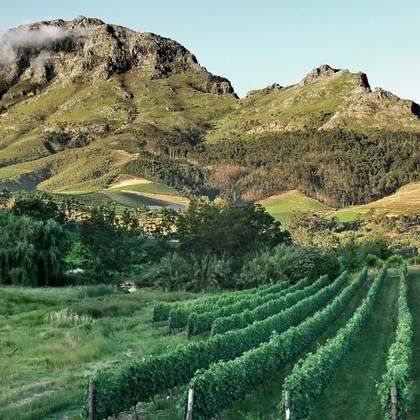
Reedbeds, vleis with tall grass, flooded grasslands, dam margins and wet farmland such as rice fields. It hunts in low flight over the reeds for frogs, small birds, rodents and young waterbirds, and roosts on the ground in dense vegetation, sometimes with other harriers.
Where the bird is most at home, classified by the vegetation units of southern Africa.

Range and movements
Scarce but regular in the north of the region: Zambia, Malawi, northern Botswana (Okavango Delta, Linyanti), the Caprivi Strip in Namibia, Zimbabwe and western Mozambique; poorly known in Angola. In South Africa a rare visitor with scattered records, mainly in Limpopo, Gauteng and KwaZulu-Natal. It breeds from western Europe and North Africa to Central Asia and winters mainly in the Sahel and East Africa.
- Summer visitor (c. Oct–Mar)
- dark = core range, pale = thinly spread
How and when to look
In November–March, watch large reedbeds and floodplains in Zambia and the Okavango for harriers coming in to roost at sunset. The male with its tricoloured wing is easiest; separate females and juveniles from African Marsh Harrier by the unbarred, uniformly dark flight feathers and the creamy head.
Conservation status
Not threatened. The European population recovered well after heavy declines in the twentieth century, thanks to the ban on DDT and the protection of reedbeds. In Africa, drainage of wetlands and poisoning are the main threats.
Scientific name
Circus aeruginosus | (Linnaeus, 1758)
Linnaeus described the species in 1758 as Falco aeruginosus; because it was later moved to another genus, the author and year stand in brackets. The genus Circus was introduced in 1799 by De Lacépède. Circus comes from the Greek kirkos, a partly mythical hawk named for its circling flight (from kirkos, 'circle'). aeruginosus is Latin for 'rusty', from aerugo 'rust, verdigris'. The specimen the first description was based on came from Sweden.