All species › Birds of prey › Hawks, eagles and kites › Lesser Spotted Eagle
Lesser Spotted Eagle | Clanga pomarina
Schreeuwarend | Águila Pomerana
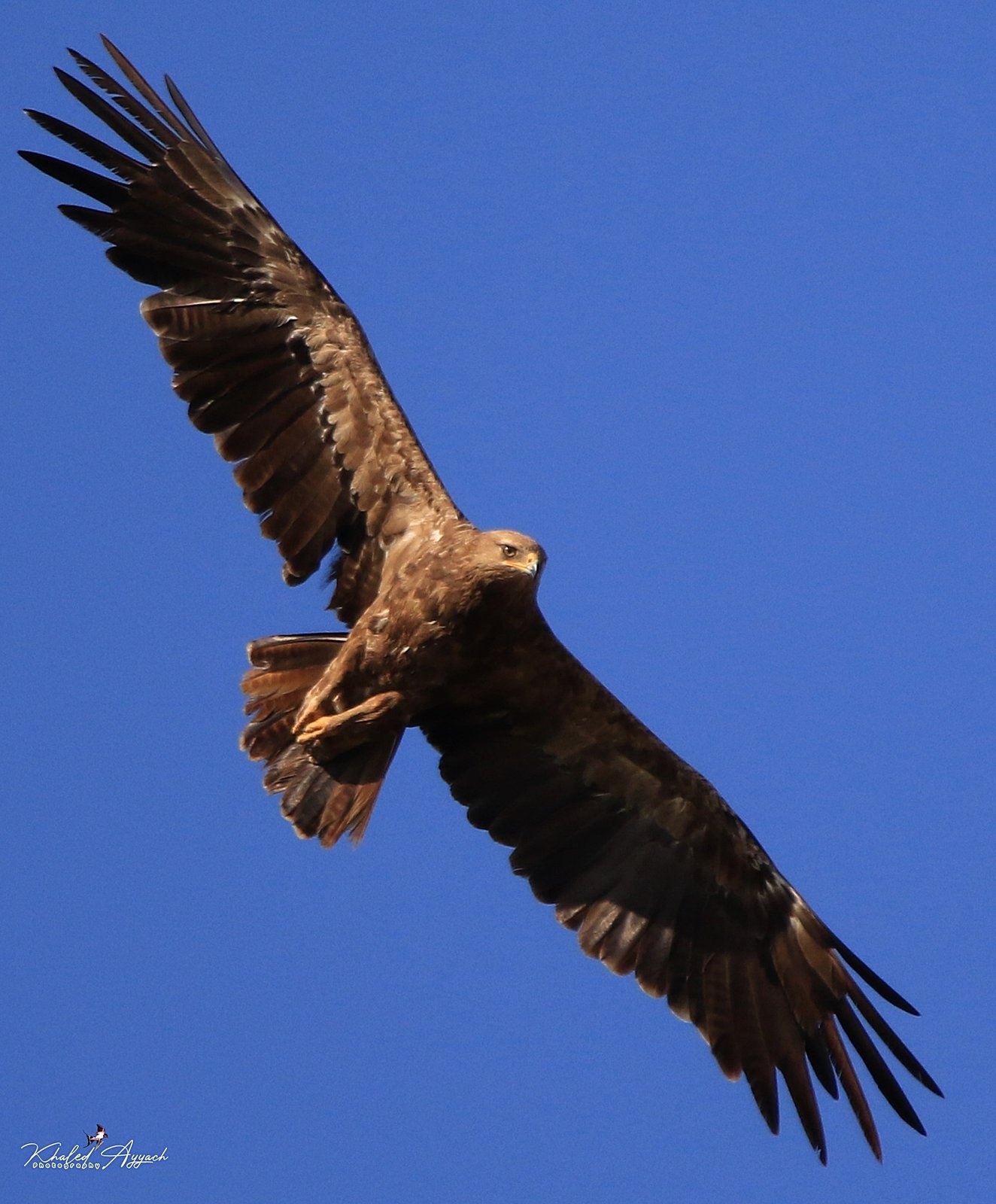
The Lesser Spotted Eagle is a medium-sized, plain brown eagle that breeds in eastern Europe and spends the austral summer in the savannas of southern Africa. It migrates south in large numbers over the Bosphorus and Suez and appears in the region often in loose groups, together with Steppe Eagles, at swarms of termites and birds.
Voice
Almost always silent in the non-breeding range. On the breeding grounds a high, yapping kyep-kyep or yip-yip, reminiscent of a small barking dog.
Recording: Uku Paal — CC BY-NC-SA 4.0 · shortened to the first 60 s, mono · xeno-canto
Identification
55–67 cm, wingspan 146–168 cm. A compact, rather small eagle with a narrow, short bill, a round nostril and tightly feathered, slender ‘stockings’ on the legs. Adults are mid-brown with a slightly paler head and paler upperwing coverts that contrast with the dark flight feathers. Below, the underwing coverts are slightly paler than or as dark as the flight feathers, and at the base of the primaries there is often a double pale ‘comma’. A narrow white patch on the rump and a small pale patch at the base of the primaries on the upperwing are good features. Juveniles are darker chocolate brown with a row of white spots along the greater coverts, a white trailing edge to wing and tail and a rusty nape patch. In flight the bird holds its wings slightly arched with the primaries drooping.
Confusion species
Steppe Eagle Aquila nipalensis is larger, with a heavier bill, a gape line reaching behind the eye, more heavily feathered legs and, in adults, clearly barred undersides to the flight feathers; juveniles show a broad white wing bar. Tawny Eagle Aquila rapax is heavier, usually paler and creamier below, and has an oval nostril and baggy trousers. Wahlberg's Eagle Hieraaetus wahlbergi has a long, straight-ended tail, a small crest and parallel-edged wings.
Habitat
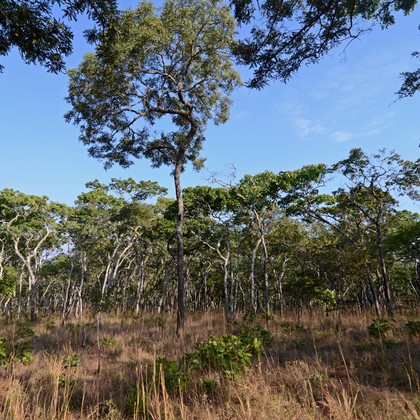
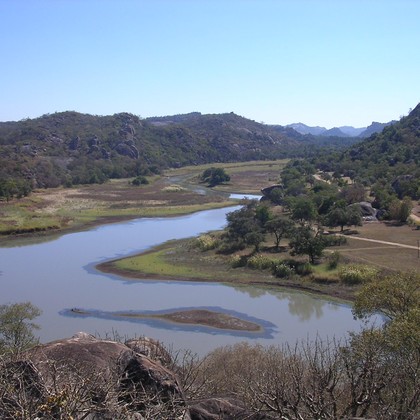
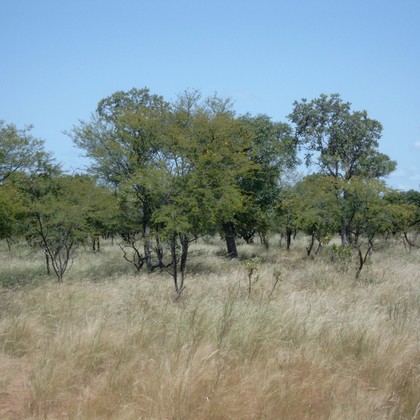
In the region mainly moist to semi-arid woodland: miombo, mixed broadleaf woodland and open acacia savanna, sometimes over farmland too. It likes to forage on the ground or from the air at swarming termites, on young queleas at breeding colonies and on mice and frogs after heavy rain. It rests in tall trees.
Where the bird is most at home, classified by the vegetation units of southern Africa.
Range and movements
Mainly in the north and east of the region: Zambia, Malawi, Zimbabwe, northern and eastern Botswana, the Caprivi Strip and north-eastern Namibia, western Mozambique, eastern Angola and, in wet years, north-eastern South Africa, notably Limpopo and the Kruger National Park; rare further south and west. It breeds from eastern Germany and Poland to the Balkans, the Caucasus and Turkey; the entire world population winters in Africa south of the equator.
- Summer visitor (c. Oct–Mar)
- Passage (Mar–Apr, Oct–Nov)
- dark = core range, pale = thinly spread
How and when to look
In December–February look for places where flying termites emerge from the ground after thunderstorms; dozens of eagles sometimes gather there, together with Steppe Eagles, kites and falcons. The flight silhouette with slightly drooping primaries and short tail, plus the small white rump patch, separates it from the heavier Steppe Eagle. Satellite-tagged birds show that individuals winter in the same part of Zambia and Zimbabwe year after year.
Conservation status
Not threatened. The European breeding population is fairly stable but sensitive to deforestation, drainage of wet meadows and shooting on migration, especially in the Middle East. In southern Africa, poisoning during termite and quelea control and collisions with power lines are risks.
Scientific name
Clanga pomarina | (Brehm, 1831)
Brehm described the species in 1831 as Aquila Pomarina; because it was later moved to another genus, the author and year stand in brackets. The genus Clanga was introduced in 1857 by Adamowicz. Clanga is from Ancient Greek klangos, a kind of eagle mentioned by Aristotle; others derive it from klangē, 'scream'. pomarina refers to Pomerania, the former Prussian province the type specimen came from. The specimen the first description was based on came from Pomerania.