All species › Passerines › Weavers › Yellow-Crowned Bishop
Yellow-Crowned Bishop | Euplectes afer
Napoleonwever | Obispo Coronigualdo
The Yellow-Crowned Bishop is the smallest bishop in the region: the breeding male is black and golden yellow and hovers like a bumblebee with puffed-out plumage over wet grasslands. Outside the breeding season it vanishes into flocks of inconspicuous streaky brown birds.

Voice
A high, sizzling, buzzing song, zit-zit-zzzzzz, in display flight or from a grass stem. In flocks a dry, crackling chip.
Recording: Jorge Leitão — CC BY-NC-SA 4.0 · converted to mono · xeno-canto
Identification
9.5–11 cm, small and compact, with a short tail and a conical black bill. The breeding male has a bright yellow crown, a yellow nape, back and rump, against a black face, black throat and wholly black underparts; the wings are brown. The female and non-breeding male are tawny with heavy dark streaking, a striking broad yellowish supercilium, a dark eyestripe and a pale, finely streaked breast; the bill is then horn-coloured. Juveniles resemble the female.
Confusion species
Golden-Backed Bishop (Euplectes aureus) of western Angola has a black crown and a golden-yellow mantle. Yellow Bishop (Euplectes capensis) is much larger, with a black crown and only the shoulders and rump yellow. Females of Southern Red Bishop (Euplectes orix) and Red-Billed Quelea (Quelea quelea) are larger with a less crisply marked head; in this species the broad, bright supercilium is the best feature.
Habitat
Seasonally flooded grassland, vleis, marsh edges with sedges and rushes, rice fields and flooded pastures. It breeds in small loose colonies in wet vegetation; the male then flies slowly and buzzingly around with the yellow back feathers raised. Outside the breeding season it forms flocks on drier grassland and fields, often with other weavers.
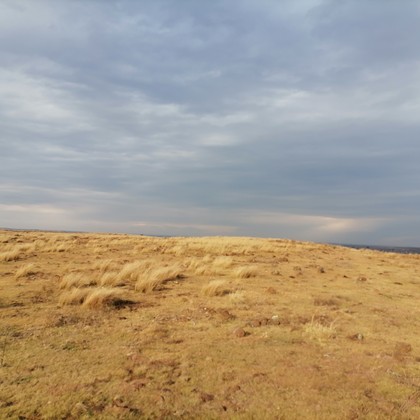
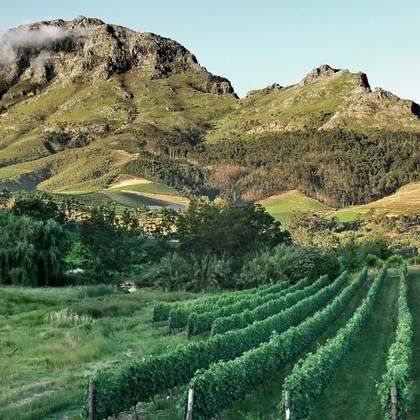
Where the bird is most at home, classified by the vegetation units of southern Africa.

Range and movements
Within the region widespread in the east and centre: the Highveld of South Africa (Gauteng, Free State, North West, Mpumalanga and inland KwaZulu-Natal), locally in the Eastern Cape and Northern Cape, Lesotho, Eswatini, northern and eastern Botswana, northern Namibia, Zimbabwe, Mozambique, Malawi, Zambia and Angola. Its occurrence varies greatly from year to year with rainfall. Beyond the region it ranges from Senegal to Ethiopia and south through East Africa.
- Resident
- Summer visitor (c. Oct–Mar)
- Winter visitor (c. Apr–Sep)
- Passage (Mar–Apr, Oct–Nov)
- dark = core range, pale = thinly spread
How and when to look
From December to March, look for vleis flooded after heavy rain; males are then unmissable as yellow powder-puffs buzzing over the grass. The display flight is most active early in the morning.
Conservation status
Not threatened; common but erratic. It depends on seasonal wetlands and suffers locally from drainage and overgrazing.
Scientific name
Euplectes afer | (Gmelin, 1789)
Gmelin described the species in 1789 as Loxia afra; because it was later moved to another genus, the author and year stand in brackets. The genus Euplectes was introduced in 1829 by Swainson. Euplectes joins Greek eu 'fine, good' to New Latin plectes 'weaver'. afer is Latin for 'African'. The specimen the first description was based on came from Senegal.