All species › Carnivores › Cats › Eurasian lynx
Eurasian lynx | Lynx lynx
Euraziatische lynx | Lince
The Eurasian Lynx (Lynx lynx) is the largest cat in Europe. It hunts mainly at dawn and dusk, moves silently and is rarely seen even in areas holding dozens of animals; most foresters in such areas never see one. The main evidence of its presence is the round print without claw marks and covered prey remains.

Tracks
The print is misidentified more often than that of any other European carnivore, because its size suggests a dog. It is round to slightly wider than long, about 7 to 9 cm across and larger in fresh snow, where the foot hair registers, with four toes and no claw marks: the claws are retractile. The toes are asymmetrical (the leading toe points clearly to one side) and the pad is large, with three lobes on its rear edge. A dog print of the same size is longer than wide, always shows claws and is narrower. The trail runs in a straight, narrow line with a stride of 40 to 70 cm, the hind foot placed in the fore-foot print; in deep snow the lynx does not drag its feet, the fox does. The second sign is the kill. A lynx kills mainly roe deer, eats the haunches and hindquarters first and then covers the carcass with snow, moss, leaves, sticks and grass, forming a covered mound from which a leg often protrudes; it returns to it for two to five nights. A wolf leaves a carcass open and scattered; a fox feeds at the belly and drags pieces away. The throat bite is high, the skin is turned back and the ribs are not crushed. There are also scratching trees with oblique, parallel scores at head height in the bark of a dead or leaning trunk, often the same tree year after year, with hairs in the bark and a scraped hollow beneath; droppings that are often buried or half covered and resemble a fox's but are thicker and smell sharply of bone; and resting places under a rock or fallen trunk with a view. In February, during the rut, a low, hoarse call can be heard that carries far and sounds like the lowing of a distant cow. Outside the rut the species is silent.


In its habitat

Identification
A long-legged cat with a short tail: head-body 90 to 120 cm, tail 19 to 23 cm, weight 17 to 25 kg. The body is short relative to leg height, the hindquarters are clearly higher than the forequarters, and the feet are large and densely furred in winter, which reduces sinking into snow. The tail is short and ends in a blunt tip that is black all round, not only on the upper side. The ears carry black tufts three to five centimetres long, and the face is framed by flaring cheek ruffs that form a full collar in winter. The coat is yellowish brown to greyish brown and spotted, ranging from almost unspotted grey animals in the north to heavily and sharply spotted animals in the Carpathians. Belly, throat and the insides of the legs are white. The gait is long, soft and silent, with the head low; over short distances the animal sprints fast, but it rarely pursues prey far.
Similar species
With a good view the lynx cannot be confused with any other European species, but many reported lynx turn out to be something else. The Wildcat and above all the feral domestic cat are most often mistaken for a lynx, especially on camera-trap images lacking scale: both have a long tail (in the Wildcat thick, ringed and with a blunt black tip), are much lower on the leg and lack ear tufts and cheek ruffs. There are large, long-legged domestic cats with ear tufts; tail length is then decisive. The Iberian Peninsula holds the Iberian Lynx (Lynx pardinus), smaller, more finely and sharply spotted and with well-developed cheek ruffs; the ranges of the two species do not overlap, as the Eurasian Lynx is absent from the Iberian Peninsula. A lynx seen there is an Iberian Lynx or an animal escaped from captivity. A large Red Fox in torchlight is sometimes taken for a lynx until the tail is visible. Supposed lynx in the Low Countries and the British Isles have almost always turned out to be escaped or released cats, dogs or inconclusive photographs; in 2025 lynx illegally released in the Scottish Highlands were recaptured within days.
Habitat
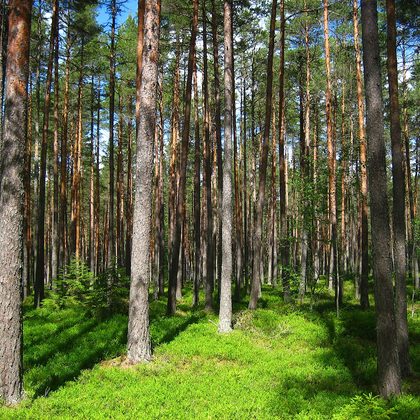
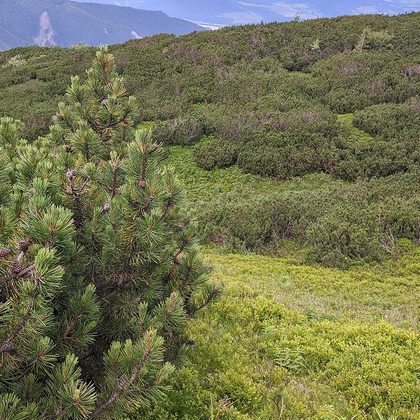
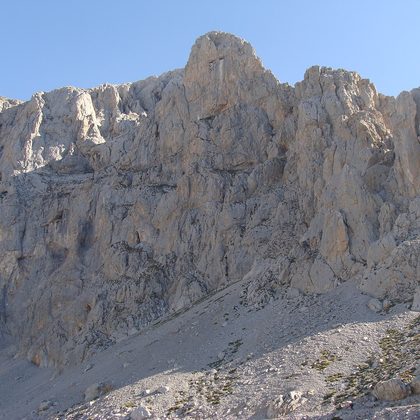
Extensive, continuous forest with much structure: old coniferous and mixed forest with dead wood, young plantations and clearings, interspersed with rock, scree, steep slopes and clear-fells. In the north, taiga and the birch zone up to the treeline; in the Carpathians and the Alps in summer up into the dwarf-shrub and alpine zone. A requirement is cover within a short distance of roe deer: the lynx is a stalking hunter and uses shrubs, rocks or dead wood to approach unseen to within a few bounds. It also needs quiet. Open farmland is crossed but not inhabited; main roads are not avoided, and many animals are killed on them.
Where the animal is most at home, classified with EUNIS — the European standard for habitats.



Distribution
From Scandinavia and the Baltic states through Russia to Siberia and the Tibetan Plateau, with a series of reintroduced populations in central Europe. In western and central Europe the species was exterminated in the nineteenth century; from the 1970s it was released in the Swiss Alps, the Vosges, the Bavarian Forest, the Harz, Slovenia and Croatia, and some of those populations are now connected. Large, continuous populations exist in Scandinavia, the Baltic states, Poland, the Carpathians and the Balkans. The Balkan lynx in North Macedonia and Albania numbers a few dozen animals. In the Iberian Peninsula the species disappeared in historical times; the nearest animals live in the Jura and the French Alps, with sporadic records in the French Pyrenees and no evidence of settlement on the Spanish side. In the British Isles the lynx has been extinct since the early medieval period; Scottish radiocarbon dates extend well into the first millennium AD. A return is being discussed in Britain in connection with high deer numbers; a licence for the proposed reintroduction in the Cairngorms or Kielder has not been granted, and there is no wild population. In the Low Countries the species is absent; occasional wanderers have been reported from the German and Walloon forests, and settlement in the Ardennes is considered possible but has not occurred.
- Native
- Reintroduced
- dark = core range, pale = thinly spread
Way of life
Crepuscular, mainly around dawn and dusk, in winter also by day. Solitary, with a large territory: in central Europe a hundred to several hundred square kilometres, in the less productive north much more. The territory is marked with urine, scratching trees and droppings along fixed routes; a male's territory overlaps with that of one or more females. The lynx hunts mainly roe deer and chamois, supplemented with hares, young ungulates, foxes, mustelids and woodland birds; in the far north reindeer is the main prey. On average about one roe deer a week is killed. The rut falls in February and March; after about 70 days two or three kittens are born in May or June, in a rock crevice, under a fallen tree or in dense scrub. They stay with the mother for almost a year and disperse in spring, often over long distances. No winter dormancy; in winter the lynx's broad, furred feet give it an advantage in hunting roe deer, which sink deeper into the snow.
Where and when to look
A sighting of the animal itself is rare; usually the species is recorded from signs. In snow, forest roads in the Carpathians, Slovakia or Sweden are most suitable: the round, clawless print and the straight trail sometimes lead to a covered carcass. Keep away from it, because a disturbed lynx abandons its kill. By day, open slopes can be scanned with a telescope from a high point in the Alps or the Jura in March. In the Carpathians and the Dinarides camera traps are used on game paths and at scratching trees; research also counts the animals this way, because the flank spotting differs between individuals and a good side view identifies an animal. In February the call can be heard at night.
Conservation status
Least Concern globally (LC, 2015). In Europe the northern and eastern populations are large and legally hunted, whereas several central and southern European populations are small, fragmented and genetically impoverished. The Balkan lynx, with a few dozen animals, is critically endangered, and the populations in the Vosges and the Dinarides depend on releases of animals from elsewhere. The main threats are poaching, traffic, forest fragmentation by roads and conflict with hunting, because the lynx takes the same roe deer as hunters. Predation on sheep is local and limited. The species is strictly protected throughout the European Union. In central Europe it has been shown that reintroduction is possible; the question now is whether the separate populations will become connected. In Britain the question is whether a reintroduction will take place. The Iberian Peninsula holds only the Iberian Lynx, which has recovered from fewer than a hundred animals in Doñana and Andújar to more than two thousand in Andalusia, Extremadura, Castilla-La Mancha and Portugal, and from Critically Endangered to Vulnerable.
Scientific name
Lynx lynx | (Linnaeus, 1758)
Linnaeus described the species in 1758 as Felis Lynx; because it was later moved to another genus, the author and year stand in brackets. Lynx is Greek lynx, probably from the root *leuk-, 'light, brightness', after the animal's reflective eyes. The specific name repeats the genus name. The specimen the first description was based on came from Sweden, Vänersborg.