All species › Lagomorphs › Hares and rabbits › Corsican hare
Corsican hare | Lepus corsicanus
Corsicaanse haas | Liebre de Córcega
The Corsican Hare was described in 1898 from an animal from Bastia on Corsica, but its actual range is central and southern Italy and Sicily; on Corsica the species was introduced by people and is rare. For a century it was regarded as a subspecies of the Brown Hare or of the Cape Hare. Only when it was found not to interbreed with the Brown Hare where both live side by side was it again recognised as a species. In the meantime Brown Hares had been released on a large scale in Italy.
Tracks
The species does not dig burrows; all signs are on the surface, and in this dry landscape droppings and feeding signs are the most important. The form is a shallow, oval hollow about 30 by 15 cm under a mastic or cistus bush, at the foot of a broom or at the edge of a cereal field, with the opening away from the wind. The droppings are flattened spheres of 15 to 20 mm, hard, ochre and visibly coarse-fibred; they lie scattered singly on open patches and along runs through the maquis, never in heaps. The rabbit, by contrast, uses fixed latrines on a stone or molehill. The print is long and narrow, with four toes, and has an indistinct edge due to the furred sole; in the bound the two long hind feet land ahead of the smaller fore feet, which usually lie one behind the other in a line. In the dust of a farm track or in the ash of burnt ground this group of four is most easily recognised. Feeding signs are clean, oblique cuts of about 45 degrees on young shoots of broom, cistus and vine; in winter it strips bark from young olive and almond trees and orchard regrowth up to about sixty centimetres. On the high slopes of Etna and in the Abruzzo fresh snow can show the complete bounding trail.
In its habitat
Head close-up
Identification
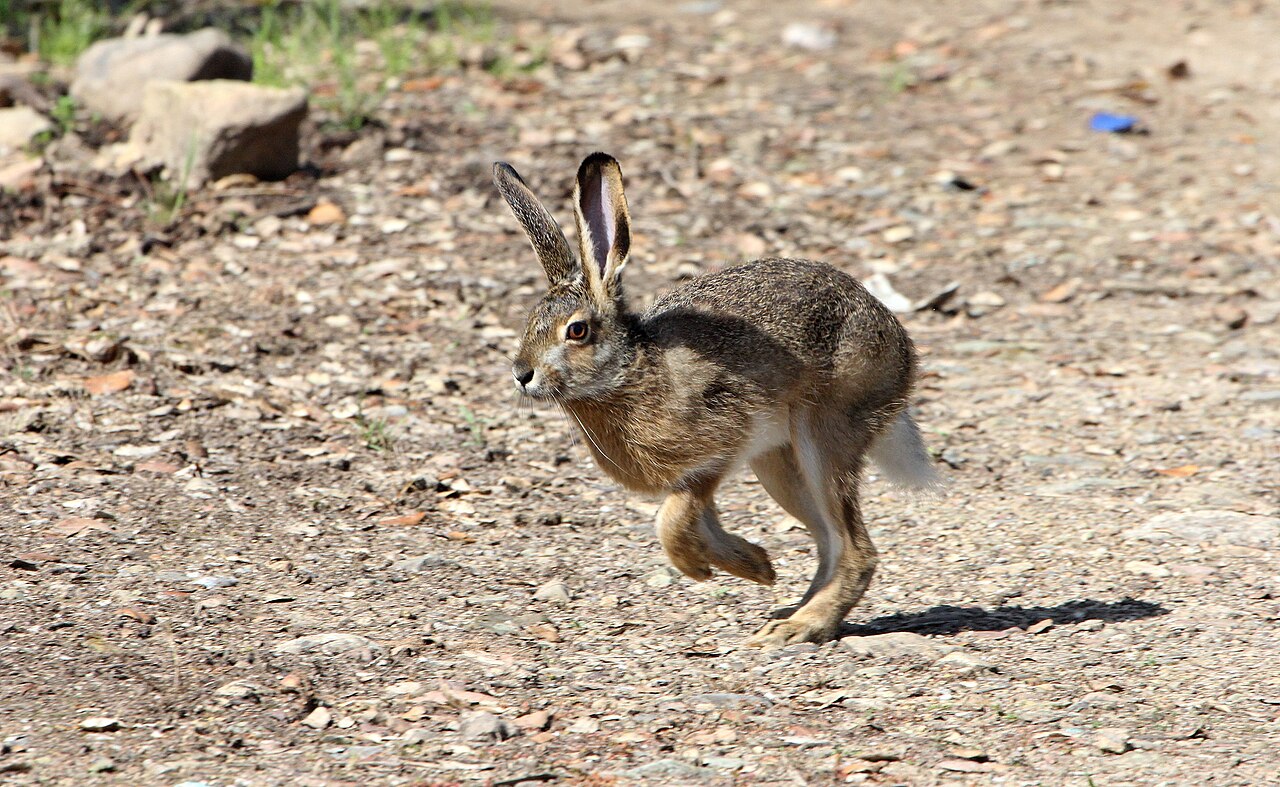
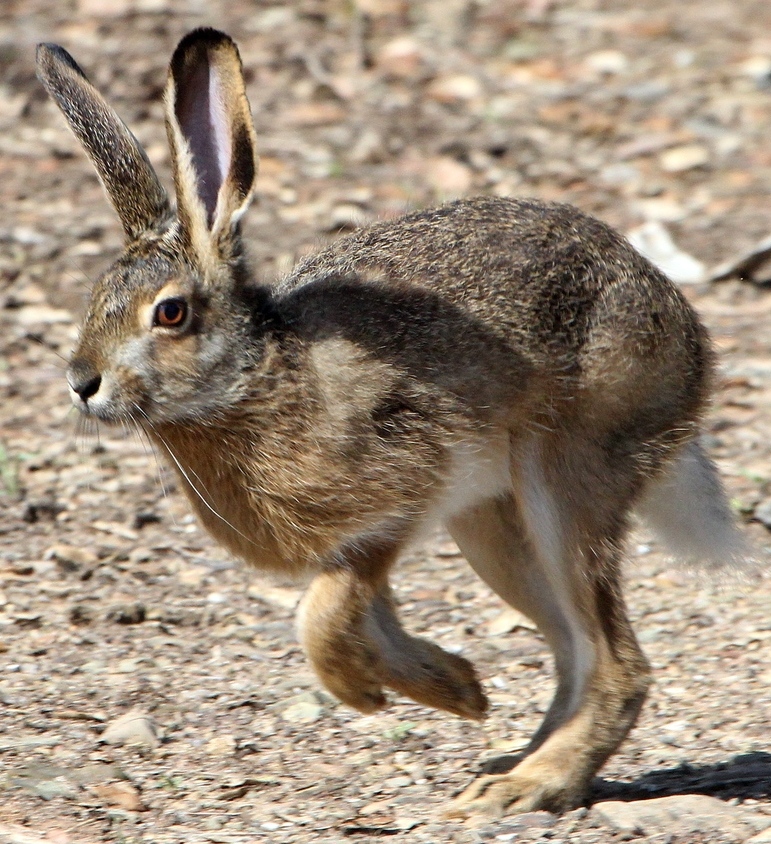
A slender hare with long legs and long ears: head-body 44 to 61 cm, tail 6.6 to 11.2 cm, 1.8 to 3.8 kg; on average slightly smaller and more finely built than the Brown Hare. The coat is brightly coloured and more strongly contrasted than in the Brown Hare: the back is dark and coarsely grizzled, nape and shoulders are strikingly rufous to rust-coloured, the flanks ochre and the belly white, with a sharp boundary between them. A character used by specialists is that the hair bases are grey rather than white, so that parted fur is dull rather than pale; this can be seen only on an animal in the hand or a road casualty. The ears are proportionally longer relative to the head than in the Brown Hare and have a broad black tip; the hind legs are also proportionally longer. The tail is black above and white below.
Similar species
The main confusion species is the Brown Hare (Lepus europaeus), whose distribution in Italy has been strongly influenced by releases. The Brown Hare is native to northern Italy and has also been released for hunting throughout the country for a century, including in the middle of the Corsican Hare's range and on Sicily; in many places both species now occur together. Useful characters: the Corsican Hare is smaller overall, has proportionally longer ears and hind legs, a brighter rufous nape and a more sharply defined white belly. On an animal at fifty metres in the maquis at dusk, however, these characters are not reliable, and recording it as Lepus sp. is then the correct choice. Here too the locality is the most important datum: south of a line from Tuscany to the Gargano and on Sicily the chance of this species is greatest, in the Po plain and the Alps every hare is a Brown Hare, and between them lies a broad zone where both occur. On Corsica both species live side by side and the locality is not conclusive. The Rabbit is common on Sicily and in southern Italy and is the most frequent confusion at a distance: smaller, greyer, short ears without a black tip, the tail raised in flight and a burrow as refuge.
Habitat
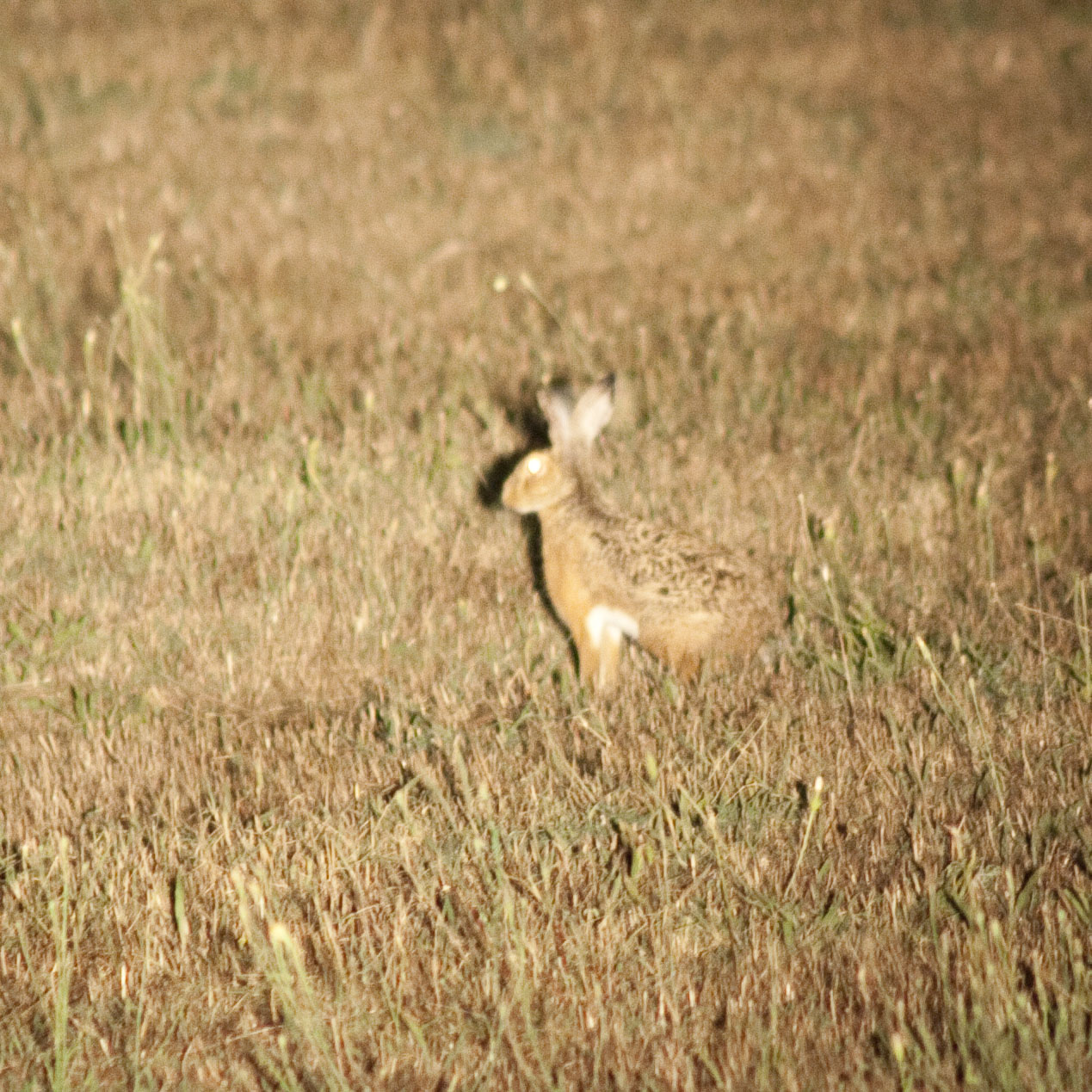
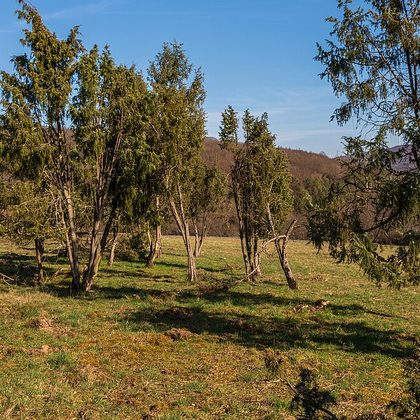
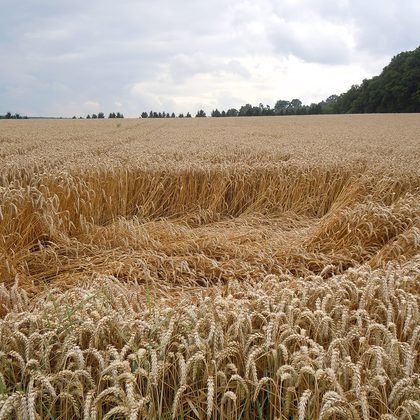
The Mediterranean mosaic: maquis and garrigue, cistus and broom, open holm and cork oak woodland with grassy ground cover, cereal fields, hay meadows and the margins between them, orchards and vineyards, and dunes and coastal plains. Unlike the Brown Hare it is not tied to low farmland: it occurs up to 2,400 m on Etna and in the Abruzzo into the alpine grassland above the treeline, and in the mountains it persists better than in the plains, where Brown Hares have been released. Open ground after fire is also suitable habitat.
Where the animal is most at home, classified with EUNIS — the European standard for habitats.




Distribution
Central and southern Italy and Sicily, with a northern limit running roughly from Tuscany to the Gargano, and from there south to Calabria and across the whole of Sicily, from sea level to 2,400 m on Etna. It was introduced to Corsica by people centuries ago and is now rare there; nevertheless most public records come from that island: GBIF holds 127 French records against 35 Italian, which says more about where observers share photographs than about where the species is numerous. The Mammal Diversity Database lists Italy only. The species is absent from Sardinia, where the hare form Lepus mediterraneus occurs.
- Native
- dark = core range, pale = thinly spread
Way of life
Nocturnal, with a peak in the first hour after sunset and again at dawn; by day it lies in its form under a bush. It eats grass, herbs, cereals, young shoots of maquis shrubs and in winter bark and twigs, and like all hares re-ingests its soft caecal pellets. In the warm south breeding continues almost all year, mainly from January to August: two to four litters of on average two young. The young are born furred and with open eyes, each lies hidden separately, and they are suckled briefly once every twenty-four hours. There is no winter dormancy; in the high Apennines it remains active in snow and then moves to the sunny slopes.
Where and when to look
The best time is the last hour before dark and the first hour after, on an open slope in the maquis or along a mountain cereal field. The best chances are in the national parks of central and southern Italy (Abruzzo, Majella, Gargano, Pollino, Cilento) and on Sicily on the high slopes of Etna and in the Madonie and Nebrodi. Drive slowly along an unsurfaced mountain road after sunset and look for eyeshine along the verges. In March and April chases can be seen on open patches. Record the altitude and location of every sighting: in the plains a hare may also be a released Brown Hare.
Conservation status
Vulnerable (VU, 2025). The range is small, fragmented and thinly occupied in many places; the main cause is not the landscape but hunting and game management. For generations Brown Hares have been released within the range of this species, often animals of eastern European origin; this leads to competition for food and space, introduction of diseases, and large-scale shooting of the Corsican Hare itself, because hunters do not distinguish the two species. In addition there is the closing-up of traditional field and pasture mosaics after land abandonment, fires that are too large and, in the plains, agricultural intensification. On Corsica the population is so small that the species was long thought to have disappeared there. Where hunting has been stopped and the distinction from the Brown Hare is taken into account in management, as in several mainland national parks and on Sicily, the species recovers; these are therefore the main conservation measures.
Scientific name
Lepus corsicanus | de Winton, 1898
De Winton described the species in 1898 and placed it straight away in the genus where it still stands. Lepus is the Latin word for 'hare'. corsicanus means 'Corsican'; de Winton described the animal from Corsica, where it was probably introduced from Italy. The specimen the first description was based on came from France, Corsica.