All species › Carnivores › Dogs, wolves and foxes › Raccoon dog
Raccoon dog | Nyctereutes procyonoides
Wasbeerhond | Perro Mapache
The Raccoon Dog originates from East Asia. Between 1928 and 1957 some 9100 animals were released in the former Soviet Union, in more than seventy areas and mainly in the European part, to enrich the fur harvest. From there the species spread across northern and central Europe. Since 2 February 2019 the Raccoon Dog has been covered by the EU list of invasive alien species of Union concern.
Tracks
The prints are small and rounder than a fox's, with visible claw marks. Because the body is broad and the legs short, left and right prints in a trail are widely spaced, unlike the fox, which places its prints almost in one line. The species digs little itself but makes small pits while foraging. For breeding and winter dormancy it often uses badger setts and fox earths; in one study badgers shared their sett with Raccoon Dogs in 88 per cent of 71 sett-winters.
Identification
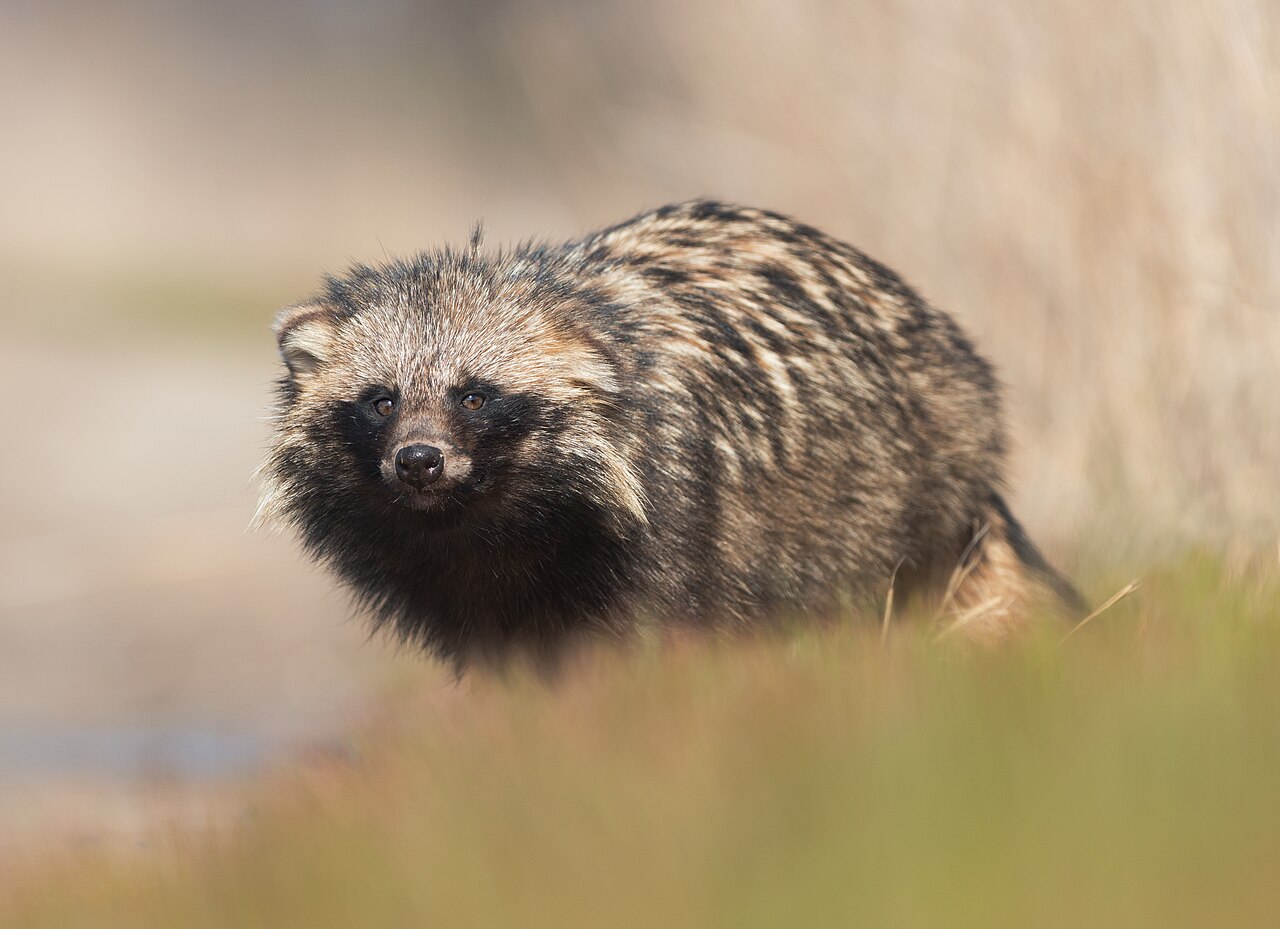
A stocky, short-legged canid with a black facial mask: black patches around the eyes with a whitish nose bridge between them, long hair on the cheeks, a pointed muzzle and small, rounded ears. The body colour ranges from yellowish to grey or reddish, with black hairs on back and shoulders; legs, feet and chest are dark. The tail is short, 15 to 23 cm, thickly haired, dark above, and does not reach the ground. In autumn and winter the animal is fat and thick-furred and looks round on short, thin legs; in summer, with thin fur and small fat reserves, it is much slimmer. Autumn weight can be 50 to 70 per cent higher than in spring.
Similar species
The Raccoon also has a black mask, but a ringed tail and a dark nose bridge between the eye patches; in the Raccoon Dog the nose bridge is whitish and the tail unringed. In winter the Badger can resemble a Raccoon Dog at a distance through its long coat and short legs, but has black-and-white stripes along the head. The Red Fox is slimmer and longer-legged, with a long tail. At dusk, in headlights or on a camera-trap image, the silhouette of a low, round animal with a short tail is the best guide.
Habitat
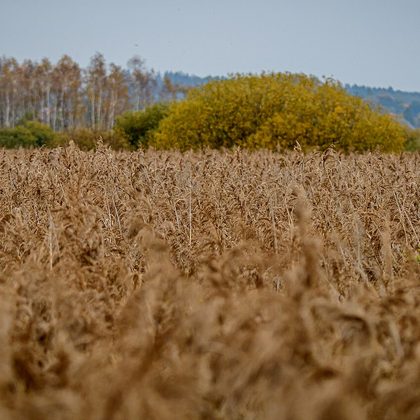
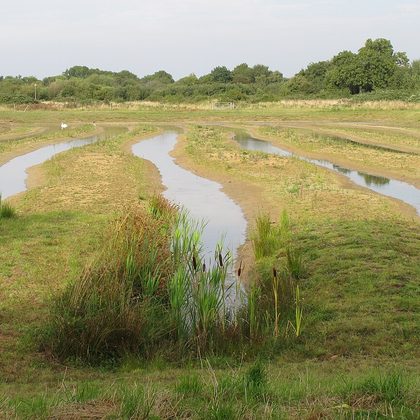
It prefers shores, wet habitats and deciduous woodland: marshes, reedbeds, carr, stream valleys and woodland edges with dense undergrowth. Large-scale arable land and coniferous forest are used less. In central and eastern Europe it usually stays below 800 m. The animals move slowly and keep to cover as much as possible.
Where the animal is most at home, classified with EUNIS — the European standard for habitats.



Distribution
Native to East Asia: China, Mongolia, Korea, Vietnam and the Russian Far East. The European population derives from the releases in the Soviet Union between 1928 and 1957. The spread averaged about 40 km per year, locally up to 120 km per year. In Germany it was first seen in 1964, in Mecklenburg-Western Pomerania; around 2001 the first animals were recorded at the Dutch border, some 480 km further on. It is common in Finland, the Baltic states, Poland and eastern Germany, and rare in Denmark and Sweden. Within the guide area GBIF holds more than seventeen thousand records.
- Established introduction
- dark = core range, pale = thinly spread
Way of life
Mainly nocturnal, leaving the den one to two hours after sunset; in dense cover also by day. The Raccoon Dog is a gatherer rather than a hunter: amphibians, small mammals, carrion, maize, fruit and insects, while hares and rabbits are almost absent from the diet. Pairs are close: partners forage together and in most cases winter together. Ranges overlap and are not defended; spring densities are usually 0.5 to 1 adult per km². Where winters are harsh the animals enter a winter dormancy from about November to March, beginning at temperatures below −8 to −10 °C or with more than 20 cm of snow and interrupted on mild days. The Handbook of the Mammals of the World calls it the only canid known to hibernate. Mating from late February to early April, gestation 59 to 64 days, usually six to nine young (range 2 to 12, maximum recorded 19); the young are sexually mature at eight to ten months.
Where and when to look
The best chance of a sighting is at dusk along shores, reed fringes and wet woodland edges, and in spring, when the animals also sunbathe by day. On a camera trap along a bank or at a badger sett the species appears regularly, often as two animals in quick succession. Look for the whitish nose bridge between the black eye patches and the short, unringed tail.
Conservation status
Least Concern globally (LC, 2016). In Europe the Raccoon Dog is an alien species: the European population derives entirely from releases for the fur trade. Since 2 February 2019 it has been on the Union list of invasive alien species (Regulation 1143/2014, as amended in 2017): keeping, breeding, transporting and trading are prohibited and member states must limit further spread. Where it is established it is mostly hunted year-round. Frogs disappeared from islands off south-west Finland after Raccoon Dogs arrived there in the 1970s; an effect on the breeding success of ground-nesting birds has been reported, an effect on bird population size has not been demonstrated. Mange, distemper and rabies are listed as causes of death.
Scientific name
Nyctereutes procyonoides | (J. E. Gray, 1834)
J. E. Gray described the species in 1834 as Canis procyonoides; because it was later moved to another genus, the author and year stand in brackets. Nyctereutes is Greek nyktereutēs, 'night hunter', from nyktereuein, 'to pass the night, to hunt by night'. procyonoides means 'raccoon-like', from the genus Procyon and Greek -oeidēs, 'resembling', after the raccoon-like mask on the face. The specimen the first description was based on came from China.