All species › Even-toed ungulates › Deer › Roe Deer
Roe Deer | Capreolus capreolus
Ree | Corzo europeo
The Roe Deer is the most numerous wild ungulate in Europe. In the field the white rump patch of an animal fleeing in short bounds is usually the first thing seen. It is a small, long-legged deer that is less tied to woodland than is often assumed: in large-scale arable country in north-western Europe more roe stand in the fields than in the woods in winter.
Tracks
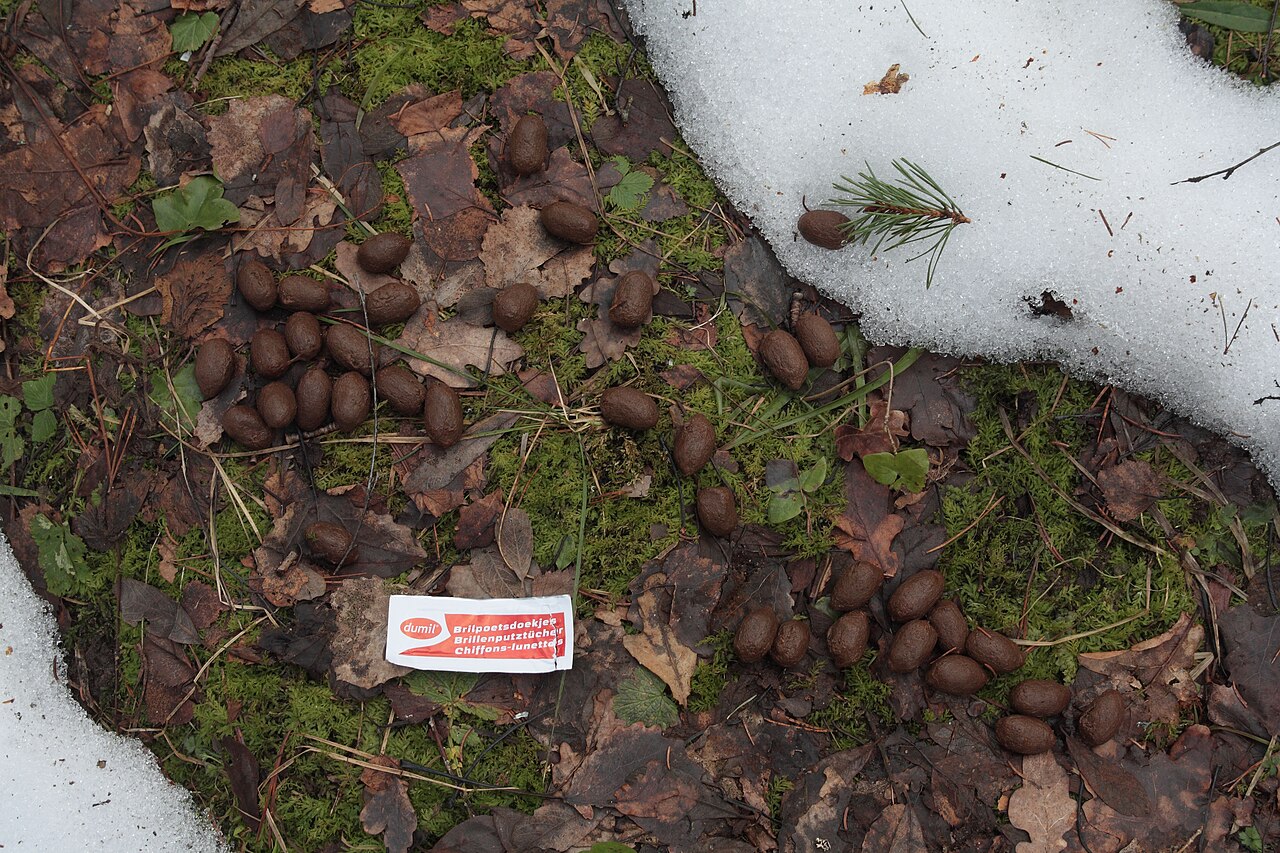
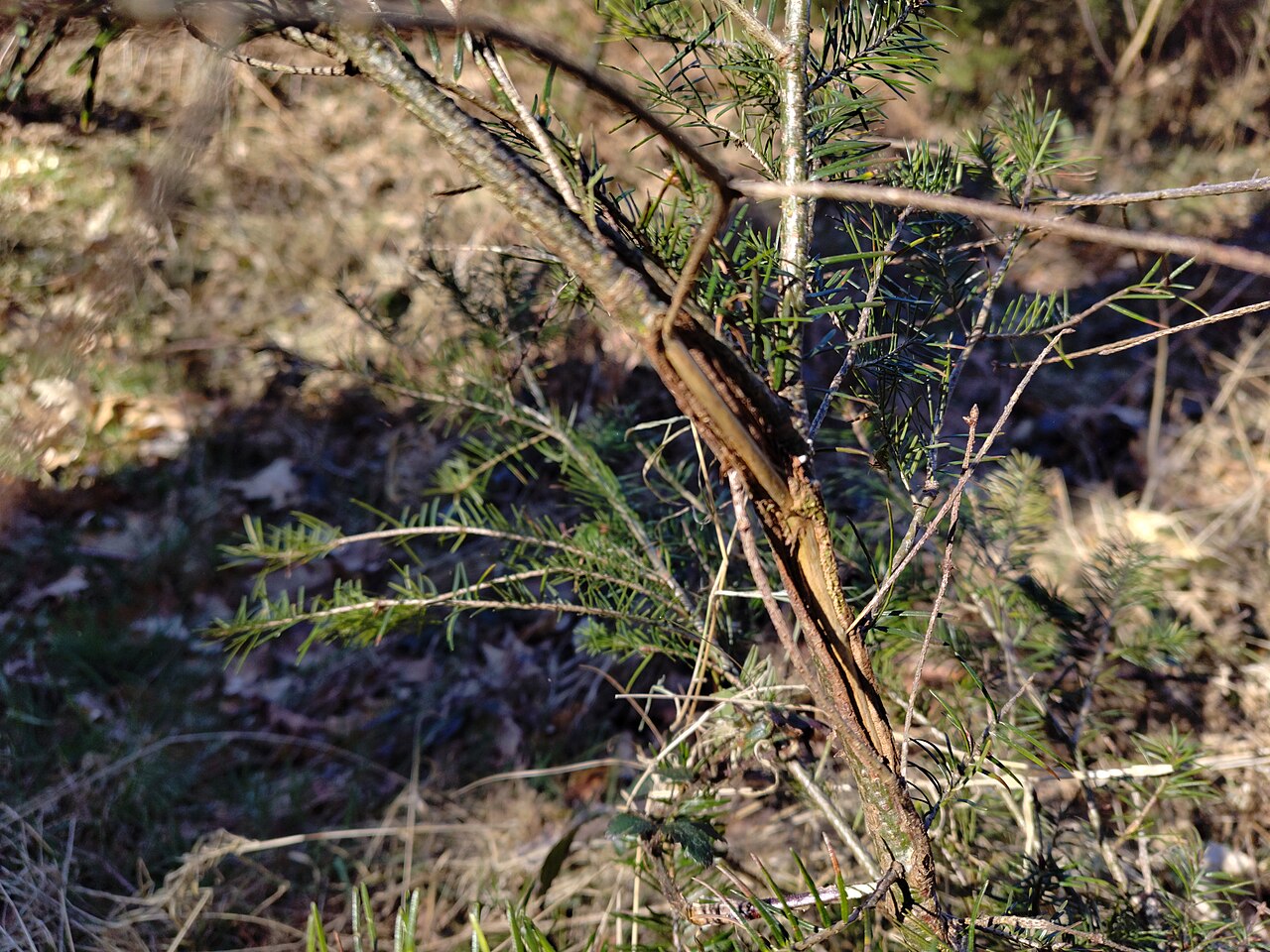
The print of a cloven-hoofed animal is called a slot. In the roe it is small, narrow and pointed: 3 to 4.5 cm long and 2 to 3 cm wide, with the two halves close together and almost parallel, the tips forward. The roe has two dew claws behind and above the hoof, and these register only in a bound, in deep mud or in snow. Two dots behind a small two-toed slot therefore mean that the animal was running or standing on soft ground, not that it is a different species. When walking, the roe places the hind foot in the print of the forefoot, with a stride of 35 to 45 cm; when fleeing, the four prints lie in groups 3 to 5 m apart. Droppings are black and glossy, cylindrical, 10 to 14 mm long, pointed at one end and dimpled at the other, and lie in loose heaps of twenty to seventy; they are smaller than those of Red Deer and differ from the round, flattened, fibrous droppings of hare and rabbit. Two signs are characteristic. Fraying stocks: a young tree or shrub — often rowan, willow, spruce, elder, juniper or young pine — with the bark rubbed off in vertical strips 30 to 120 cm above the ground and hanging in shreds, the ground around trampled bare. In April the buck frays the velvet from his new antlers, and from May to July he frays to mark his territory with the glands on his forehead; the same stem is used for years and usually dies. And the roe ring: in the rut, late July and August, the buck drives the doe in circles around a tree, shrub, stone or tussock until a worn ring or figure of eight up to several metres across is trodden into the grass and herb layer. This sign is characteristic of the roe. There are also couches, oval flattened patches in long grass, bracken or standing corn; browsing signs on twigs with a ragged end, because deer have no upper incisors and tear the shoot off, whereas hare and rabbit bite it off cleanly at an angle; and at night the bark, three to five loud, hoarse calls, often taken for a dog.

In its habitat
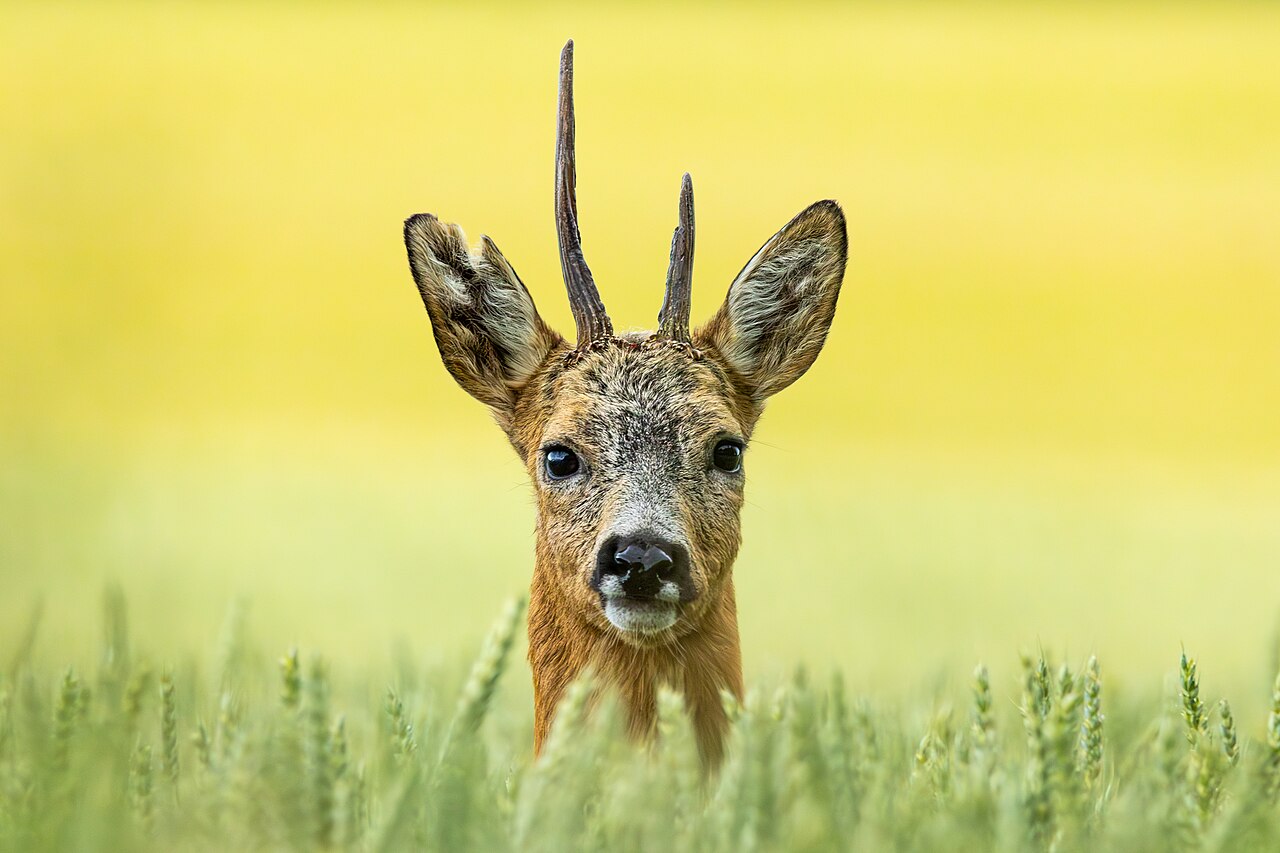
Head close-up
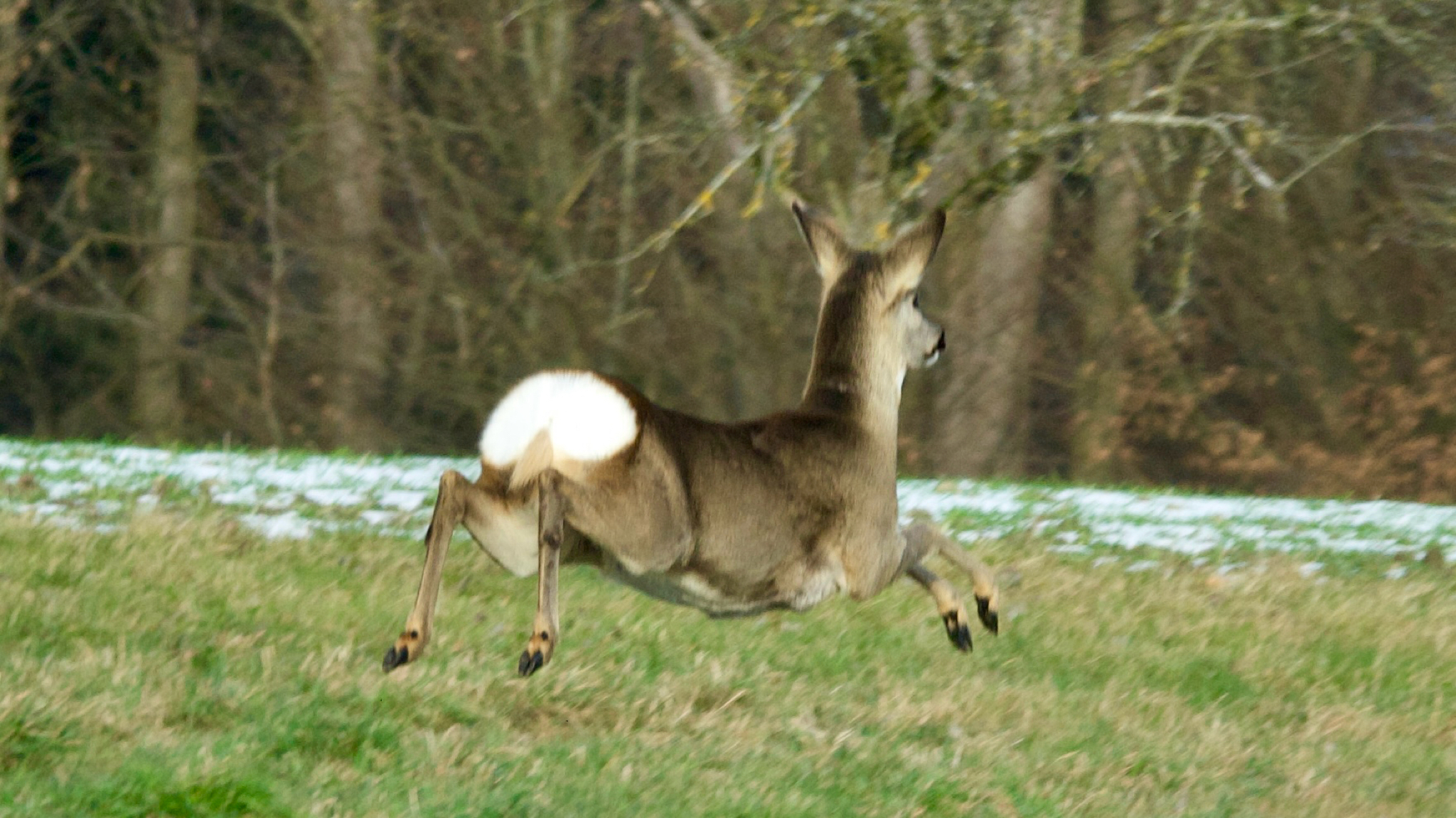
In winter coat
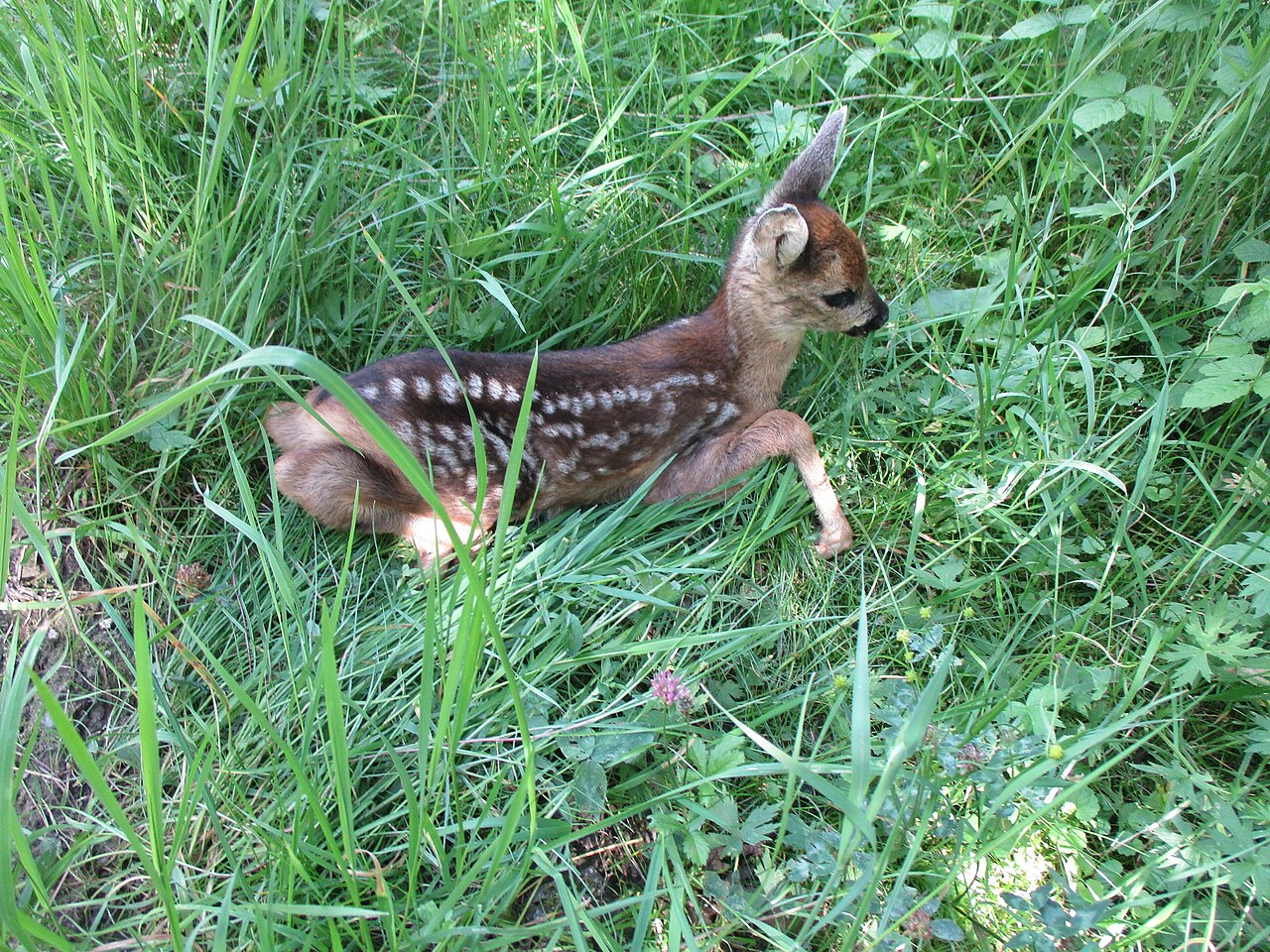
The young
Identification
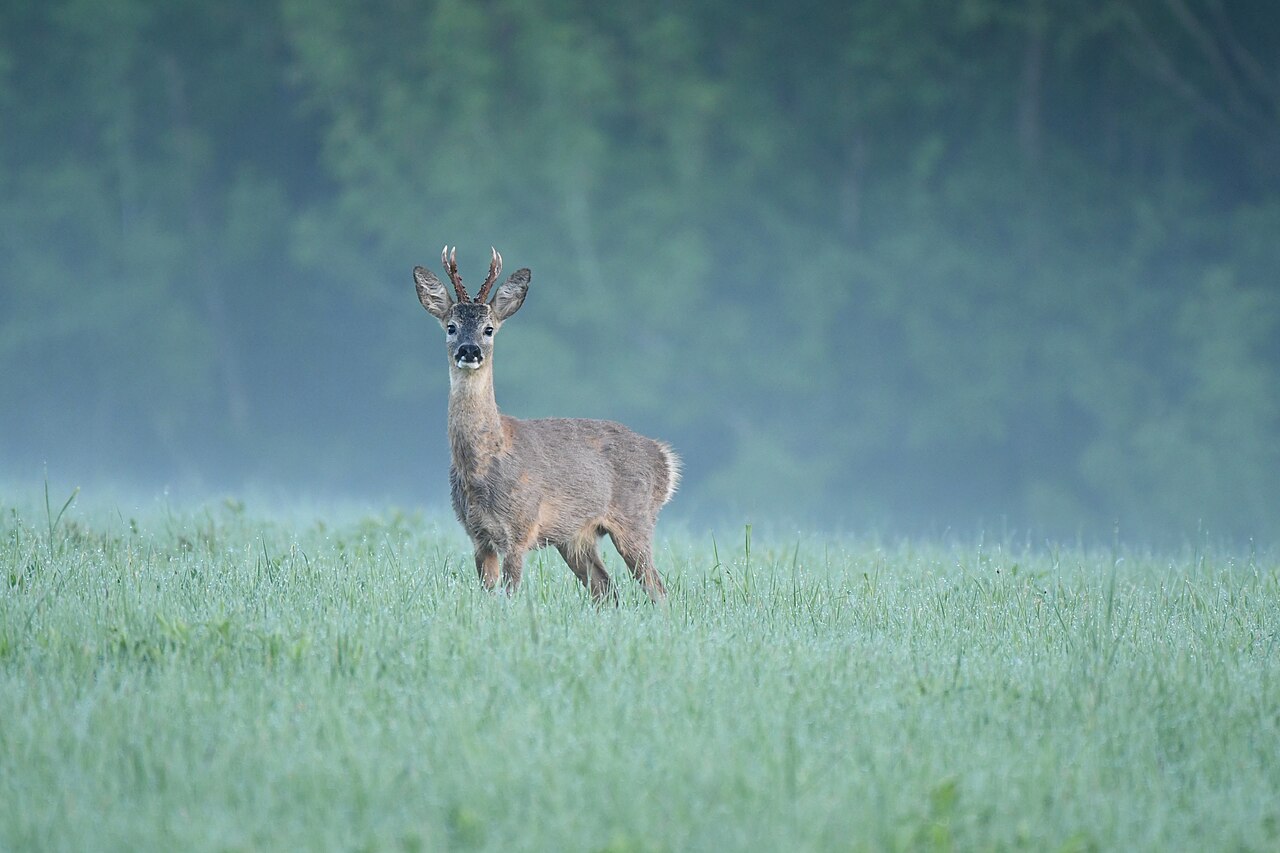
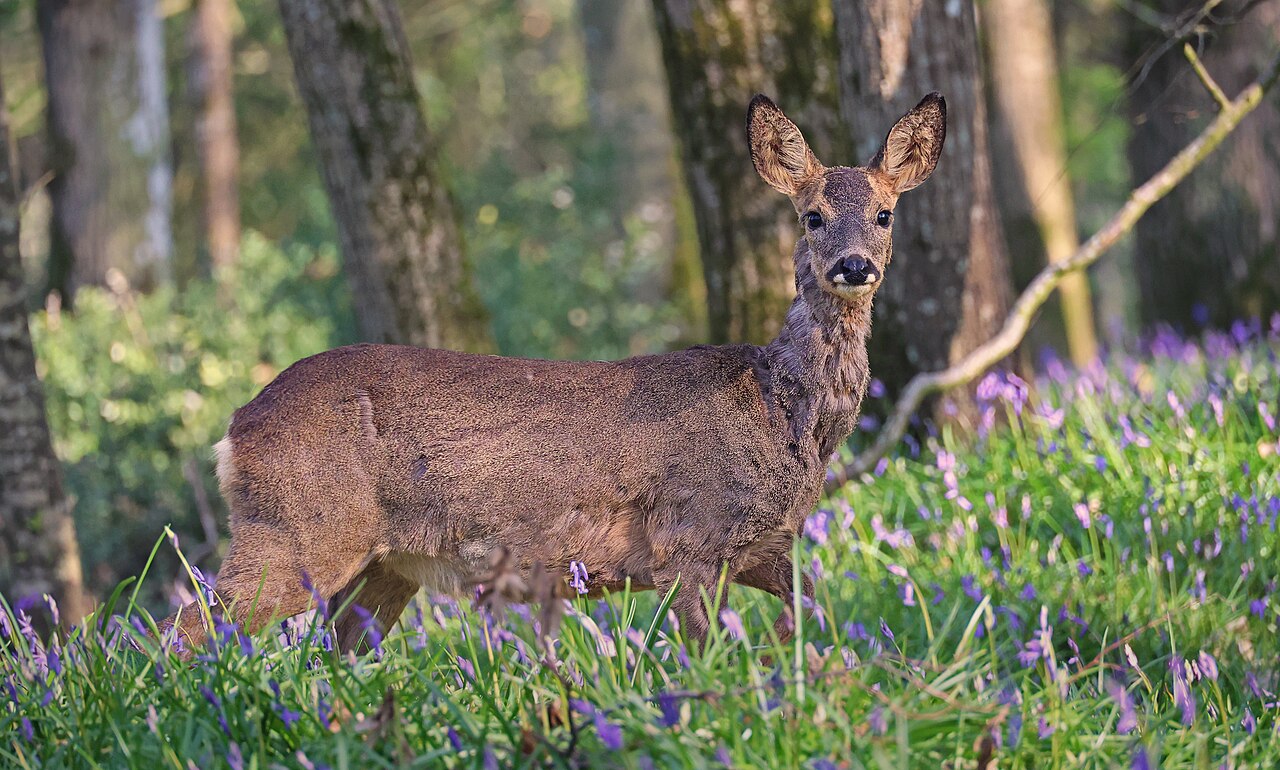
A small, long-legged deer of 95 to 135 cm head-body, 60 to 75 cm at the shoulder and 10 to 25 kg, with a body that rises slightly towards the rump. The tail, at 2 to 3 cm, is invisible; in the field the rump patch stands out, the white to cream area of hair around the anus, which is flared when the animal is alarmed and then shows bright white. The rump patch also serves to sex the animal: in the buck it is kidney- or bean-shaped, in the doe heart-shaped with a pointed tuft of hair below; in winter this is the only reliable difference at a distance. The summer coat is bright reddish brown, the winter coat grey-brown to grey with two pale throat patches. The nose is black with a white band over the upper lip; the eyes are large and dark, the ears long and oval. Only the buck carries antlers: short and upright, 15 to 25 cm, with at most three points per side and a coarsely pearled, ridged coronet at the base. The antlers are cast between October and December; the new set grows in midwinter and is cleaned of velvet in March or April. The roe is thus the only European deer whose antlers grow in winter. Young are spotted for the first weeks. The roe moves in short, springy bounds and can bark loudly and hoarsely.
Similar species
Fallow Deer is clearly larger and heavier, usually spotted, and has a long tail that is black above, with a black-bordered rump patch in the shape of an inverted horseshoe; the buck's antlers are palmate. Red Deer is two to three times as heavy, with a long head, a buff rump patch without a black border and branched antlers. A Red Deer calf in summer is about roe-sized and also spotted; the rump patch and head shape decide. In Britain and Ireland there are also the Muntjac, smaller, with a humped back, a long tail held up when fleeing and visible canines in the buck, and the Chinese Water Deer, which has no antlers but tusks and no white rump patch. A roe standing at dusk with its head low in the grass is regularly taken for a sheep or a goat, and vice versa.
Habitat
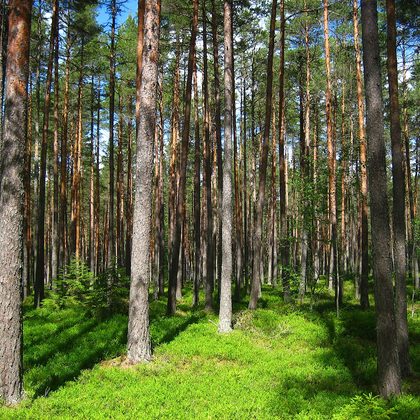
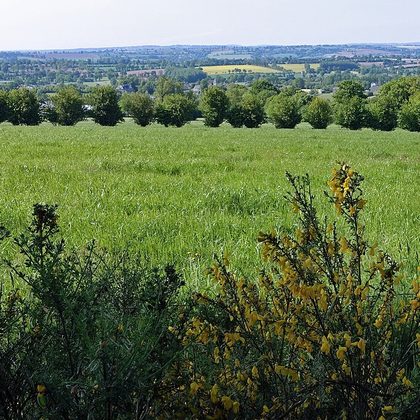
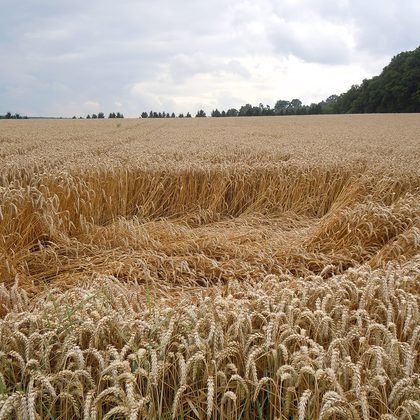
Woodland edges and transitions resembling them: broadleaved, mixed and coniferous woodland with glades, clear-fells and young plantations, rank margins and bramble scrub, tree lines, copses, hedgebanks and hedgerows, and the adjoining farmland; oilseed rape, cereals and grass are important food in spring. In large-scale open arable country lives the field roe, which spends its whole life in the crops; these animals stand in groups on bare land in winter and are then easiest to observe. Closed, dark forest is not preferred, because it offers little food.
Where the animal is most at home, classified with EUNIS — the European standard for habitats.




Distribution
From Spain and Scotland to the Caucasus and from southern Italy to central Scandinavia, numerous almost everywhere. On the Iberian Peninsula it inhabits the whole northern half — the Cantabrian Mountains, the Pyrenees, the Iberian System and the Central System — and has increased strongly since the 1970s with rural depopulation and the spread of scrub and woodland, reaching Extremadura in the west and Catalonia and the Maestrazgo in the east. In the mountains of Cádiz and Málaga (Grazalema, Los Alcornocales, Sierra de las Nieves) lives an isolated population, the Andalusian roe, smaller and paler than northern animals and separated from the rest for thousands of years. In Britain it had been reduced by about 1800 to the Scottish Highlands and a few places in northern England; nineteenth-century reintroductions in Dorset, Sussex and East Anglia and natural spread from Scotland brought it back to most of the country, and it is still spreading into Wales and the Midlands; the population numbers several hundred thousand. In the Netherlands it was confined around 1900 to the Veluwe, Drenthe and a few estates; since then it has occupied the whole country, including the new polders (Flevoland unaided), urban fringes and the islands of Texel and Terschelling, with a population of the order of a hundred thousand. In Belgium it is common in the Ardennes, the Kempen and the Flemish woodlands and is spreading into open farmland. It is absent from Ireland, where a nineteenth-century introduction in Sligo failed, from most Mediterranean islands, including the Balearics, and from the Canary Islands.
- Native
- dark = core range, pale = thinly spread
Way of life
Active at dusk and in the early morning, in quiet farmland also by day; at night it ruminates and rests. The roe is not a grazer but a selective browser with a small rumen: buds, shoots, bramble, herbs, ivy, bilberry and heather in winter, acorns and beech mast in autumn, and in farmland oilseed rape, young cereals and grass. It feeds in short bouts, ten to twelve times in 24 hours, ruminating in between. The buck is territorial from March to August and drives off other bucks; outside that period the roe lives alone or as a doe with young, and in winter loose groups of up to twenty form on open ground. The rut falls in late July and August, with the rings, chasing and barking, and is followed by a character that distinguishes the roe from the other European deer: delayed implantation. The fertilised egg remains free in the uterus for four to five months and only begins to develop in December or January, after which the actual gestation lasts just over four months. The young are thus born in May or June, when the grass is high and food is most abundant. Usually there are two, sometimes one or three, spotted and almost scentless; for the first weeks they lie alone in tall grass while the doe feeds nearby and returns only to suckle. A roe kid in the grass is therefore not abandoned and should be left untouched. Mowing of grass and lucerne fields in May and June is an important cause of death. Roe do not enter winter torpor; in winter the metabolism slows and they become slower, and disturbance then costs a great deal of energy.
Where and when to look
The last hour of daylight at the edge of a field or meadow bordering woodland is most suitable, in April or May, when the grass is still short and the bucks patrol their territories. The rump patch is noticed before the animal. In August rutting bucks are active by day and sometimes respond to an imitation of the doe's call; this works at most once per site. In winter the field roe on bare arable land is easily watched from a car. The Andalusian roe can be sought in the mountains of Cádiz and Málaga; in the Cantabrian Mountains beech and oak woods at sunrise are suitable. For signs: in March the fraying stocks along young plantations can be counted, and in September a worn ring can be found in the grass along the same edge.
Conservation status
Least Concern (LC, 2016), and greatly increased during the twentieth century. Since 1950 roe numbers have risen across almost all of Europe and the species has occupied areas from which it had been absent for centuries: woodland area grew, small-scale farming disappeared, maize and oilseed rape enriched winter food, and the large predators had gone. The issues are therefore the opposite of those facing many other mammal species. Road collisions are a large and growing cause of death (in the Netherlands alone many thousands of animals a year), mowing machines kill tens of thousands of young each year, and browsing locally prevents the natural regeneration of woodland; in Britain browsing by deer is regarded as one of the main constraints on the restoration of native woodland. The return of the wolf and the lynx in central Europe is changing this picture: the roe is the main prey of both, and where wolves settle, not only the numbers but above all the behaviour of the roe change.
Scientific name
Capreolus capreolus | (Linnaeus, 1758)
Linnaeus described the species in 1758 as Cervus Capreolus; because it was later moved to another genus, the author and year stand in brackets. Capreolus is Latin for 'little goat', a diminutive of caper or caprea, 'goat'; which animal the Romans meant by it is not certain. The specific name repeats the genus name. The specimen the first description was based on came from Sweden.