All species › Rodents › Blind mole-rats › Western Anatolian Blind Mole-rat
Western Anatolian Blind Mole-rat | Nannospalax xanthodon
Nannospalax xanthodon | Nannospalax xanthodon
Nannospalax xanthodon, the Western Anatolian Blind Mole-rat, is the blind mole-rat of Anatolia; in Europe the species occurs only on Lesbos. The animals of that island form the western edge of the global range and the only European population of the species. In Turkish it is called kör fare. Von Nordmann described the taxon in 1839 from material from Smyrna, present-day İzmir. Like the Lesser Blind Mole-rat it is a superspecies: at least twenty-five chromosomal forms with chromosome numbers from 2n = 36 to 62 are included under the name Nannospalax xanthodon, and by 2025 the Mammal Diversity Database had split off N. nehringi, N. tuncelicus and N. cilicicus.
Tracks
The earth mounds are the main sign and are easily recognised on Lesbos: broad and low rather than conical, of coarse clods rather than fine crumbs, without a visible tunnel opening (the tunnel is sealed from inside), and in a meandering line twenty-five to thirty metres apart. The largest nest lies beneath the largest mound; this is a useful rule of thumb in the field. The feeding tunnels lie at five to forty centimetres depth, the deeper tunnels and chambers at eighty to one hundred and fifty centimetres. There are one or two nest chambers of about twenty by twenty centimetres, lined with dry plant material, besides store chambers and latrines. Ten kilograms of potatoes, beet and carrots were found in one burrow system; an ordinary store weighs seven hundred to fifteen hundred grams and is smallest in summer. There are also gnawed roots, bulbs and tubers in the tunnel, and patches at the surface where a plant has been pulled down from below. Pellets of Little Owl, Barn Owl, Tawny Owl and Eagle Owl provide additional records.
Identification
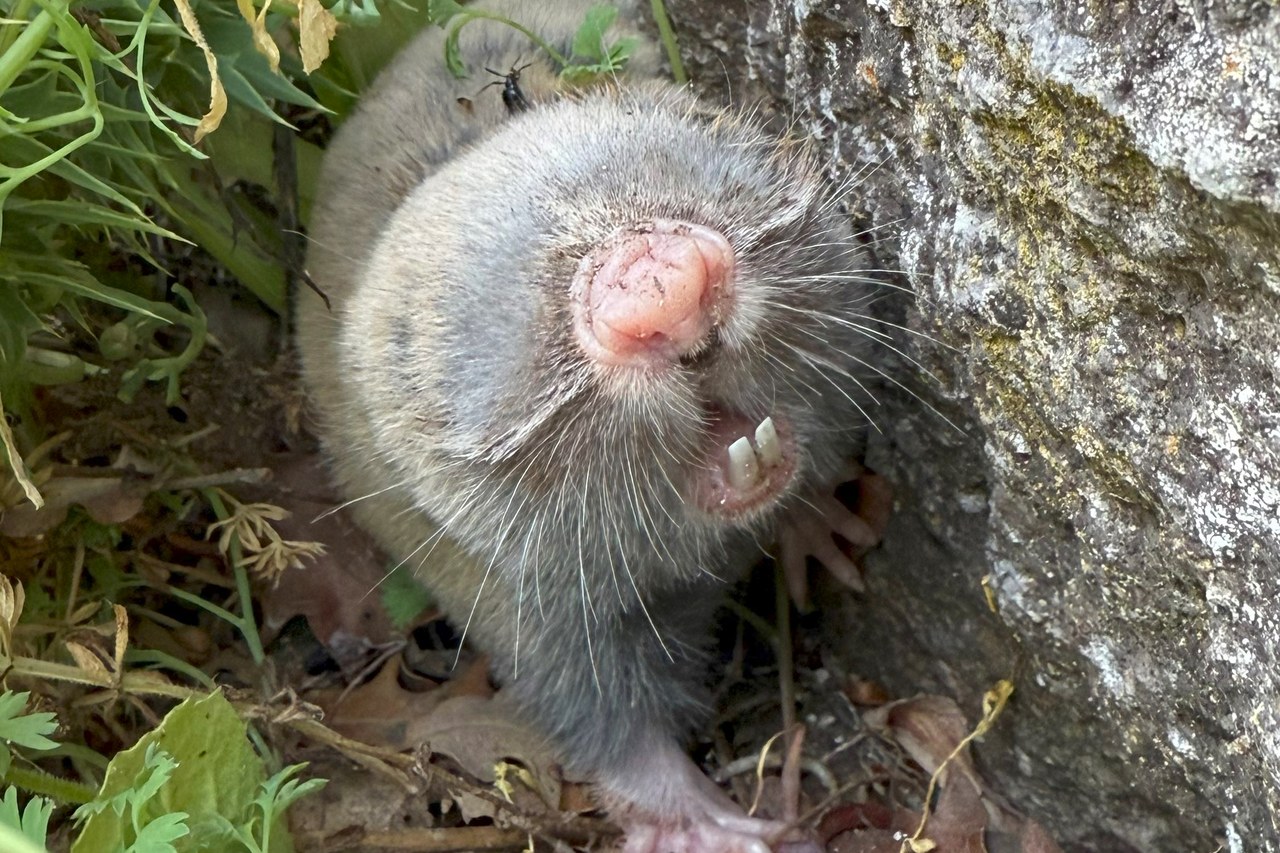
A medium-sized blind mole-rat of 14 to 25 centimetres and 130 to 522 grams, neckless and cylindrical, with a broad, flat head and a heavily built front; males are larger than females. Over most of their length the hairs are slate grey with a buff, grey, reddish or brown tip, so that the coat appears brownish grey from above; the belly hairs are slate grey and vary from almost black to white or silvery. The head is characteristic: a large, brown, bare, triangular nose pad, with a bristly fringe of paler, yellowish hairs running back to about halfway to the ear region. White hairs may border the nose pad and lips, and the head sometimes bears white spots or streaks. Ear pinnae are absent, the eyes lie as lenses beneath a closed fold of skin, and there is no external tail; the sources consulted therefore give no tail measurement. The incisors protrude in front of the lips and are white, yellow or orange.
Similar species
No second blind mole-rat occurs on Lesbos, so in practice the assignment there is certain; this rests on locality, not on a character. Externally it cannot be seen to which blind mole-rat species an animal belongs: the forms of this genus are alike in fur, size, head shape, bristle fringe and tooth colour, and the differences fall within the variation of each population. Within Anatolia identification is not always possible even with a chromosome preparation, and the recent splits rest partly on the shape of the baculum and on DNA. On the neighbouring mainland and the Greek islands other species occur: N. serbicus in Greek Thrace, N. insularis on Limnos, N. hellenicus in the Greek mountains. The genus, however, can be determined with certainty. A Nannospalax weighs about as much as a large rat and reaches at most a little over half a kilogram; a Spalax of the eastern steppes weighs six to eight hundred grams and is nearly a third longer. The earthworks differ too: on Lesbos the mounds of this species lie twenty-five to thirty metres apart in a thin line, whereas a Spalax leaves a dense field of mounds one to two metres apart. Spalax does not occur on Lesbos. What must be excluded are the mole (smaller, spade-shaped forefeet, short tail) and the local rats, with ears, eyes and a long tail.
Habitat
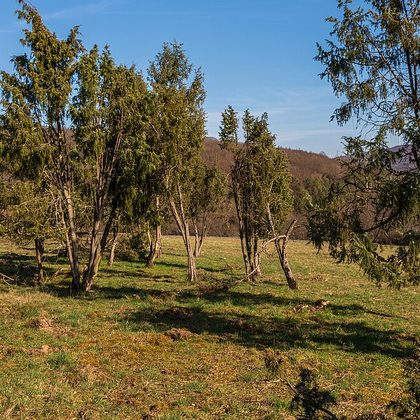
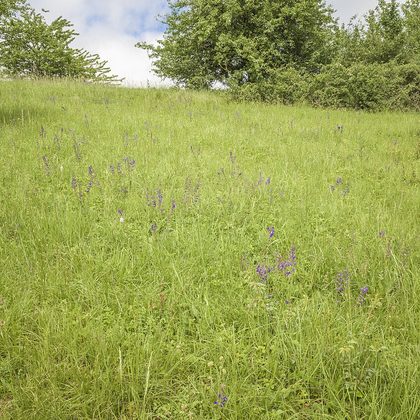
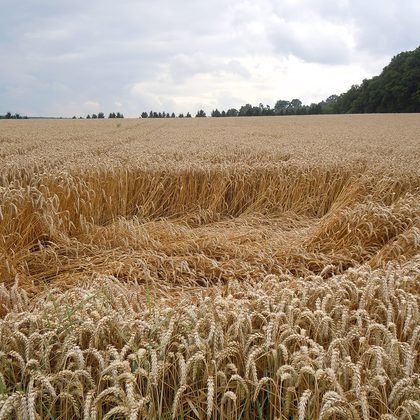
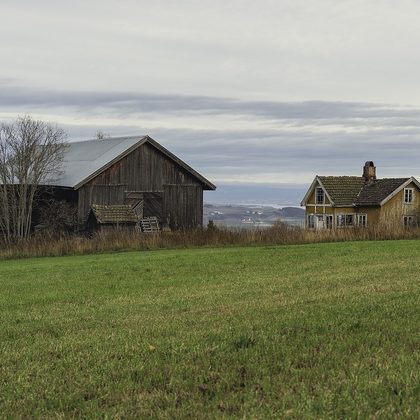
In Anatolia from Mediterranean coastal areas through steppe and semi-desert to mountain pastures at 2,900 m, most numerous between 900 and 1,600 m; woodland, rocky ground and marsh are avoided. On Lesbos the main habitats are non-irrigated arable land, pasture and the scattered edge settlement of villages; according to modelling about twenty-two per cent of the island is suitable. In the higher parts of the island suitability declines. Everywhere deep, loose, well-drained soil with an underground food supply of bulbs, tubers and thick roots is required.
Where the animal is most at home, classified with EUNIS — the European standard for habitats.

Distribution
Anatolian Turkey, with outliers in Armenia, Georgia and Iran; in Europe only Lesbos. The type locality is İzmir. The populations on Lesbos form the western edge of the global range and are the only European populations of the species. Older literature also assigned European Turkey and other Greek islands to this species; in the delimitation followed here the Thracian animals belong to N. serbicus and those of Limnos to N. insularis. Blind mole-rats are absent from western and northern Europe and from the Iberian Peninsula.
Way of life
Strictly subterranean and active around the clock, with most digging at the beginning and end of the day. There is no hibernation or winter dormancy; the winter is bridged with store chambers. The diet consists mainly of underground plant parts, preferably bulbs (the tuberous Geranium tuberosum is named most often), supplemented with roots and tubers; daily intake is twenty-two to nearly sixty per cent of body weight. The species is solitary; in optimal habitat densities reach sixty animals per hectare. Females have one litter a year: in Turkey from January to June with a peak in February, in Armenia from January with pregnant females into May. Gestation is twenty-six days; a litter has one to six, usually two or three young of five to six centimetres and nine to nine and a half grams. They are weaned at about one hundred and fifteen grams and leave the nest in the course of the summer. Predators are Little Owl, Eagle Owl, Tawny Owl and Eastern Imperial Eagle.
Where and when to look
On Lesbos, in March or April, when the grass is still short and fresh soil shows dark, search non-irrigated field margins and sheep pastures around the villages for a series of broad, low mounds twenty-five to thirty metres apart. The largest mound of the series lies above the nest. Fresh, damp, coarsely clodded soil indicates an occupied system. Waiting a few metres from a fresh mound, it is sometimes possible to see new soil being pushed out from inside. Most observations of the animal itself are chance encounters: an animal in defensive posture beside a footpath, or one caught by a cat.
Conservation status
Least Concern (2023). This assessment covers the superspecies as a whole and says little about the individual forms. As a whole the species is common and occurs in several protected areas; the Handbook of the Mammals of the World notes that several forms within the complex deserve attention as separate units, because some chromosomal forms have a very small range. The threats are large-scale arable farming, overgrazing and fragmentation. For the animals of Lesbos this applies all the more: they live at the extreme edge of the range, on an island, and form the only European population of the species. A lost population there would not be replenished from elsewhere.
Scientific name
Nannospalax xanthodon | (von Nordmann, 1839)
Von Nordmann described the species in 1839 as Spalax typhlus xanthodon; because it was later moved to another genus, the author and year stand in brackets. Nannospalax joins Greek nannos, 'dwarf', to Spalax: the small blind mole-rat. xanthodon is Greek for 'yellow-toothed', from xanthos, 'yellow', and odōn, 'tooth', after the yellow incisors, as against the white ones of leucodon. The specimen the first description was based on came from Türkiye, İzmir.