All species › Caryophyllales › Sundew family › Drosera mannii
Drosera mannii
A pink-flowered pygmy sundew from the jarrah forest of the northern Darling Range, described by the British botanist Martin Cheek of Kew. Drosera mannii is one of the less well-known members of the large group of south-west Australian pygmy sundews; beyond the basic data in FloraBase little that we could consult has been published on it.

Identification
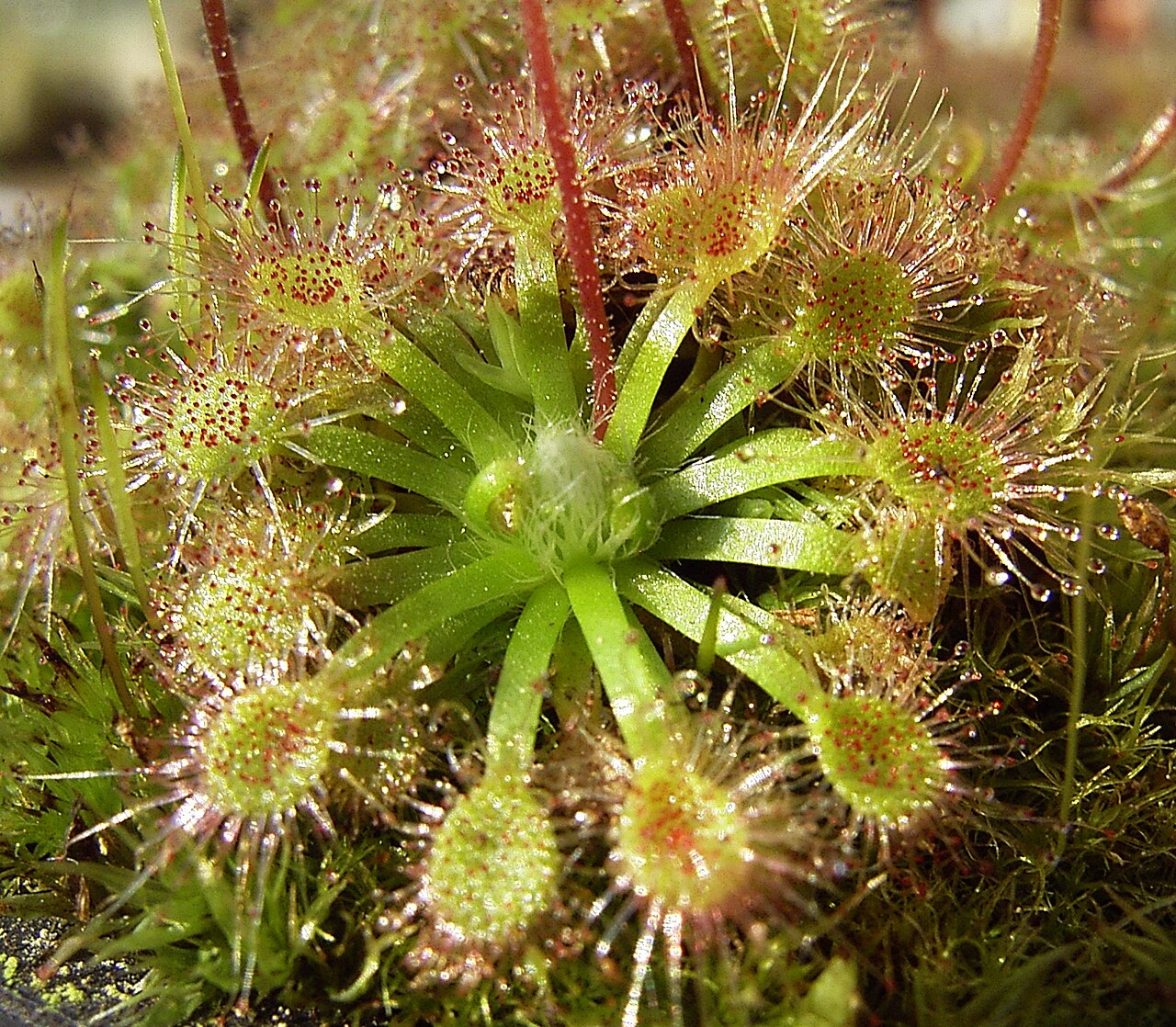
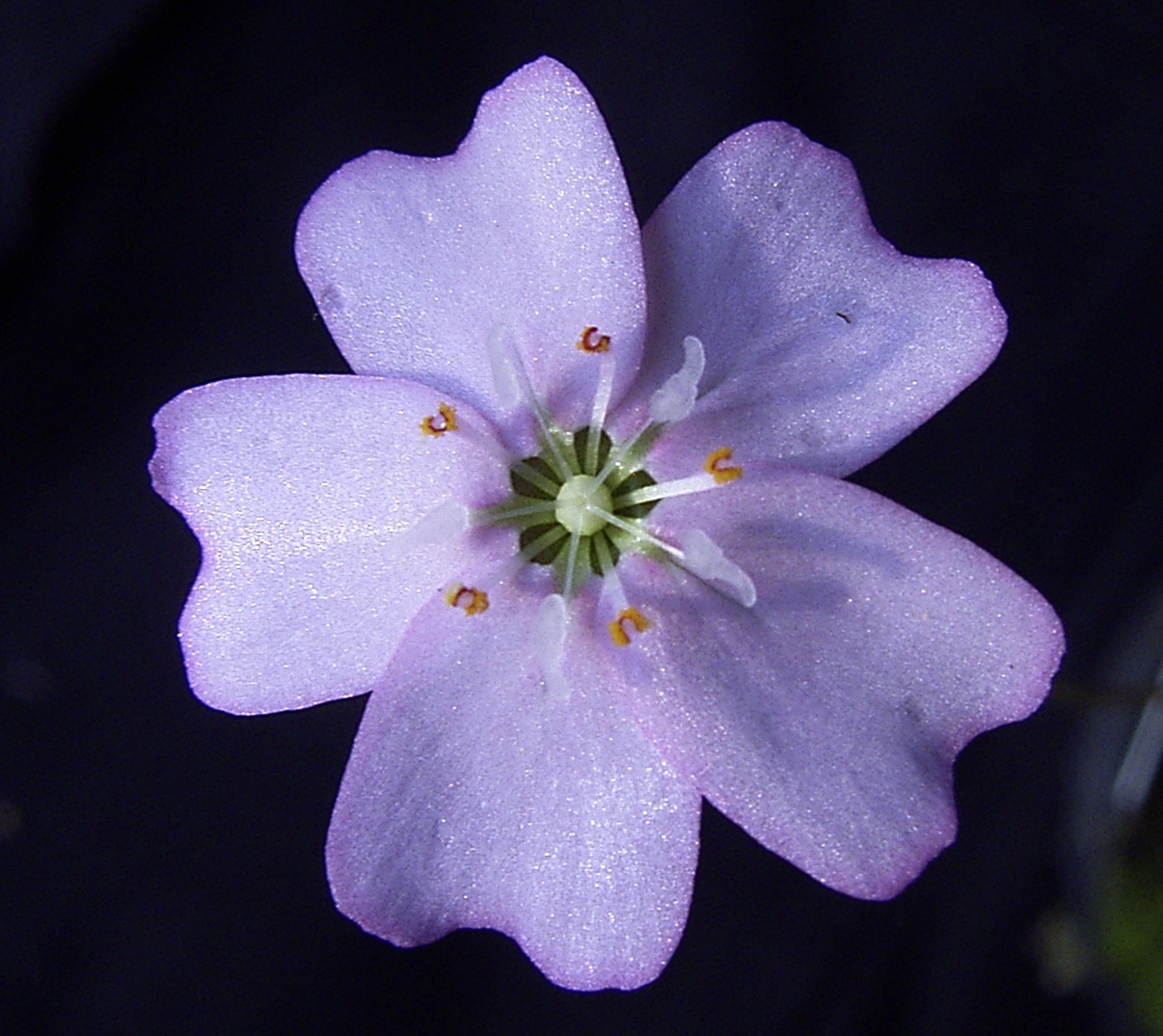
A small perennial reaching up to 10 cm tall, with the rosette and the tuft of stipules at its heart that mark all pygmy sundews. The flowers are pink. FloraBase gives a flowering time of June to September, earlier than many other pygmy sundews, which flower only in late spring. We did not find precise measurements of rosette, leaf and flower in any source consulted.
Similar species
There are several pink-flowered pygmy sundews in the south-west, including Drosera helodes of the wet coastal plain and D. lasiantha of the southern granite ranges with its woolly-hairy scape. The habitat in jarrah forest on loam and the relatively early flowering are clues, but a secure identification needs details of styles, stigmas and hairs and the key in Lowrie (2013).
The trap and how it works
An active flypaper trap in miniature. The leaf blades carry stalked glands with a sticky droplet; the long marginal tentacles catch the prey and bend it to the centre of the leaf, where shorter glands take over digestion. The catch consists of springtails, mites and the smallest flies of the forest floor.
Habitat and ecology
Loam soils in the open jarrah forest of the northern Darling Range (B1, D3, W7), a forest of Eucalyptus marginata on lateritic soils. The codes for laterite and seasonally wet places are derived from the character of that forest, not from a published habitat description. Like all pygmy sundews the plant grows in the wet winter and rests in summer.
Distribution and elevation
Endemic to south-west Australia. FloraBase lists only the Jarrah Forest bioregion, Northern Jarrah Forest subregion: the northern Darling Range, east and south-east of Perth.
- Recorded (one-degree cells)
Forms and variation
No subspecies or varieties have been described. Like most pygmy sundews the plant forms gemmae in the heart of the rosette, which are dispersed by raindrops.
Where and when to see it
Search in winter and early spring in the open jarrah forest of the Darling Range, on bare patches of loam between the leaf litter. Because the plant is small and the flowers open only in sun, a bright day around midday gives the best chance. Mind the risk of the root rot Phytophthora in jarrah forest: clean your boots before and after the visit and keep to the tracks.
Conservation status
On the global IUCN Red List the species is listed as Least Concern (LC); in Western Australia it is regarded as not threatened. It is not listed in CITES. The jarrah forest is under pressure from bauxite mining, logging, the root rot Phytophthora cinnamomi and declining rainfall. Uncertainty: the sources are thin; we could not consult the original description.
Scientific name
Drosera mannii | Cheek, 1990
Described by M. Cheek in 1990, in Phytologia, volume 68, no. 2, p. 86. The only known population is located near Bannister, south-western Western Australia, on clay and peaty sandy soils in a winter-moist watershed. The suffix -ii indicates a dedication to a person surnamed Mann, but exactly who is being honoured could not be established.
World Checklist of Vascular Plants (WCVP), via Plants of the World Online (POWO), Royal Botanic Gardens, Kew.