All species › Pigeons and doves › Pigeons and doves › African collared dove
African collared dove
Streptopelia roseogrisea | Izabeltortel | Tórtola rosigrís
In the wild the African Collared Dove is a bird of the Sahel, from Mauritania east to Sudan. What turns up in Europe is another matter: every pale dove on a town square or in a park goes back to escaped or released Barbary Doves, the tame form of this species, or to crosses between those and Collared Dove.

Voice
A low rolling coo-krrooo with the stress on the drawn-out second syllable, and a laughing, stuttered ha-ha-ha-ha given in excitement. Feral birds call all year, loudest from a favourite perch on a roof edge or aerial.
No freely licensed recording is available for this species yet.
Identification
Slim, sandy to cream dove with a narrow black hind-neck bar, a greyish head and a pink wash over throat and breast. The iris is deep red-brown, the bill black, the legs purplish red. A pale grey wing panel contrasts with darker primaries, and the undertail coverts are white rather than grey. From below the tail shows a broad white outer half.
Confusion species
A pale dove in a European town is almost never a wild African Collared Dove. Wild birds stay south of the Sahara; what you are looking at are cage and aviary Barbary Doves, which come in white, cream and pied. They also cross freely with Collared Dove, so plumage tone on its own proves nothing. Go by behaviour and voice: a bird that sits tight at two metres and walks up for bread is a Barbary Dove. If you still want to run the features, check the white undertail coverts, the sharply contrasting grey wing panel, the red-brown iris and above all the voice, a rolling two-syllable coo plus a laughing rattle, against the three-part coo-COOO-cuk and nasal flight note of Collared Dove.
Habitat
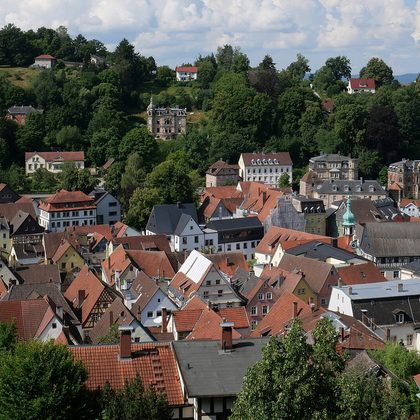
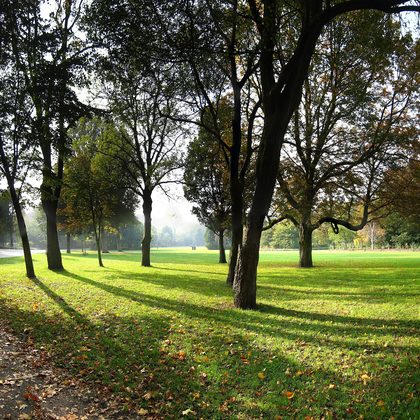
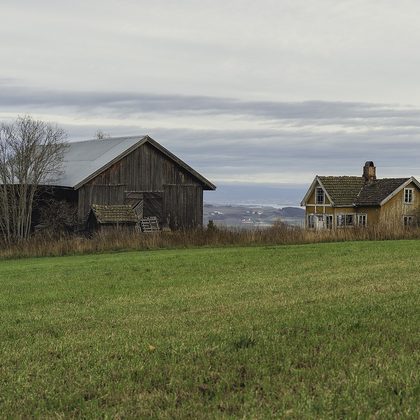
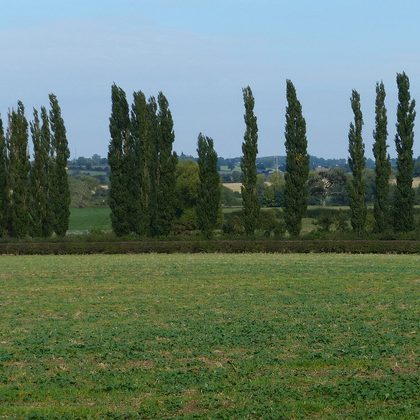
In the Sahel, acacia savanna, village edges and oases, always within flying range of drinking water. In Europe the bird is in town parks, palm-lined squares, around city farms, aviaries and zoos, and on farmyards and barns where grain is spilt.
Where the bird is most at home, classified with EUNIS — the European standard for habitats.
Range and movements
The wild range runs from Mauritania and Senegal east to Sudan, Eritrea and Somalia, with a second form in south-west Arabia. In Britain and Ireland the species exists only as an escape, and records are treated as such; small parties can hold on in one suburb for years without ever forming a real population. The same is true across the continent, with most feral birds around the Mediterranean and on the Canary Islands.
- Winter
- Passage
- dark = core range, pale = thinly spread
Where and when to look
Do not plan a day around it. If you do meet one, photograph the spread tail from below and the undertail coverts, and record the voice; without all three a claim goes nowhere. Then look around for an aviary or a dovecote nearby.
Conservation status
Not threatened globally, and common in the Sahel, where villages and wells suit it well. In Europe it does not count as a wild species. Spain lists it in its register of invasive alien species, because feral birds cross with Collared Dove and can damage crops.