All species › Kingfishers, bee-eaters and rollers › Bee-eaters › Arabian green bee-eater
Arabian green bee-eater | Merops cyanophrys
Arabische groene bijeneter | Abejaruco esmeralda árabe
A tiny emerald bee-eater of the desert wadis of Israel and Jordan, barely bigger than a starling. It hunts from a low acacia twig or a fence wire and returns to the same perch after every sally.

Voice
A dry, high, rolling tree-tree-tree or tit-tit-tit, thinner and sharper than the full prruip of European bee-eater and rarely carrying far. Heard all year; pairs answer one another from neighbouring twigs, and an alarmed bird runs the notes together into a fast rattle.
No freely licensed recording is available for this species yet.
Identification
Small and slim, with a fine, slightly decurved black bill, pointed wings and two needle-thin central tail feathers projecting about two centimetres; the length above excludes them. The plumage is largely grass-green with a coppery wash across wings and tail. Forehead and supercilium are sky blue, the chin and throat blue, and a narrow black crescent crosses the upper breast. A thin black eye-stripe divides the blue from the green; the iris is red and the legs dark grey. Juveniles are duller, lack the streamers and show no black breast band.
Confusion species
Blue-cheeked bee-eater breeds in the same valleys and is the only real pitfall: it is almost twice as long, has a rufous throat below a yellow chin and a blue-green cheek patch, and its streamers measure six to eight centimetres. European bee-eater is larger still, chestnut and gold. Size settles it, and so does behaviour: this bird works a low perch like an outsized flycatcher rather than circling high overhead in noisy parties.
Habitat
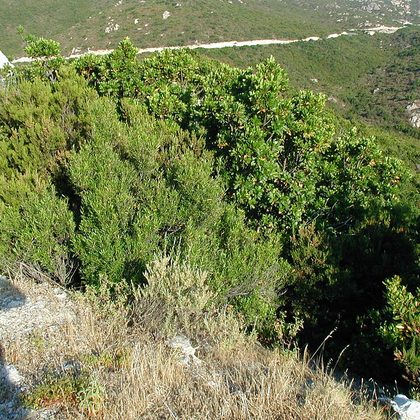
Warm, open desert and semi-desert valleys with scattered acacia and tamarisk, and beyond them date gardens, irrigated fields, kibbutz plantings and the margins of fish ponds and sewage pools. It avoids bare, plantless desert. The nest tunnel goes into a low sandy face, a gully edge or simply into flat sand, usually singly or in loose groups of a few pairs.
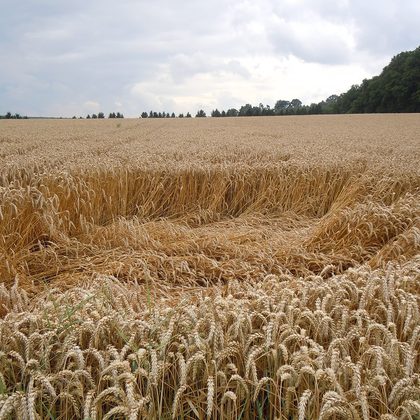
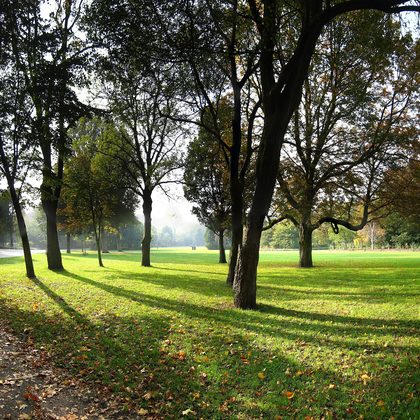
Where the bird is most at home, classified with EUNIS — the European standard for habitats.

Range and movements
An Arabian and Sinai bird which, inside the area of this guide, holds the Arava, the Negev, the Dead Sea shores and the country around Eilat, and in Jordan the Wadi Araba, Aqaba and the southern wadis. In Israel it is spreading north, helped by irrigation and building. It has been treated as a species in its own right since 2021, apart from the green bee-eaters of Africa and Asia. It reaches no part of Europe: British and Irish birders meet it on a trip to Eilat, not at home.
- Resident
- Passage
- dark = core range, pale = thinly spread
Where and when to look
One morning in the Arava will almost always produce it: work the field edges and fish ponds at Neot Semadar, Yotvata or Lotan and check barbed wire, dead twigs and irrigation pipes. In winter birds sit out sunning themselves well into the morning; in summer the first and last hour of light are best.
Conservation status
Not threatened, and increasing. Irrigated farming, gardens and water works have put insects and perches into desert that had neither, and the species has moved steadily north through Israel as a result. What harms it is the tidying and infilling of the low sandy banks it tunnels into, and insecticide use on the irrigated fields.