All species › Waders, gulls and terns › Sandpipers and snipes › Stilt sandpiper
Stilt sandpiper
Calidris himantopus | Steltstrandloper | Correlimos zancolín
A calidrid on stilts that behaves like a dowitcher. Stilt Sandpiper wades belly-deep in shallow fresh water and drives its bill straight down in rapid vertical strokes, sewing-machine fashion. Long greenish-yellow legs plus that feeding action is a combination nothing else in Europe offers.

Voice
Rarely heard on this side of the Atlantic. The call is a low, hoarse krrp or tchu, short and carrying poorly, much less ringing than the clear whistle of Lesser Yellowlegs. On the breeding grounds males give a sustained whinnying song in display flight. Do not count on voice to solve the identification of a European bird.
No freely licensed recording is available for this species yet.
Identification
A slim, long-legged wader, larger than Dunlin and smaller than Redshank. The legs are long and greenish-yellow to dull yellow, and the bill is long, thick at the base and drooped only over the outer part, ending in a blunt tip rather than a fine point. Breeding adults are barred right through from throat to undertail and carry a rusty wash on the crown and ear-coverts. Winter and juvenile birds are grey-brown above with a long, sharp white supercilium and streaking that runs down onto the flanks. In flight there is no wingbar, the rump is whitish and the tail grey with fine barring, and the feet trail well beyond the tail.
Confusion species
Two species crowd in. Curlew Sandpiper has black legs, a finer bill curved evenly along its whole length, a crisp white band across the rump that lights up as the bird turns, and an obvious white wingbar; it is also shorter in the leg and does not wade belly-deep. Lesser Yellowlegs has bright yellow legs, a straight thin bill with no droop and a square white rump patch, and it picks from the surface instead of stitching vertically. Stilt Sandpiper sits between them: leg colour duller and greener than Lesser Yellowlegs and far paler than Curlew Sandpiper, bill heavy at the base and bent only at the tip, rump whitish but without the clean white band of Curlew Sandpiper. When structure leaves you unsure, wait for the bird to feed. Neither of the alternatives probes that deep or that mechanically.
Habitat
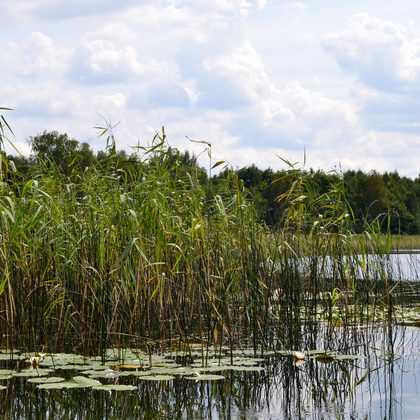
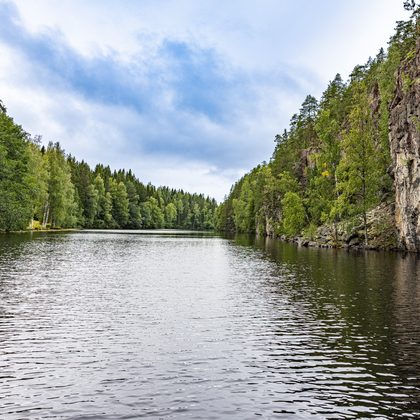
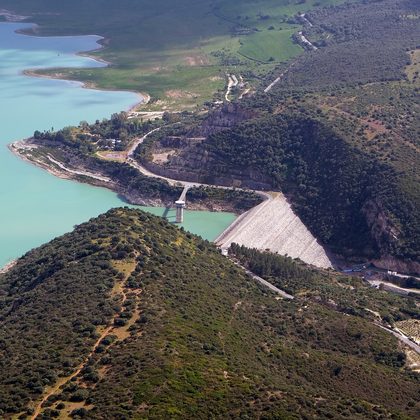
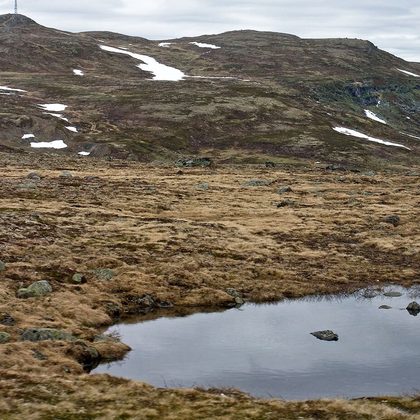
Shallow fresh and slightly brackish water: muddy pool margins, drying edges of peat lakes, sewage farms, settling lagoons, rice fields and flooded reserves. It habitually stands deeper than the waders around it. On the breeding grounds it takes low, wet sedge tundra with pools along the arctic coasts of Canada and Alaska.
Where the bird is most at home, classified with EUNIS — the European standard for habitats.
Range and movements
Breeds on the arctic tundra of northern Canada and northern Alaska and winters from the southern United States to the Argentine pampas and the Bolivian lowlands. Britain holds more than forty accepted records, the first at Kilnsea in Yorkshire in 1954, split between a spring peak in April and May and a stronger autumn arrival from July to September, with most birds on inland and coastal freshwater reserves in southern and eastern England rather than on open estuary. The Netherlands has five accepted records between 1998 and 2019; Ireland has a comparable scatter.
Where and when to look
In July and August work shallow freshwater pools with a broad muddy fringe: sewage farms, gravel pits, flooded grazing marsh and newly restored wetland reserves, and stay off the open estuary. Scan the water as well as the shoreline, ten to twenty centimetres deep, where the bird may be standing among Greenshank and Ruff. The stitching feeding action registers at a distance long before leg colour does, and a bird that keeps its whole bill submerged is worth walking towards.
Conservation status
In 2024 the species moved from Least Concern to Near Threatened. The world population remains large but the trend is downward, and the pressure lies on the staging grounds: prairie pothole wetlands across the northern Great Plains, reduced by drainage and drought, and the freshwater marshes of the wintering range, drained for arable. Because the birds seek out exactly the shallow waters that sit inside farmed landscapes, exposure to agricultural chemicals adds to the problem.