All species › Waders, gulls and terns › Sandpipers and snipes › White-rumped sandpiper
White-rumped sandpiper
Calidris fuscicollis | Bonapartes strandloper | Correlimos culiblanco
The commonest Nearctic sandpiper to reach Europe under its own power, and the only small Calidris with a clean white rump. Britain records it every year in small numbers, with a peak count of fifty-one in 2019, and long-staying adults are a feature.
Voice
A very high, thin, insect-like squeak, tzeet or jeet, closer to a bat or a shrew than to a wader. It is sharp, short and unmodulated, and it sits distinctly above everything else coming out of a Dunlin flock. On an estuary the ear finds this bird before the eye does, and a good share of British records have been picked up exactly that way.
No freely licensed recording is available for this species yet.
Identification
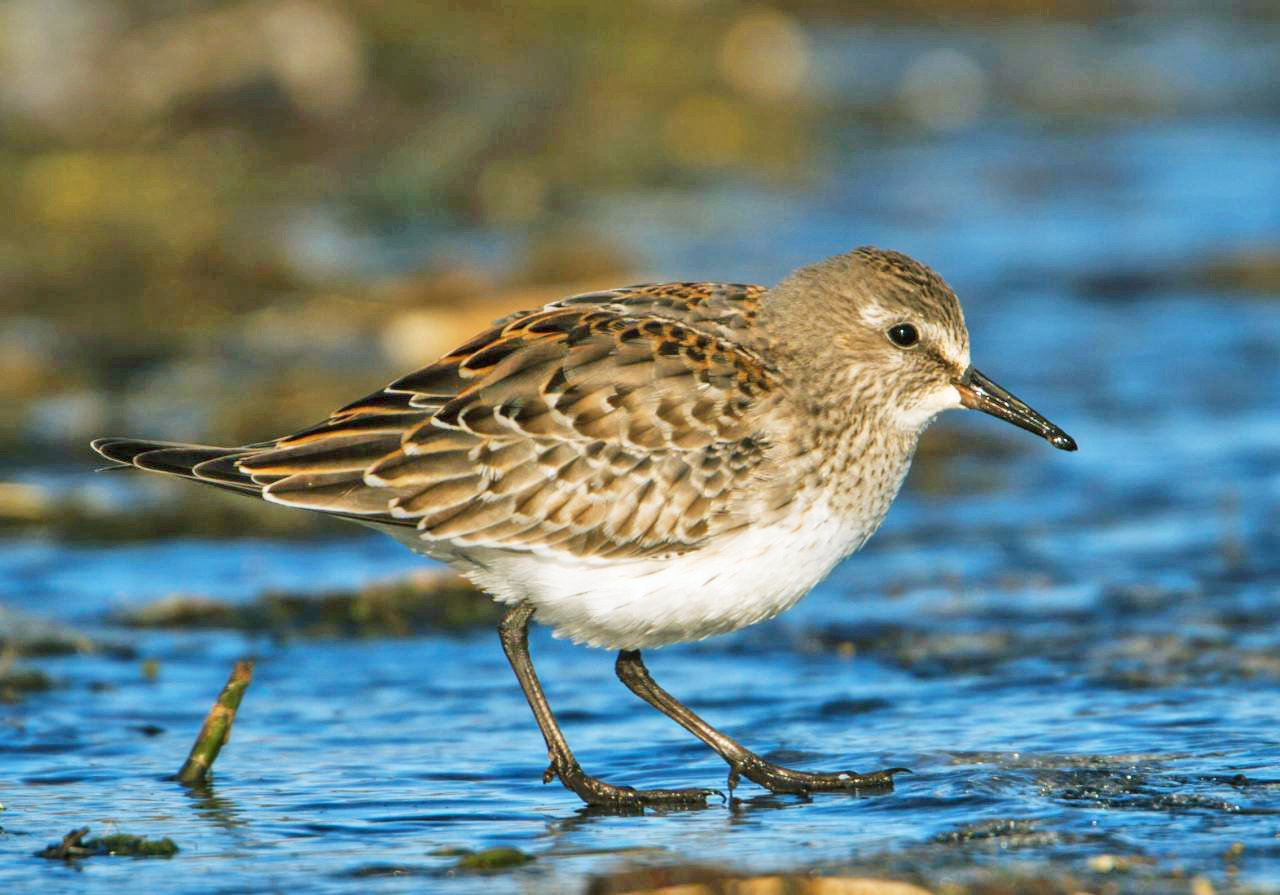
A long, low sandpiper the size of a Dunlin but flatter and more attenuated, with primaries clearly beyond the tail. The bill is straight to faintly decurved, with a dull orange to reddish-brown base to the lower mandible; the legs are black. Black streaking covers the breast and continues as arrowheads well down the flanks. A long, obvious white supercilium runs above the eye. When the bird stretches or takes flight, a square white block shows across the uppertail coverts. Adults in August look grey and worn; juveniles are warmer, with rufous scapular fringes and white mantle lines.
Confusion species
First the wing tips: White-rumped and Baird's Sandpiper both project beyond the tail, Dunlin and Curlew Sandpiper do not. Then the rump. White-rumped shows a crisp white block across the uppertail coverts; Baird's has a dark rump with only a narrow white margin. Curlew Sandpiper also shows white there, but broader and carried further onto the flanks, and that bird is larger, longer-legged and evenly decurved in the bill. The bill base is the third check: dull orange on the lower mandible in White-rumped, wholly black in Baird's. Beyond that, White-rumped is colder grey and more heavily marked, with streaking spilling as arrowheads onto the flanks, while Baird's has a plain buff breast cut sharply against white. Dunlin is the bird it hides among: shorter-winged, longer-billed with a drooping tip, dark-centred rump and a heavier, more hunched build. Pectoral and Sharp-tailed Sandpiper are eliminated at once by their yellow to olive legs, longer necks and stouter frame.
Habitat
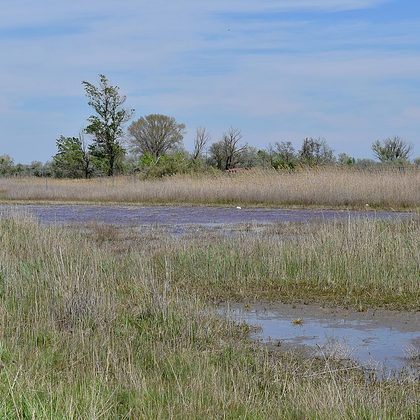
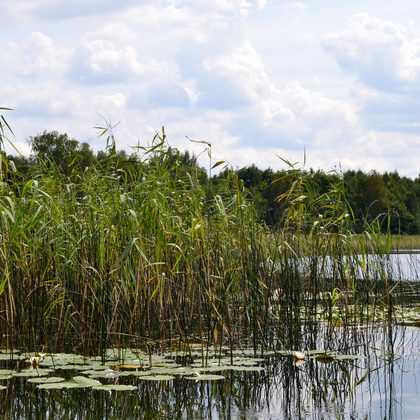
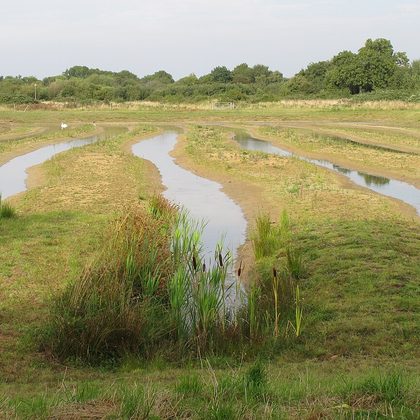
Saline ground: estuarine mud, saltmarsh creeks and pans, brackish scrapes and coastal lagoons, and, more than any of the other Nearctic waders here, the open flats themselves, where it feeds in among Dunlin. Freshwater margins, reservoir shorelines and wet grassland are used as well, though less habitually than by Baird's. It breeds on wet coastal tundra from northern Alaska east to Baffin Island and winters south to Tierra del Fuego.
Where the bird is most at home, classified with EUNIS — the European standard for habitats.

Range and movements
Autumn migration takes the species out over the western Atlantic, and depressions crossing that route deliver birds to north-west Europe, which is why Britain and Ireland see roughly twice as many as Baird's Sandpiper. Most are juveniles from late September into November, with adults from July onwards and a scatter in late spring. The Netherlands has sixty-two accepted records, mostly adults, and Spain nearly ninety, more than half of them in the Canaries.
Where and when to look
From August onwards, work Dunlin flocks on estuary mud and at high-tide roosts and look for one bird that sits lower and longer with the wing tips past the tail. Listen before you push the flock, because the high tzeet carries and gives the bird away. Then let it fly for the rump: that single view closes the identification and also settles Curlew Sandpiper, whose white patch is broader and set on a longer-legged, longer-billed bird.
Conservation status
Listed as Least Concern, with a large world population. European records have risen sharply since about 2000, though that mainly reflects observer coverage rather than a change in the bird. Warming tundra and shifting insect peaks on the breeding grounds are watched, as is the condition of the Atlantic estuaries of North and South America on which the migration depends.