All species › Waders, gulls and terns › Plovers and lapwings › White-tailed lapwing
White-tailed lapwing
Vanellus leucurus | Witstaartkievit | Avefría coliblanca
A lapwing on stilts. The White-tailed Lapwing is slim and sandy-brown with strikingly long bright yellow legs that carry it belly-deep into shallow water. The tail is entirely white, with no terminal band, and that is the feature everything turns on.

Voice
A sharp, slightly nasal pi-tee-weet, higher and thinner than Northern Lapwing, usually given on take-off. When agitated a short pinched kret-kret. Away from the breeding grounds the species is fairly silent, and a vagrant in western Europe is rarely heard at all.
No freely licensed recording is available for this species yet.
Identification
Slender-bodied, with no crest and no wattles. Head and neck are pale sandy brown with a paler face and throat, the breast greyish, the belly warm ochre with a pinkish wash. The bill is short and black, the eye dark red. The legs are long and bright yellow and project well beyond the tail in flight. The upperwing shows three bands stacked together: brown coverts, a broad white panel and black primaries. The tail looks pure white in every plumage.
Confusion species
Against Northern Lapwing the difference is obvious once you look at legs and tail: Northern has a crest, a black breast band, broad rounded wings, dark legs and a white tail with a black terminal band. Sociable Lapwing is equally slim but has a boldly marked black-and-white head with a long white supercilium, a dark belly patch in summer, grey-black legs and a genuine black tail band. Spur-winged Lapwing has a black cap and throat and again a black tail band. Confusion with Black-winged Stilt arises at range, when a bird wading belly-deep on long pale legs shimmers in the heat: the stilt is black and white rather than sandy brown, has a needle-fine straight bill, red-pink rather than yellow legs and a wholly black upperwing without a white panel. When in doubt look at the bill, which on White-tailed Lapwing is short and plover-like.
Habitat
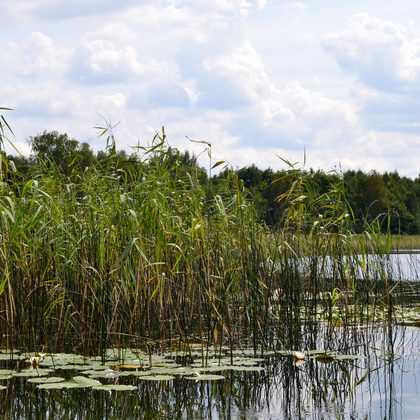
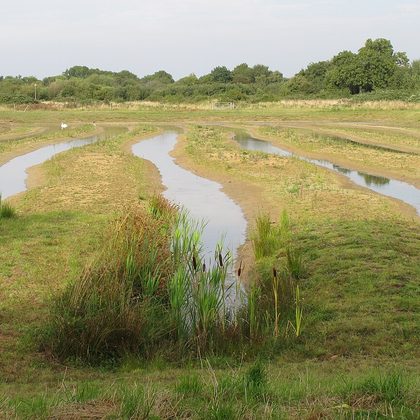
Shallow freshwater marshes, muddy pool edges, flooded meadows and irrigated land. In Europe it turns up along reservoir margins, on the settling beds of sewage works, in wet grassland and on shallow flooded scrapes alongside Greenshank and Ruff. It feeds wading in a few centimetres of water, picking from the surface, with far less of the run-and-stop action of other lapwings.
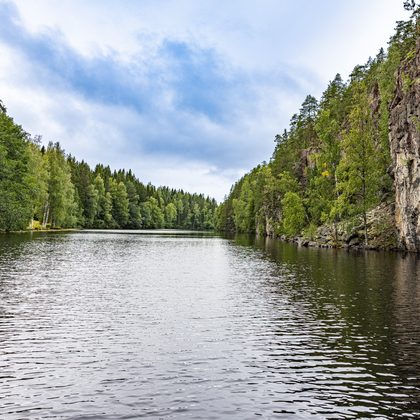
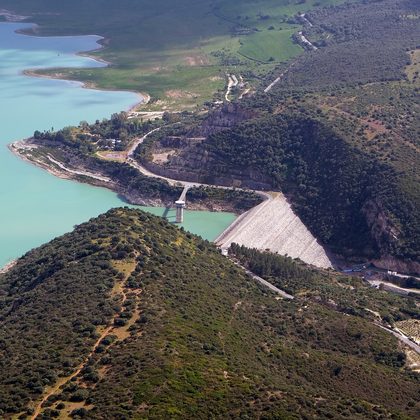
Where the bird is most at home, classified with EUNIS — the European standard for habitats.
Range and movements
Breeds in Iraq, Iran, southern Russia and Kazakhstan, with the breeding range pushing west in recent decades into Turkey and Israel. European records have risen in step. Britain has several dozen records since the first at Packington, Warwickshire in July 1975, several of them long-staying birds that draw crowds to a single flooded scrape. Ireland and the North Sea countries have a handful each.
- Breeding (summer)
- Winter
- Passage
- Migration direction
- dark = core range, pale = thinly spread
Where and when to look
Work shallow flooded scrapes and reservoir margins in May, June and July, and scan the passage waders the bird attaches itself to. Watch for the very long yellow legs and the calm wading gait; in flight the three-toned wing and the all-white tail settle it in a second.
Conservation status
Not globally threatened, and gaining ground westwards. In the core range the species is under pressure from wetland drainage, the Mesopotamian marshes of Iraq being the best-known case, and from the conversion of irrigated land to intensive agriculture. The westward spread makes further European vagrants likely.