All species › Divers › Divers › Yellow-billed loon
Yellow-billed loon
Gavia adamsii | Geelsnavelduiker | Colimbo de Adams
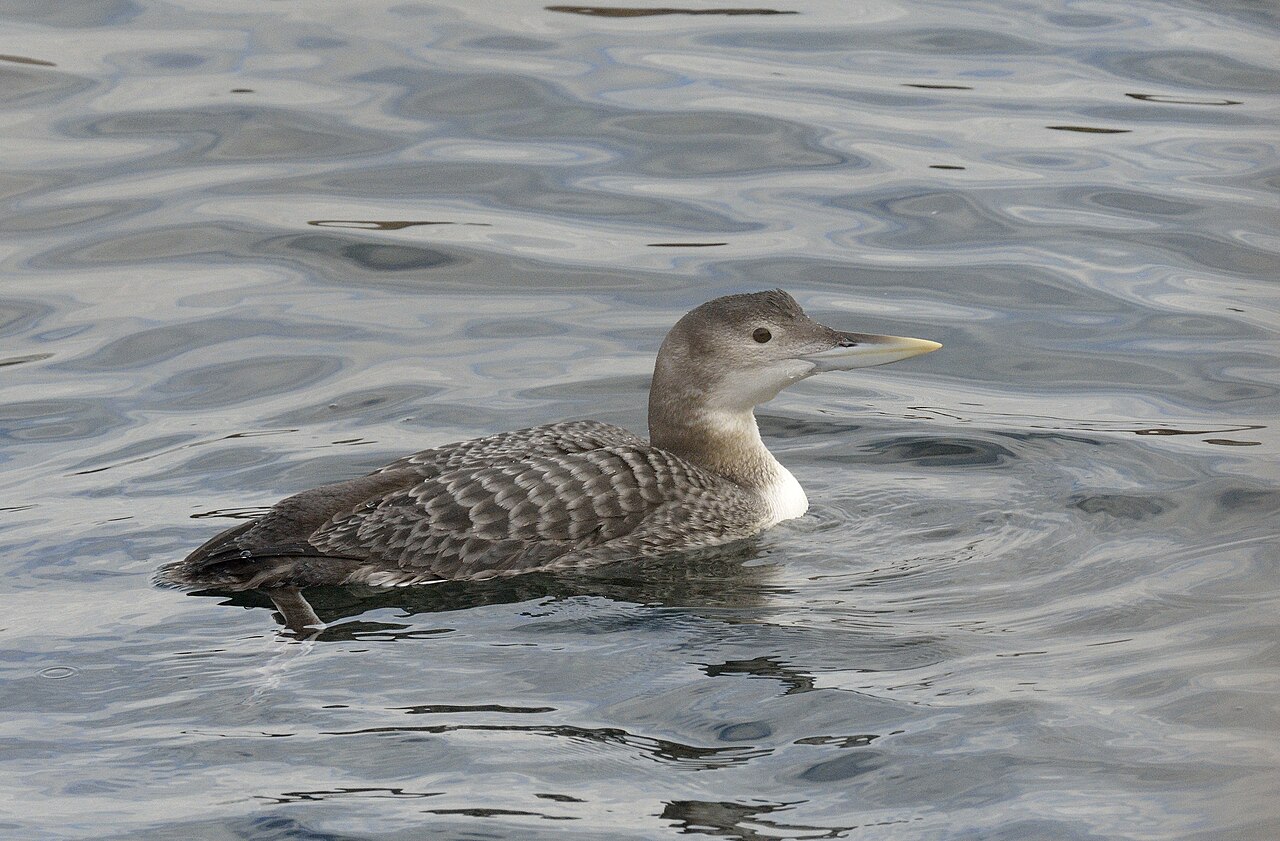
The White-billed Diver is the largest of the five divers and a decided rarity along North Sea coasts. Anyone who finds one usually notices the pale, up-angled bill first, carried tilted towards the sky. A few dozen winter each year off the Norwegian coast; further south it comes down to scattered records.
Voice
Practically silent away from the breeding grounds; anyone who sees one here will normally hear nothing. On the Arctic breeding lakes it gives a long, mournful wail, ah-oo-eeeh, deeper and slower than that of Great Northern Diver, and a hard, laughing ka-ka-ka-ka when uneasy. In flight a short, hoarse kwok, which sometimes betrays a passing bird before it is seen.
No freely licensed recording is available for this species yet.
Identification
The bill is heavy and ivory to pale yellow, with a straight upper edge; only the base of the culmen ridge may be dark, and the outer part always stays pale. Because the lower mandible angles upwards the whole bill looks tilted, and the bird tends to carry it raised as well, giving the profile a rather haughty look. The head is large and angular, with a steep forehead and a bump on the rear crown. In winter the face is strikingly pale and plain, with an isolated dark spot behind the eye; the neck is light and shows little contrast between front and back, so the dark collar stays weak and lacks sharp indentations. The upperparts are brownish with broad pale feather edges, giving a scaled back. In summer the head is black, with two striped neck bands and large white blocks on the back.
Confusion species
Great Northern Diver is where the confusion nearly always starts. In winter it has a grey bill with a dark culmen along its whole length, holds it level, and shows a darker, mottled face with a pale eye-ring and a clear dark collar with a sharp indentation. So check the culmen when in doubt: young Great Northerns can have a pale bill base, but only in White-billed does the outer half of the culmen stay light. Black-throated Diver and the very rare Pacific Diver are much smaller and slimmer, with a thin bill held level and a crisp, straight border between dark hindneck and white foreneck; Pacific Diver also has dark rear flanks with no white patch showing above the waterline. Red-throated Diver likewise has an uptilted bill, but is considerably smaller, lighter in build and finely white-spotted on the back.
Habitat
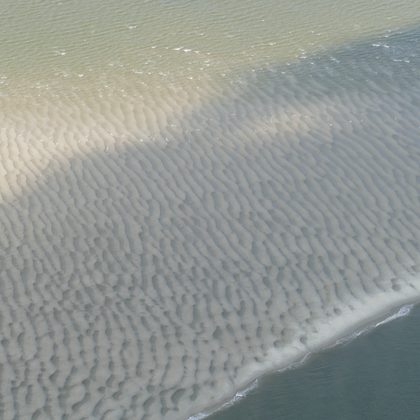
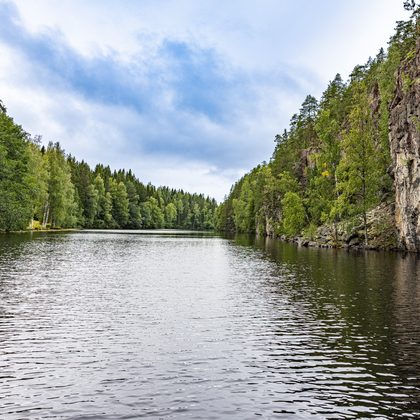
Winters at sea, usually within a few kilometres of the coast over sand and mud bottoms, in fjords, bays and sheltered sounds, where it dives for flatfish, crabs and shrimps. Off Norway the birds often gather at tide-swept places around islands and skerries. Wanderers turn up in harbours, off the surf line and sometimes for weeks on a large inland lake or a river. It breeds on deep freshwater lakes in the Arctic tundra, where it also feeds.
Where the bird is most at home, classified with EUNIS — the European standard for habitats.

Range and movements
Breeds on the Arctic tundra of northern Russia eastwards into Siberia, and beyond that in Alaska and northern Canada. Within the area of this guide it is above all a winter bird of the Norwegian coast: from Varanger to Trøndelag dozens winter each year, with Vesterålen, Troms and Andøya the best-known sites. Along the North Sea coast it is a genuine rarity: the Netherlands has only a small number of records, and Britain gets a handful of birds a winter, mainly in Scotland and eastern England. It has also been recorded in the Baltic, around the British Isles and as far south as Spain.
- Resident
- Breeding (summer)
- Winter
- Passage
- dark = core range, pale = thinly spread
Where and when to look
The best chance is the Norwegian coast in February and March. Take the coastal ferry along Vesterålen, or watch from the quay at Andenes or Bleik; shortly after sunrise the birds feed close inshore with the light behind you. Along the Dutch coast targeted searching achieves little: follow the reports and go at once, because wandering birds often stay a single day. From a seawatching point November and December offer the most, especially in the hours after a north-westerly gale.
Conservation status
Globally Near Threatened (IUCN). The world population is small, in the order of a few tens of thousands of birds, and is slowly falling. The main pressures are drowning in gill nets, oil and gas extraction in the Arctic breeding grounds, disturbance and hunting at the breeding lakes, and the effects of a warming climate on the tundra. Because the birds spread out over an enormous coastline outside the breeding season, numbers are hard to track; the European winter counts say most about what is happening in northern Russia.