All species › Passerines › White-winged chough and apostlebird › Apostlebird
Apostlebird | Struthidea cinerea
Apostelvogel | Corvino apóstol
The Apostlebird is rarely seen alone: it lives in noisy, inseparable parties that shuffle about on the ground, confer in a constant scratchy chatter and burst into a tree together at the slightest alarm. The name refers to that party size — often around twelve, like the apostles — though in practice a group runs from six to twenty birds.
Voice
A continuous grating chatter: hoarse, scraping chek and kyew notes passing back and forth within the group all day, with a sharper, higher alarm when a raptor goes over. It is not song but conversation, and it gives the group away almost always before it is seen. The nicknames lousy jack and happy family come straight out of that racket.
No freely licensed recording has been found for this species yet; what to listen for is described below.
Identification
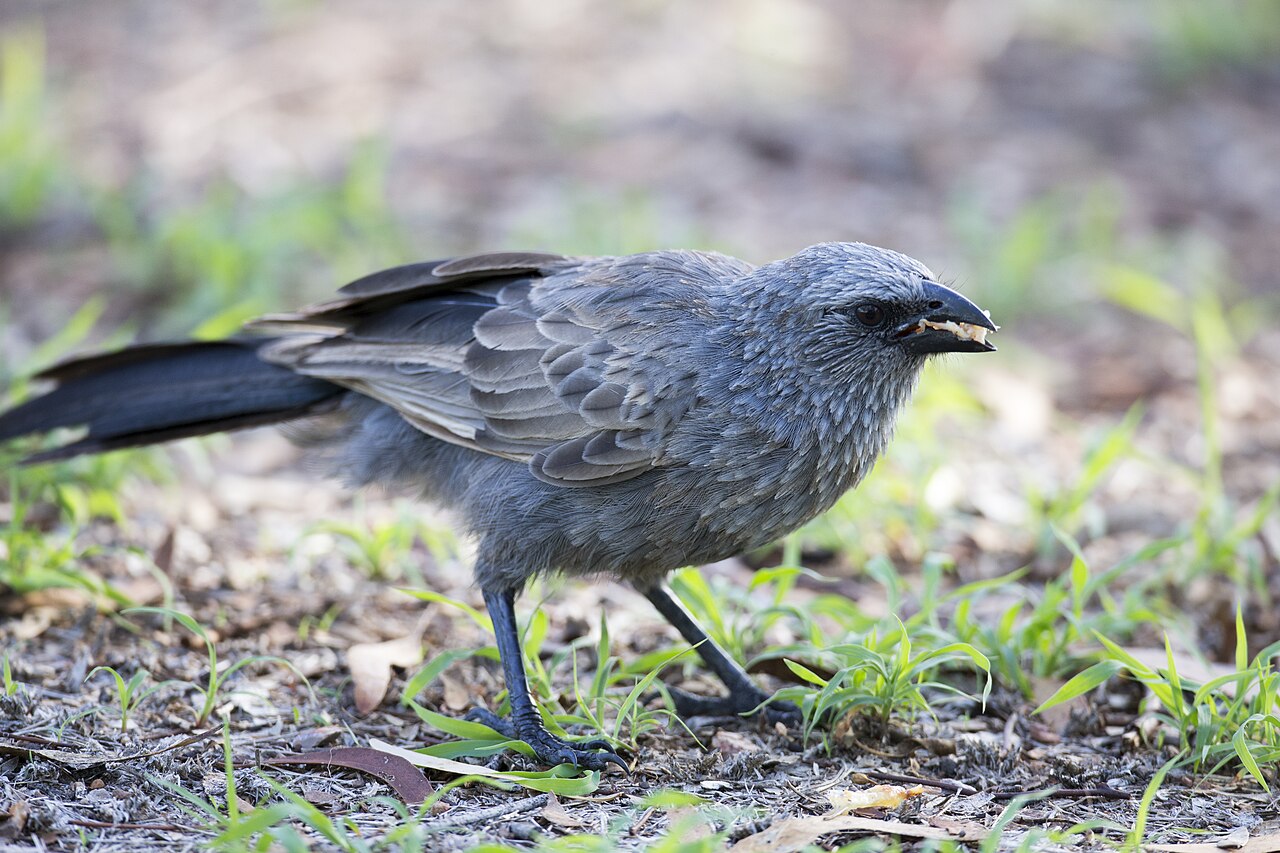
A slim, long-tailed bird of around 33 centimetres, mainly grey, with pale whitish streaking on head, neck and breast and browner wings. The fairly long tail is black and glosses greenish in sunlight. The bill is short, high and deep — almost finch-like in shape — and black, as are the legs. The gait is distinctive: a shuffling walk with the tail raised and much hopping.
Confusion species
White-winged Chough (Corcorax melanorhamphos) is the nearest relative and lives in the same country in comparable groups, but is far larger, all black with big white wing patches that show only in flight, has a red eye and a long, slightly down-curved bill. The Apostlebird by contrast is grey with a short deep bill and shows no white in the wing. Both build a mud bowl for a nest, so a mud nest does not separate them.
Habitat
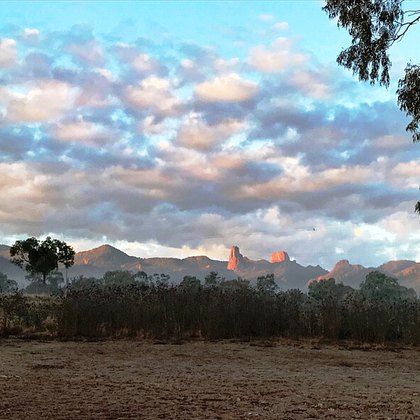
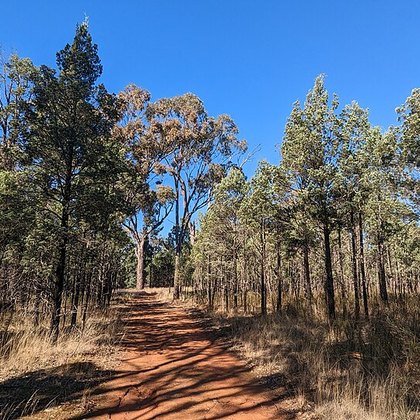
Dry open eucalypt forest and woodland of the interior, often with cypress-pine (Callitris) or casuarina, and river red gum woodland along creeks and rivers. Beyond that, farmyards, roadsides, campgrounds, picnic areas and gardens in country towns, where groups can become very tame. Water is nearly always close by.
Where the bird is most often found, arranged by main group and formation.


Range and movements
The interior of eastern Australia, from the mallee of northern Victoria and eastern South Australia through New South Wales to central and western Queensland, with a separate occurrence in the Northern Territory. Sedentary: groups hold the same ground all year and move only locally in dry times.
- Resident
- dark = core range, pale = thinly spread
Where and when to look
Go by ear: a continuous hoarse chatter just above the ground in dry woodland is nearly always this species. Then count — a single bird is unusual. Look along a horizontal branch for the mud bowl nest; several group members feed the same young, since the species breeds cooperatively with helpers.
Conservation
Least Concern (LC) and common over most of its range, but more fragile at the southern edge: in Victoria it is listed as threatened under state law. The cooperative breeding system, with young of earlier years staying on to help, leaves small isolated groups exposed when habitat becomes fragmented. Keeping old cypress-pine and casuarina woodland with open ground is what matters most.
Scientific name
Struthidea cinerea | Gould, 1837
Gould described the species in 1837, with the interior of New South Wales as type locality; author and year stand without parentheses, as the genus has not changed since. Struthidea is built from Greek strouthos, 'bird' or 'sparrow', with the suffix -ideus, 'resembling'; cinerea is Latin for 'ash grey'. The English and Dutch names go back to the supposed parties of twelve.