All species › Passerines › Wagtails and pipits › Australian Pipit
Australian Pipit | Anthus australis
Australische pieper | Bisbita australiano
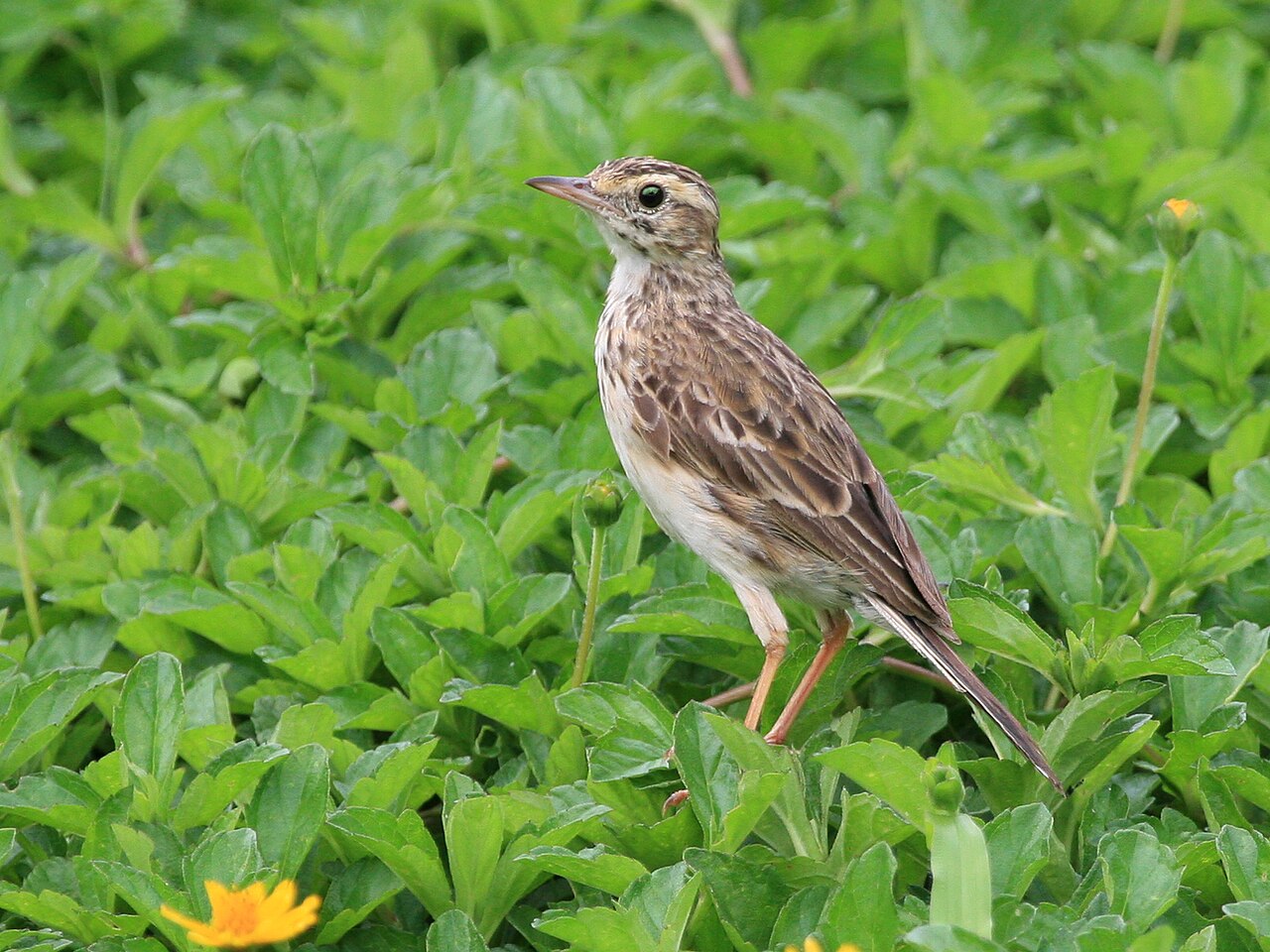
The Australian Pipit is the brown streaked bird that walks on the ground everywhere in Australia where the country is open: along roadsides, across hard-grazed paddocks, on dusty plains and over gibber. It is small, slim and inconspicuous, pumps its long tail continually, and on being approached flies up with an undulating flight and a thin call. It is one of the few birds you meet in almost every Australian landscape outside forest.
Voice
The call is a thin, sharp, slightly rising tsip or chwip, usually given as the bird takes off or during the undulating flight, and often the first sign of it. The song is a simple monotonous repetition of that same high phrase strung into a series, delivered from a post, a fence or a stone, or during a short display flight in which the male climbs, hangs briefly and glides down singing. The whole thing is thin and strikingly unvaried — recognising a pipit by voice in Australia gets you the genus, not the species.
No freely licensed recording has been found for this species yet; what to listen for is described below.
Identification
A slim ground bird of sixteen to eighteen centimetres with a long tail, long legs and a thin pointed bill. The upperparts are sandy to greyish brown with vague dark streaking, the underparts dirty white to pale buff with a clearly streaked breast and an unstreaked belly. The head shows a pale supercilium over a dark eyestripe, and from the base of the bill a dark malar stripe runs down beside the throat — that stripe, with the pale throat below it, gives the face a pattern no lark has. The outer tail feathers are white and catch the eye as soon as the bird flies. The behaviour is characteristic: it walks and runs rather than hopping, stands upright and still, and pumps its tail up and down all the while.
Confusion species
The honest message first: New Zealand Pipit (Anthus novaeseelandiae) is effectively inseparable from this species in the field. The two were split only recently, in the taxonomy this guide follows, from what was previously treated as one species — the bird older books call Richard's Pipit — and the differences lie in averages of size and tone that are of no use to an observer. In practice they are therefore told apart on range alone: a pipit in Australia is this species, a pipit in New Zealand the other. The real field confusion is with Eurasian Skylark (Alauda arvensis), introduced in south-eastern Australia: it is stockier, has a blunt crest, a shorter tail and a heavier bill, does not pump its tail, and shows a white trailing edge to the wing in flight. Singing Bush Lark (Mirafra javanica) is smaller, far shorter-tailed and has a rufous wing panel. Rufous Songlark (Cincloramphus mathewsi) and Brown Songlark (Cincloramphus cruralis) are larger, darker and lack the white tail sides.
Habitat
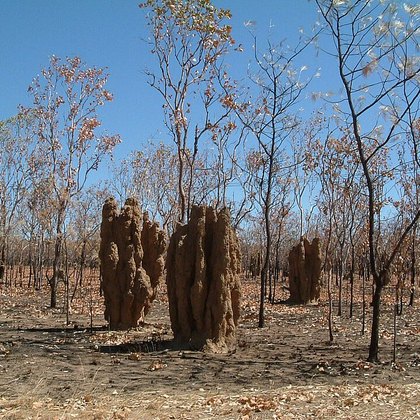
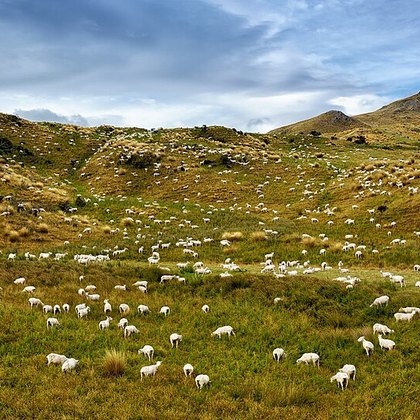
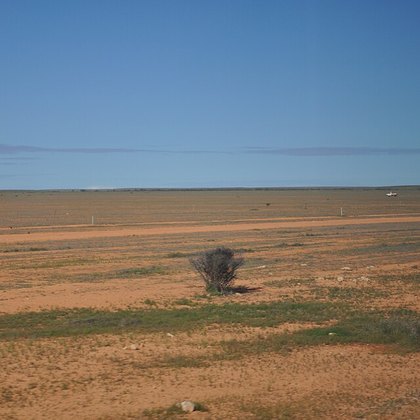
Open, short or bare ground of every kind: Mitchell grassland and other dry swards, eucalypt savanna, saltbush and bluebush plains, gibber, dune edges, verges, stubble and hard-grazed paddocks, and up into the alpine herbfields of the Snowy Mountains. It needs neither water nor trees, only a view and low cover, and nests in a cup on the ground in the shelter of a grass tussock or a stone. Freshly burnt or freshly mown ground positively attracts it.
Where the bird is most often found, arranged by main group and formation.


Range and movements
Spread across virtually all of Australia, from the coast to the inland desert margins, Tasmania included, and one of the few songbirds you may meet both in the wet south-east and on the driest gibber plains. In the arid interior it moves with the rain and the grass growth that follows, so numbers there swing widely from year to year; in the south and along the coast it is resident. Outside Australia the species does not occur under the treatment this guide follows: the pipits of New Zealand belong to New Zealand Pipit.
- Resident
- dark = core range, pale = thinly spread
Where and when to look
Watch the tail, not the plumage. Any small brown streaked bird that runs ahead of the car on an Australian dirt road, stands up straight and then rhythmically pumps its tail is this species — no lark does the pumping. If it flies, look for a white trailing edge to the wing: if it is there you have seen a skylark and not a pipit.
Conservation
Not Evaluated (NE): because the species was split off only recently, it does not yet appear under its own name on the global Red List, and large datasets often do not hold it separately either. On the substance there is little cause for concern: the range covers a whole continent, the species actually thrives on closely grazed land and in farmed country, and it is seen in large numbers everywhere. Locally, heavy grazing, sward thickening or a run of dry years can sharply depress density for a time; no long-term decline is known.
Scientific name
Anthus australis | Vieillot, 1818
Vieillot described the species in 1818, with Sydney in New South Wales as the type locality; the name stands without parentheses because the bird is still in the genus in which it was described. Anthus is Latin anthus, from Greek anthos, the name of a small grassland bird in Pliny and Aristotle; australis simply means southern. For a long time this bird was lumped with the pipits of New Zealand, New Guinea and even Asia into one widespread species under the name Anthus novaeseelandiae, of which australis was then a subspecies; the split this guide follows restores Vieillot's name to its old standing.