All species › Cranes, rails and allies › Cranes › Brolga
Brolga | Antigone rubicunda
Australische kraanvogel | Grulla australiana
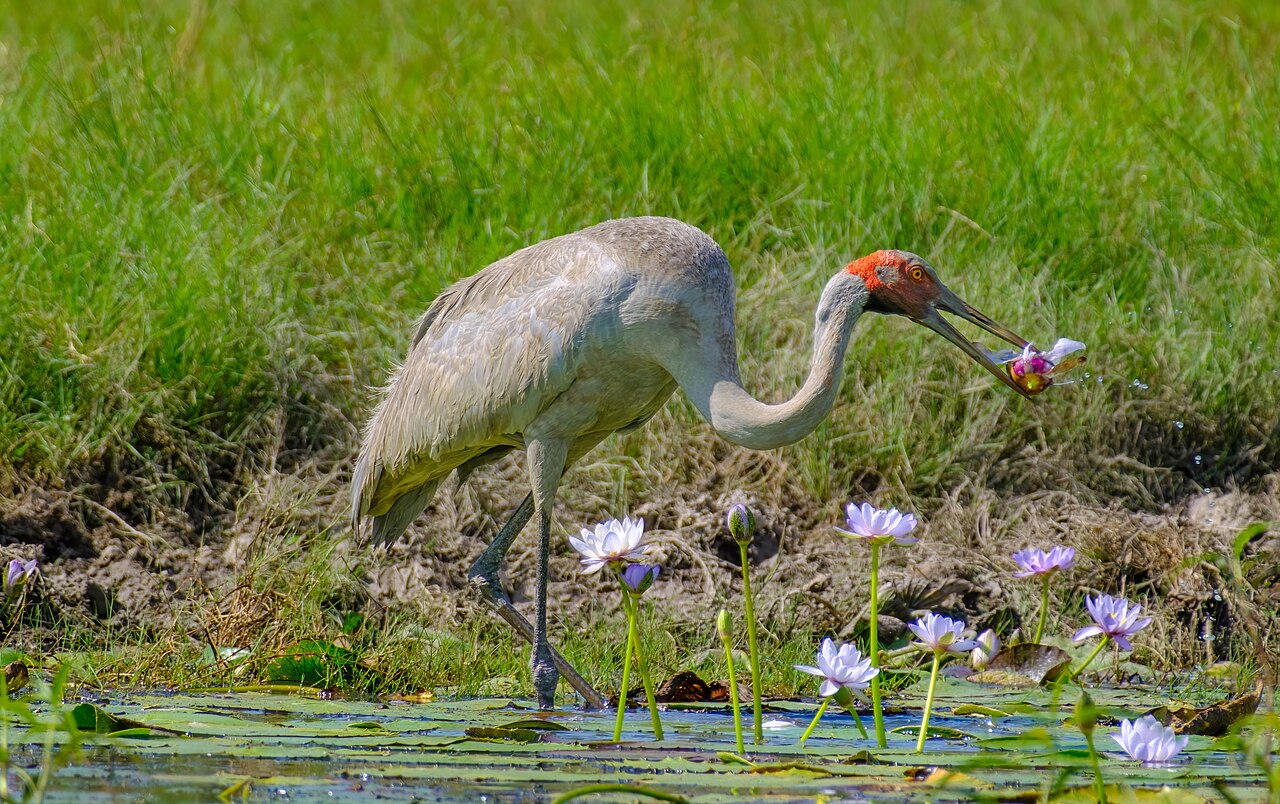
The Brolga is the crane of northern and eastern Australia: silvery grey, standing over a metre, with a bare orange-red band across the back of the head and a black dewlap under the chin. It dances the year round — a tuft of grass thrown into the air, a leap with wings spread — and not only to win a mate.
Voice
The call is a loud, rusty trumpeting that carries for kilometres and is pitched lower than that of the Sarus Crane: garoo-garoo, usually delivered by a pair in unison with heads thrown back. On take-off there is a short, hard bark. Young birds beg with a high, squealing whistle that stays with them well into their first year.
No freely licensed recording has been found for this species yet; what to listen for is described below.
Identification
A crane of a hundred and ten to a hundred and twenty-five centimetres, silvery grey, with black primaries and pale margins on back and wing coverts. The head is bare: a grey-green crown and an orange-red band running from behind the eye across the cheeks to the nape, with a black-bristled dewlap below that hangs low in old males. The legs are grey-black and the bill grey-green. Young birds have a fully feathered head without red and a dark eye. In flight it holds neck and legs extended and circles up on thermals.
Confusion species
The Sarus Crane (Antigone antigone) is the only real confusion and stands on the same stubble in North Queensland: on it the red of the head runs some way down the neck and the legs are pink to coral red, while the Brolga has grey-black legs and red that stops at the nape. The Brolga also carries the black dewlap, which the Sarus lacks, and calls a tone lower. At range a crane in flight can pass for a heron, but herons draw the neck in and cranes hold it out.
Habitat
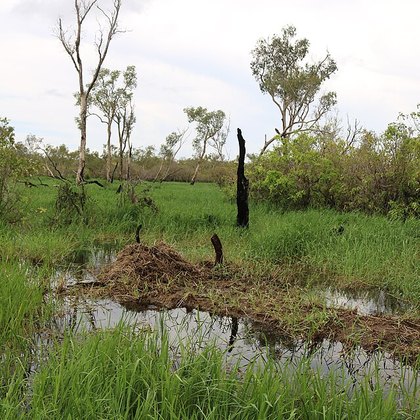
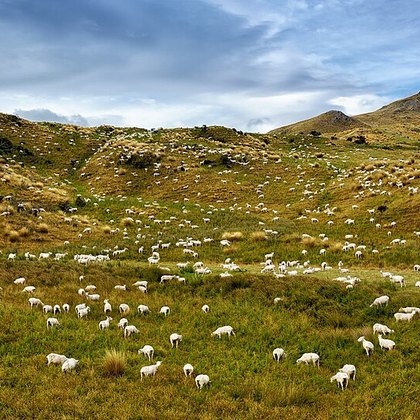
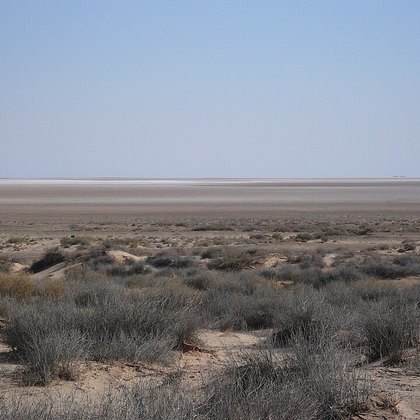
Shallow freshwater marshes, floodplains and lagoon margins, along with grassland, harvested cropland and coastal mudflat. It can take salt water — a gland near the eye excretes the salt — and so feeds in saltmarsh and mangrove creek as well. It avoids deep water and closed forest: it needs an open view and water it can wade.
Where the bird is most often found, arranged by main group and formation.



Range and movements
Tropical northern Australia and the east to central New South Wales and western Victoria, plus southern New Guinea. Its movements are seasonal and poorly known: in the north it breeds in the wet season and gathers in flocks at permanent water through the dry, from June to October. In the south it is the other way round — birds stand in flocks from December to May and only disperse to their breeding swamps with the winter rain of June and July.
- Resident
- dark = core range, pale = thinly spread
Where and when to look
In the dry season go at sunrise to a permanent lagoon in the Gulf country or on the Atherton Tableland and wait for the flock to walk from its roost out to the paddocks. In North Queensland check the head of every bird in the flock: one with red running down the neck is a Sarus Crane, and the two stand together.
Conservation
Least Concern (LC). The north holds an estimated twenty to a hundred thousand birds; the southern population is small, about a thousand birds, and listed as threatened in Victoria. Wetland drainage, blue gum plantations in breeding country, collision with powerlines, grazing and burning press the numbers there, with wind farms an added concern.
Scientific name
Antigone rubicunda | (Perry, 1810)
Perry described the species in 1810 as Ardea rubicunda, among the herons; it long stood as Grus rubicunda and now sits in Antigone, so author and year keep their parentheses. The genus Antigone was introduced by Reichenbach in 1853, after Antigone of the Greek tales, said to have been turned into a long-legged bird. rubicunda means 'reddening', after the bare head. The type locality is Botany Bay, New South Wales; the name Brolga comes from Gamilaraay, a language of northern New South Wales.