All species › Birds of prey › Kites, Old World vultures, eagles and hawks › Brown Goshawk
Brown Goshawk | Tachyspiza fasciata
Australische havik | Azor australiano
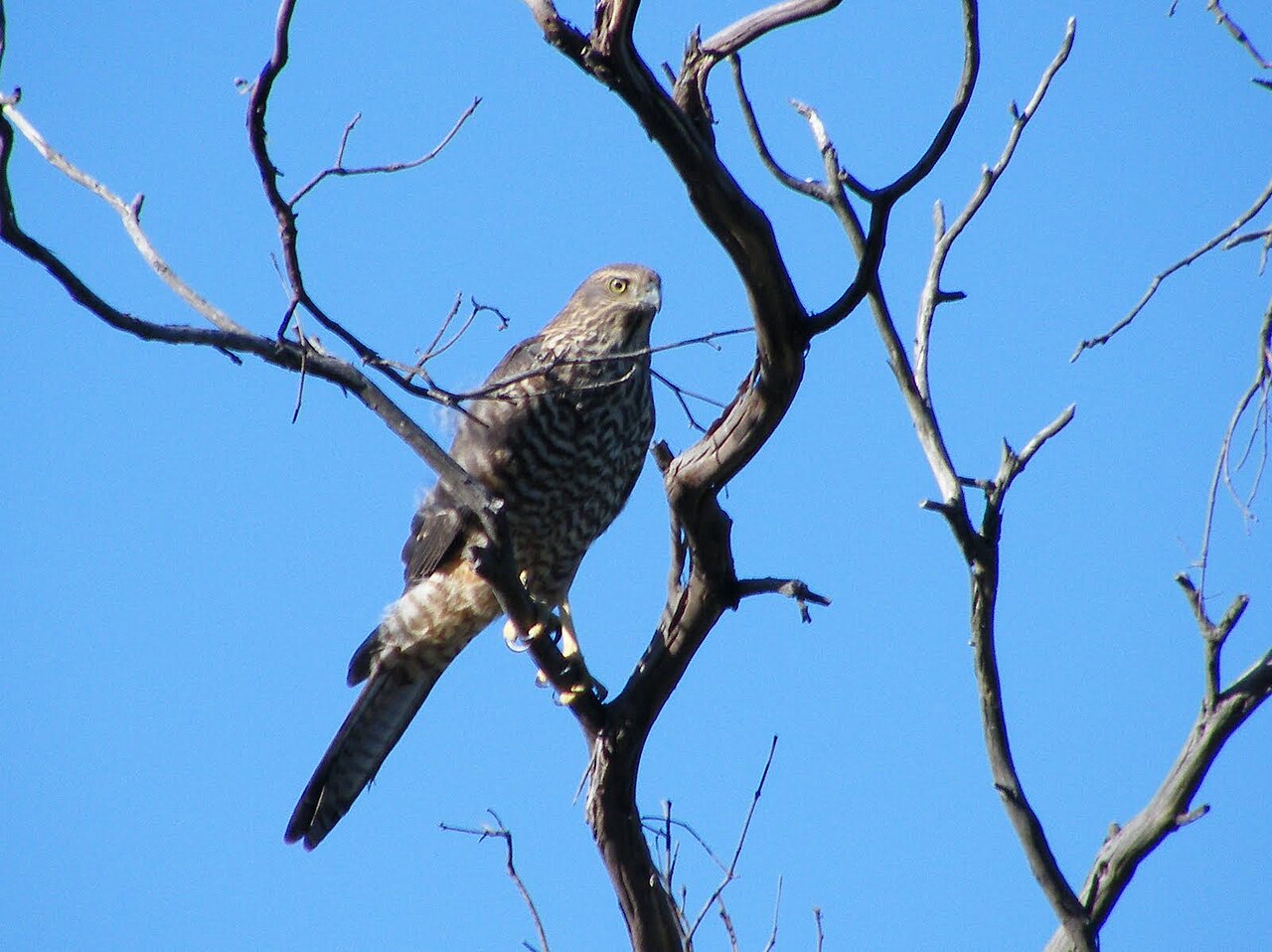
The Brown Goshawk is the largest and heaviest built of the three Australian sparrowhawks and goshawks: a woodland bird with short rounded wings, a long rounded tail and a rufous collar on the nape, dropping onto prey from a hidden perch in a short burst. The heavy brow ridge over the yellow eye gives it a permanent frown.
Voice
A loud, rising and fairly slow keek-keek-keek, fired off in runs of ten or more, and besides that a slow drawn-out ee-you-wick, ee-you-wick heard mainly at the nest. The female calls markedly deeper and slower than the male. In spring the call carries far through closed forest.
No freely licensed recording has been found for this species yet; what to listen for is described below.
Identification
Thirty-seven to fifty-five centimetres, the female half as long again as the male and much heavier. The upperparts are slate-grey to brown, with a rufous collar across the upper nape; the underparts are finely barred rufous on white. Three things decide it: the tail tip is rounded, the trailing edge of the wing is straight on a soaring bird, and the legs are stout and thick, with a middle toe that does not reach past the claws of the others. The eye is bright yellow and set deep under a heavy brow. Young birds are brown with teardrop streaks on the breast and bars on the belly.
Confusion species
Collared Sparrowhawk (Tachyspiza cirrocephala) is the classic trap. It is slimmer, with a square-cut tail tip with sharp corners that even looks slightly notched when the tail is closed, a curved trailing edge to the wing, strikingly thin spindly legs with a long middle toe projecting well past the other claws, and an open, staring look with no heavy brow; its call is higher and more hurried. Size alone will not do it: a female Collared Sparrowhawk of thirty-five to thirty-eight centimetres measures exactly as much as a male Brown Goshawk. Grey Goshawk (Tachyspiza novaehollandiae) is plain grey or wholly white, has a dark red iris and lacks both the rufous collar and the fine barring.
Habitat
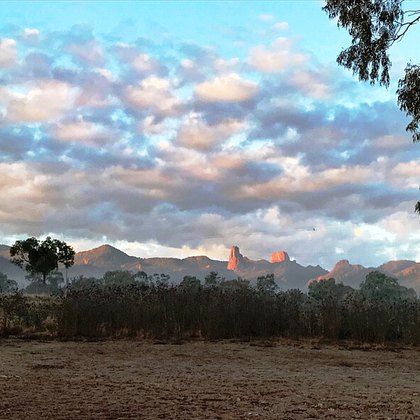
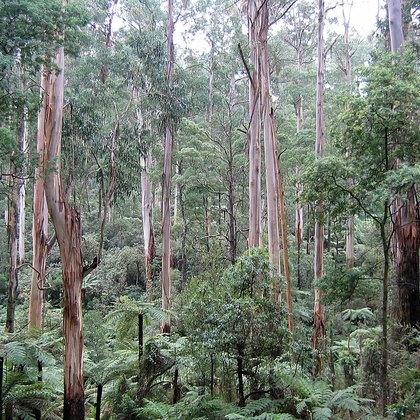
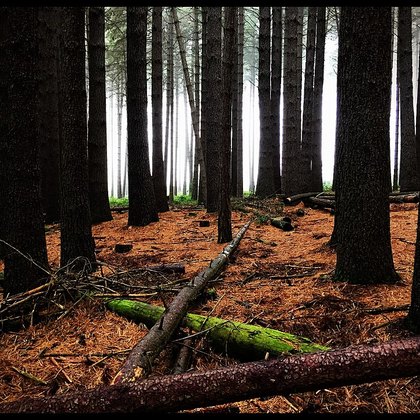
Almost any timbered country: dry and wet eucalypt forest, riverine woodland along creeks, mallee, casuarina woodland, pine plantations and the well-grown gardens and parks of the suburbs. It needs cover to surprise from, so a dense shrub layer or a line of tall trees counts for more than the size of the woodland.
Where the bird is most often found, arranged by main group and formation.


Range and movements
Across the whole of mainland Australia and Tasmania, from the tropical north coast to the southwest, and scattered far into the dry interior wherever riverine timber stands. It does not occur in New Zealand. Beyond this guide's window it lives in New Guinea, the Lesser Sundas, New Caledonia and Vanuatu. Part of the southern population moves north in winter.
- Resident
- dark = core range, pale = thinly spread
Where and when to look
Let the songbirds do the work: a sudden hush or a mob of scolding honeyeaters at a clump of trees nearly always gives away a goshawk or sparrowhawk. Once the bird is perched, look first at the tail tip — rounded points here — and then at the legs, which in this species are thick and short-toed. On a soaring bird the straight trailing edge of the wing is the quickest mark.
Conservation
Least Concern (LC) and common right across the continent, a species that locally even gains from dense plantations and leafy suburbs. Losses come mostly from window strikes during a chase, collisions along forest edges, secondary rodenticide poisoning through prey, and illegal shooting at pigeon lofts and poultry runs.
Scientific name
Tachyspiza fasciata | (Vigors & Horsfield, 1827)
Vigors and Horsfield described the species in 1827 as Astur fasciatus; because it was later moved to another genus, author and year stand in parentheses. The genus Tachyspiza was introduced by Kaup in 1844 and brought back into use in 2024, when molecular work showed that Accipiter as formerly understood was not a natural group; the name is from Greek takhus, 'swift', and spizias, 'hawk'. fasciata is Latin for 'banded' and refers to the barring of the underparts. The type locality is New South Wales.