All species › Passerines › Australasian robins › Eastern Yellow Robin
Eastern Yellow Robin | Eopsaltria australis
Groenstuitvliegenvanger | Petroica amarilla
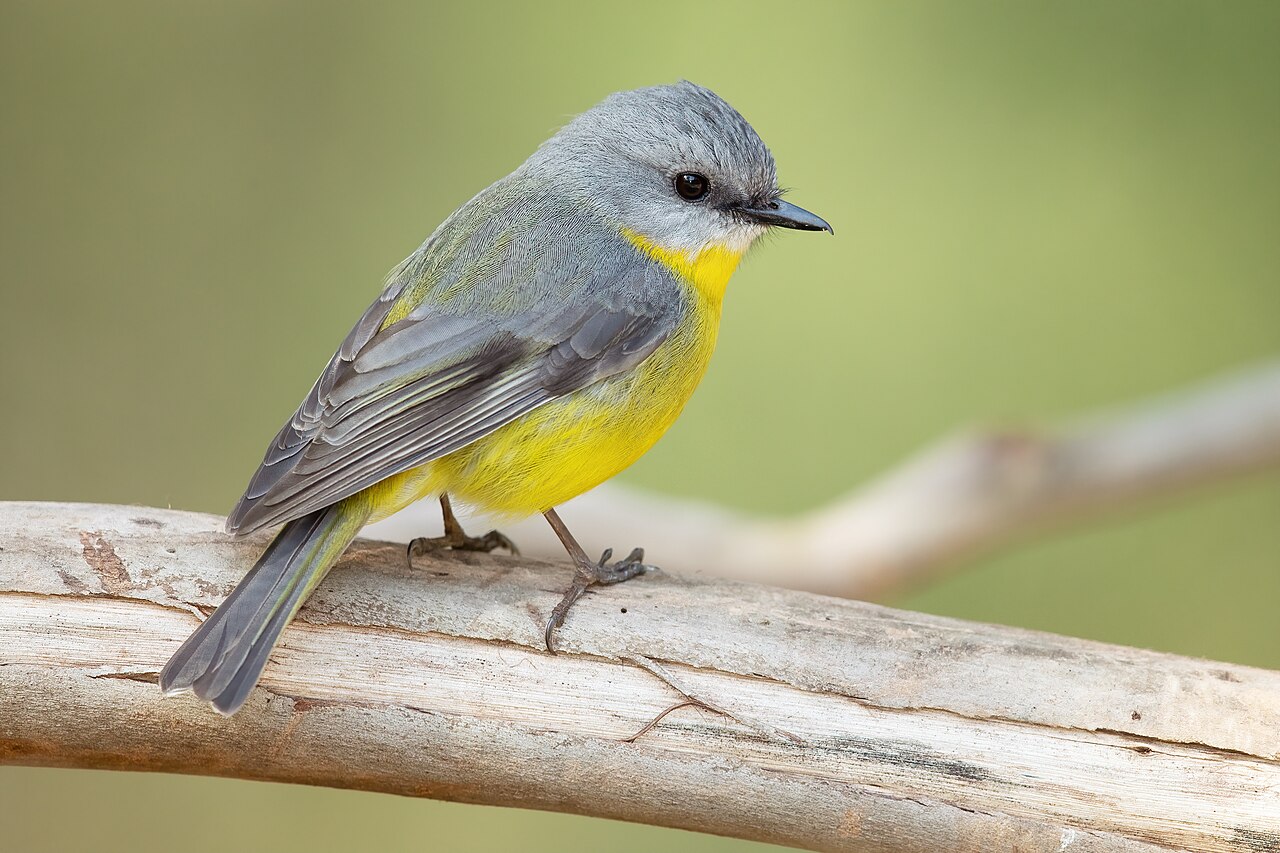
The Eastern Yellow Robin is the best-known yellow robin in Australia and, for many people on the east coast, simply the bird in the garden: grey head, white throat, and bright yellow from the breast to under the tail. It clamps itself sideways to a trunk, looks down at the ground with large dark eyes, and lets itself be watched at close range without fuss. It is also the first bird to sing in the morning and the last to fall silent at night.
Voice
A series of sharp, high, piping whistles — chop chop chop — that begins a good half hour before sunrise and sometimes sounds again well after dark; it is one of the very first sounds of the Australian morning. Alongside it a soft, low rattling churr between partners and a hard, sharp scolding when a snake or a cat appears. In the breeding season there is a subdued, mixed song into which it inserts short passages from other species.
No freely licensed recording has been found for this species yet; what to listen for is described below.
Identification
Fifteen to sixteen centimetres and a little over twenty grams; a compact bird with a big head, large dark eyes and a short bill. Head, neck and upperparts are grey, the throat whitish, and from the upper breast down the whole underside is bright yellow. The rump is the key: olive-green in southern birds, bright yellow in the northern form chrysorrhoa. Wing and tail are grey-brown and the legs long for hunting between perch and ground. The sexes are alike; young birds are brown with rusty markings and lack the yellow.
Confusion species
Within the genus the division runs mainly on how much grey shows from the front, and on range. Eopsaltria griseogularis of the west and South Australia has a grey throat and a grey breast, so the yellow only begins on the belly; in this species only the throat is whitish and the yellow starts high on the breast. There is barely any overlap. Eopsaltria capito, which does occur alongside it in the east, is smaller, duller and paler yellow, has a conspicuous pale eye-ring and a pale bill base, and keeps strictly to rainforest and vine thicket, whereas this species is everywhere. Eopsaltria georgiana is entirely white below and western only. Pachycephala pectoralis is larger, heavier-billed, and the male has a black breast band.
Habitat
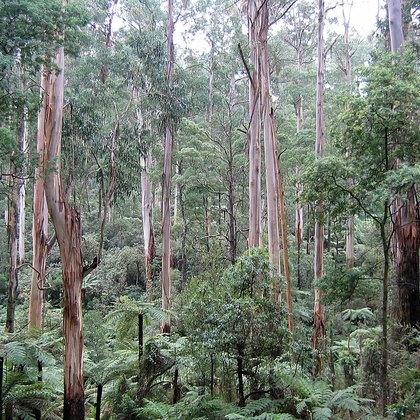
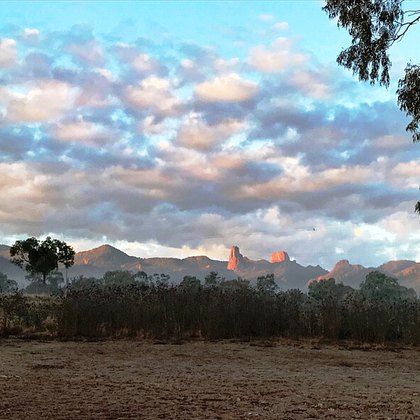
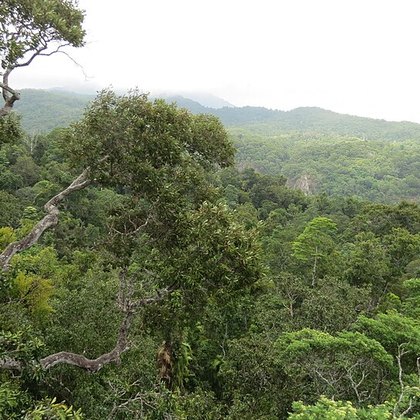
Almost any wooded ground with a shrub or stump layer: wet and dry eucalypt forest, woodland, rainforest edge, creek vegetation, mallee, coastal dune scrub — and in settled country the garden, the city park and the cemetery, as long as there is shade and open ground. It hunts from a low, vertical perch against a trunk and drops onto prey in the litter. The cup nest of bark and cobweb, finished with lichen, sits in a fork; young from earlier broods often help raise the next.
Where the bird is most often found, arranged by main group and formation.


Range and movements
The eastern rim of the continent, from northern Queensland near Cooktown along the whole east coast south through New South Wales and Victoria into south-eastern South Australia. Inland it reaches as far as the trees do. It is by far the most widespread species in the genus and occurs from sea level to high in the Great Dividing Range. It is sedentary on a fixed territory; only in the mountains do some birds drop to lower ground in winter.
- Resident
- dark = core range, pale = thinly spread
Where and when to look
You need do nothing but get up early. In any coastal park or forest reserve between Cairns and Melbourne this is the bird you hear first and that then stays put on a trunk right beside the path. Use it to calibrate your eye: look at exactly where the yellow begins and what colour the rump is as the bird flies off. With that picture in mind you will later recognise Eopsaltria griseogularis in the west at once, by the much larger grey field on the breast.
Conservation
Least Concern (LC). The species is common, widespread and does well in gardens, parks and forest remnants; a shady garden with open ground and some shrubs holds it effortlessly. Even so, a steady decline is reported in the dry, fragmented farming country inland of the coastal belt, with the same cause as for so many woodland birds: remnants too small, no shrub layer, and domination by the Noisy Miner Manorina melanocephala, which drives other birds out of fragmented woodland. Cats and too-frequent fire management do the rest.
Scientific name
Eopsaltria australis | (Shaw, 1790)
Shaw described the bird in 1790 as Motacilla australis, from specimens taken in New South Wales; because it was later placed in another genus, author and year stand in parentheses. Eopsaltria is formed from Greek eos (dawn) and psaltria (female harpist) — the dawn singer, which fits no species in the genus better than this one. australis is Latin for southern. The Dutch name refers to the olive-green rump of the southern birds, precisely the character in which the northern form chrysorrhoa, the golden-rumped one, differs from them.