All species › Passerines › Bowerbirds › Fawn-breasted Bowerbird
Fawn-breasted Bowerbird | Chlamydera cerviniventris
Okerbuikprieelvogel | Pergolero pechipardo
The only bowerbird of its genus without a lilac nape crest, and the only one that decorates its bower almost entirely in green: fresh leaves and green berries, replaced daily as soon as they wilt. The range lies almost wholly in New Guinea; in Australia it is confined to the north-eastern tip of Cape York.
Voice
At the bower a hard scraping sound: hissing, rattling and a grinding churr, broken by short hoarse calls. This species mimics too, though less lavishly than the inland ones, chiefly other birds of the vine thicket and the savanna edge. The contact call is a short nasal note that carries through the scrub.
No freely licensed recording has been found for this species yet; what to listen for is described below.
Identification
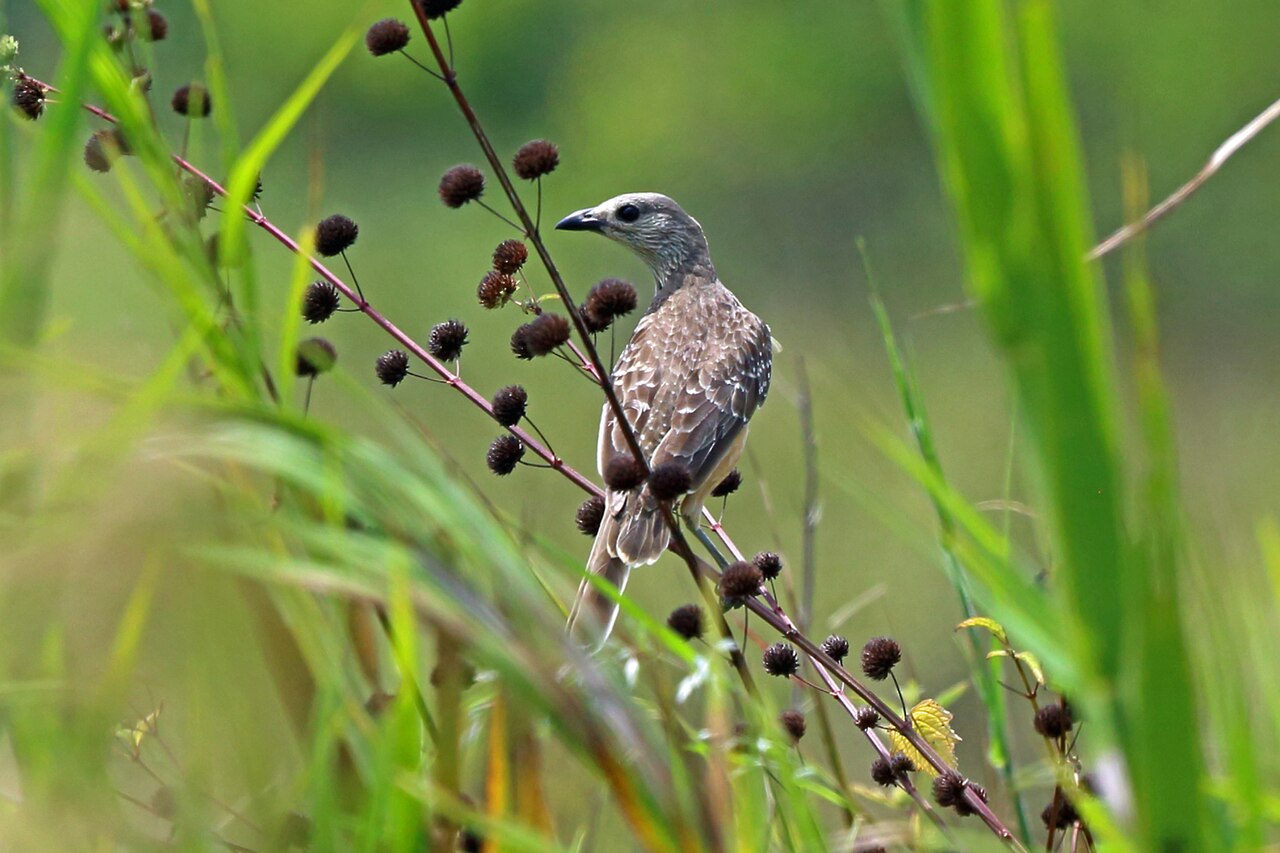
A grey-brown bowerbird of 28 to 32 centimetres, sown above with ochre to cream spots on a dark ground, with a dark, lightly flecked crown. The decisive mark is underneath: breast, flanks and belly are warm ochre to fawn, where every other species in the genus is grey or pale buff. Just as decisive is what is missing: this species carries no lilac-pink nape crest, in either sex. The sexes cannot be told apart. The bill is stout and dark, the tail long.
Confusion species
The Great Bowerbird (Chlamydera nuchalis) is the only relative it shares ground with — both occur on Cape York — but that bird is larger, longer-tailed, far plainer grey, grey rather than fawn below, and the male carries the lilac nape crest. The Spotted Bowerbird (Chlamydera maculata) lives much further south and likewise has the nape crest and pale underparts. When in doubt, look at the bower: this species lays out almost nothing but green leaves and berries, while the others gather chiefly white, grey and glittering things.
Habitat
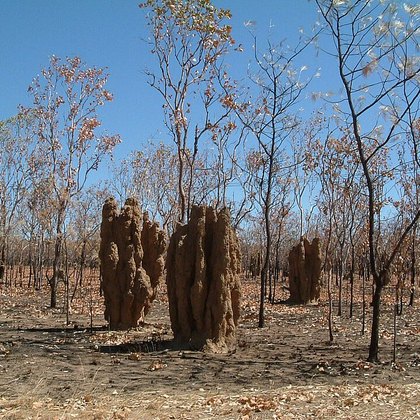
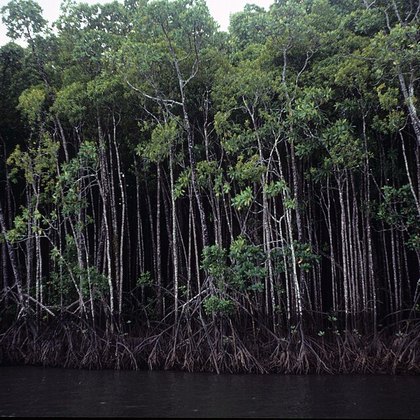
The zone between forest and open country: monsoon forest and vine thicket, scrub along creeks, the edges of eucalypt savanna, and notably often the landward side of mangrove and the rank growth around gardens and villages. The bower stands in dense scrub, usually on a substantial platform of sticks that lifts the whole structure off the ground — that platform is heavier in this species than in its relatives.
Where the bird is most often found, arranged by main group and formation.


Range and movements
Most of the range lies in New Guinea, across the south and east of that island, including the coastal plains and nearby islands. In Australia only north-eastern Cape York in Queensland, roughly from the Iron Range north to the tip of the peninsula. Sedentary, with no migration; the Australian population is small and wholly derived from the New Guinea range.
- Resident
- dark = core range, pale = thinly spread
Where and when to look
In Australia this is a species for those who drive on to the far north of Cape York. Search the edges of vine thicket and scrub for the bower, which often stands out against the brown leaf litter through its fresh greenery. On a bird in the field, watch the belly: warm ochre means this species, grey means the Great Bowerbird. There is no need to look for a nape crest, because there is none.
Conservation
Least Concern, with a large range in New Guinea where the bird is common and does well around village edges and gardens. The Australian population is small and sits at the edge of that range; it is not separately threatened, but it depends on the small areas of vine thicket on Cape York, which are vulnerable to fire from the surrounding savanna and to trampling by stock and feral pigs.
Scientific name
Chlamydera cerviniventris | Gould, 1850
Gould described the species in 1850, with Cape York in northern Queensland as type locality; author and year stand without parentheses, as the genus has not changed since. Chlamydera is built from Greek chlamys, 'cloak', and dere, 'neck', after the nape collar of its relatives — the very thing this species lacks. cerviniventris is Latin: cervinus, 'fawn-coloured', and venter, 'belly'. The English, Dutch and Spanish names all point to that same ochre underside.