All species › Waders, gulls and terns › Plovers and lapwings › Grey Plover
Grey Plover | Pluvialis squatarola
Zilverplevier | Chorlito gris
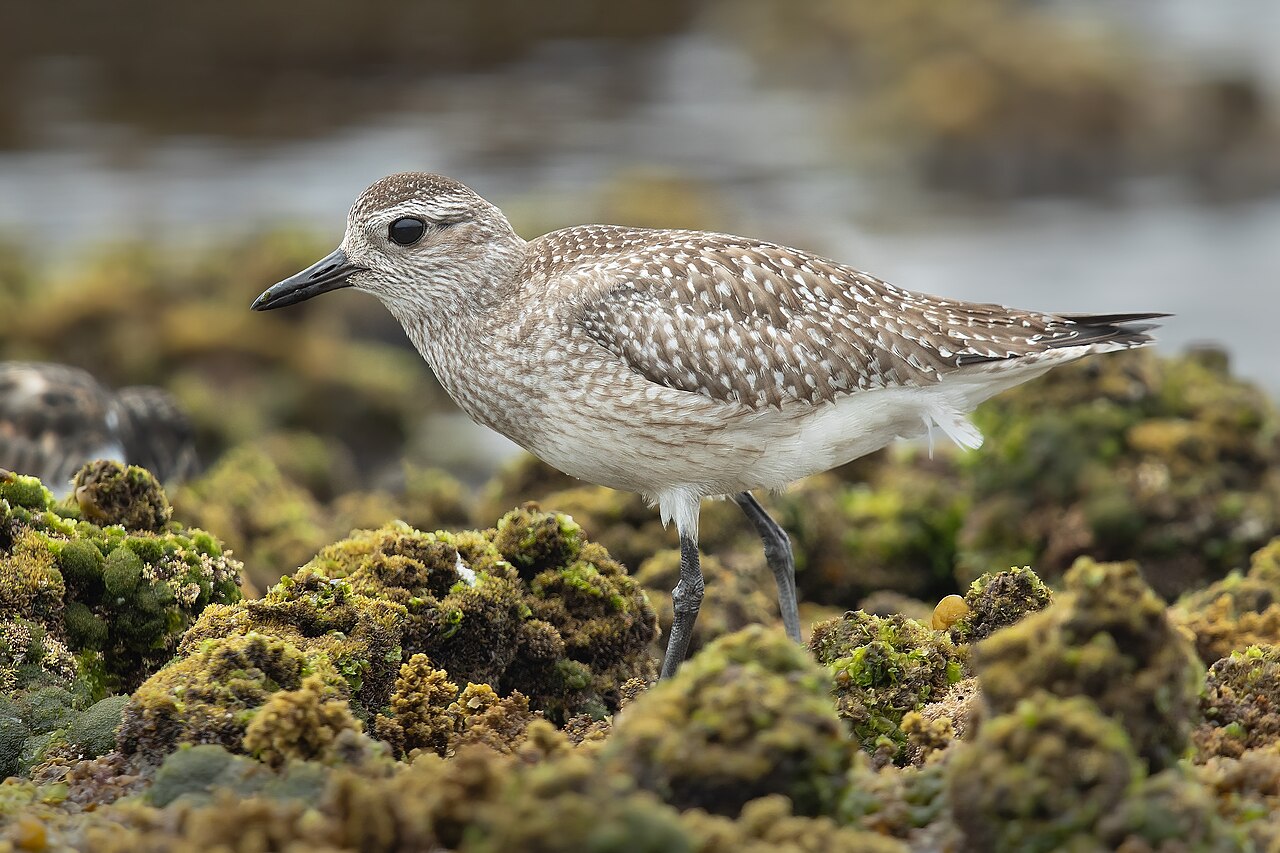
The Grey Plover breeds on the Siberian tundra and winters here: from September to April it stands on Australian tidal flats, which is to say through this hemisphere's summer. It is the largest and heaviest built of the golden plovers, and the black axillaries make it unmistakable in flight.
Voice
The call is a clear, plaintive three-syllable whistle with a dip in the middle note: plee-oo-ee, usually in flight and audible at long range. On the flat it is otherwise silent; disturbed, it calls once and flies. In March and April, among flocks gathering to leave, snatches of song are sometimes heard.
Recording: Philippe Grange — CC0 · ARS-EN-RÉ - Déviation (near Ars-en-Ré), Charente-Maritime, Nouvelle-Aquitaine, France · xeno-canto
Identification
A stocky plover of twenty-seven to thirty centimetres with a large head, a heavy black bill and an upright stance. In non-breeding plumage it is grey with finely spangled upperparts, a greyish streaked breast and a white belly; in breeding plumage, which late birds take on in March and April, face, breast and belly are black inside a broad white border. In flight every plumage shows the white rump, a white wingbar and above all the black axillaries. Young birds are more yellowish spangled and more finely streaked on the breast.
Confusion species
The Pacific Golden Plover (Pluvialis fulva) often stands beside it and is smaller and slimmer, with golden-spangled upperparts, a finer bill, longer legs and, in flight, a grey underwing with no wingbar. In a mixed roost the grey bird can also suggest a Great Knot, but that has a longer bill, walks on quickly as it probes and stands in dense packs, while the Grey Plover spaces itself out. In doubt, wait until it moves of its own accord: the black armpit decides.
Habitat
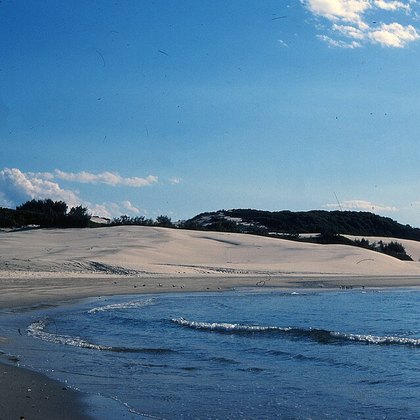
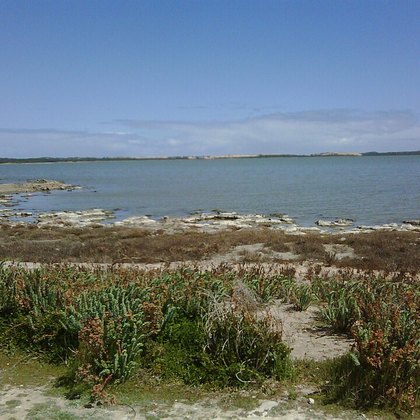
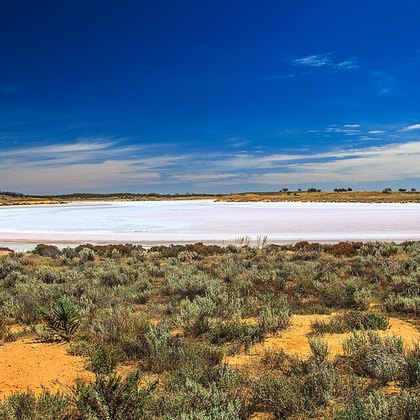
Mudflat, sandflat and the wide intertidal plains of estuaries, along with saltworks, saltmarsh and sandy beach. It keeps its distance from others of its kind and defends a feeding area on the flat, so it is usually seen alone or in twos and only joins the crowd at the high-tide roost. It hardly uses the interior at all: it stays tied to the tide.
Where the bird is most often found, arranged by main group and formation.

Range and movements
A breeder of the tundra of Siberia, Alaska and arctic Canada; the birds in this region come from northern Siberia and follow the East Asian–Australasian Flyway. It is here from September to April, leaving northward in March and April; some immatures stay through the Australian winter. The strongholds are in the northwest, at Eighty Mile Beach and Roebuck Bay, and in the gulfs of South Australia; in New Zealand it is a scarce annual visitor.
- Resident
- Non-breeding visitor
- dark = core range, pale = thinly spread
Where and when to look
Go to a high-tide roost on a rising tide and look along the line of waders for the pale, large-headed plover standing a little apart. Do not flush the flock to identify it, but wait until it shifts of its own accord; the black armpit shows on the first wingbeat.
Conservation
Vulnerable (VU), the category AviList carries for this species after a decline was established across its range. On the East Asian–Australasian Flyway the loss of the tidal flats of the Yellow Sea weighs heaviest, since the birds must refuel there both going north and coming south. In Australia itself counts are falling at most sites, including sites where the flat itself has been left alone.
Scientific name
Pluvialis squatarola | (Linnaeus, 1758)
Linnaeus described the species in 1758 as Tringa Squatarola; because it was later placed in another genus, author and year stand in parentheses. The genus Pluvialis was introduced by Brisson in 1760, after Latin pluvia, 'rain': the plover was held to announce rain. squatarola goes back to sgatarola, a Venetian name for plover-like birds. The type locality is Europe, restricted by Hartert to Sweden.