All species › Gamebirds › Partridges, pheasants, grouse and allies › King Quail
King Quail | Synoicus chinensis
Chinese dwergkwartel | Codorniz azul china
The King Quail is the smallest gamebird in the world: a ball of thirteen centimetres and barely forty grams that lives in dense damp grass along the tropical and eastern coasts of Australia. The male is one of the handsomest small birds in the country — slate-blue breast, chestnut belly and a black-and-white throat pattern — but anyone who gets a look at one in the field has been lucky.

Voice
The call is a high, thin, plaintive whistle of two or three notes, tee-yoo or tee-tee-yoo, the last note falling, low in volume and monotonously repeated; it is given mostly in the last hour before sunset and at dusk, and in the breeding season at night as well. Outside the breeding season it is largely silent. A flushed bird gives a fast rattling tir-tir-tir and otherwise only the soft hum of its wings.
No freely licensed recording has been found for this species yet; what to listen for is described below.
Identification
Twelve to fifteen centimetres, round, short-tailed and small-headed, about the bulk of a fat sparrow. The male has slate-blue forehead, face, breast and flanks, a chestnut belly and undertail, and a sharply drawn black-and-white pattern on chin and throat — a black throat patch ringed with white and a white line across the cheek. Back and wings are dark brown and finely marked, the legs bright yellow. The female looks like a miniature Brown Quail: dark brown with faint streaking, but with a white throat and clearly barred underparts. In flight the wings are narrow and pointed and there is no pale wing panel at all.
Confusion species
Brown Quail (Synoicus ypsilophorus) is the main source of confusion, above all between the females: the Brown Quail female is half again as large, has no white throat, is chestnut below with fine vermiculation rather than crisply barred, and has orange-yellow rather than bright yellow legs. Stubble Quail (Coturnix pectoralis) is far paler, clearly streaked and a bird of dry open country; the two rarely share ground. Button-quails (Turnix) are the real stumbling block in the wet grass of the north: Red-backed Button-quail (Turnix maculosus) is just as small, but lacks a hind toe, has a yellow bill and shows pale coverts against dark primaries in flight — and it is precisely that pale wing panel that King Quail does not have. The male is unmistakable.
Habitat
Dense, low, damp grass: sedgeland, the margins of freshwater swamps and creeks, wet coastal grassland, rank pasture and heath with a closed grassy floor. Also ferns, sugar cane and fallow ground, as long as the soil stays damp and the cover runs right down to the ground. It avoids dry open plains and closed forest, and generally stays within a few tens of kilometres of the coast.
Where the bird is most often found, arranged by main group and formation.
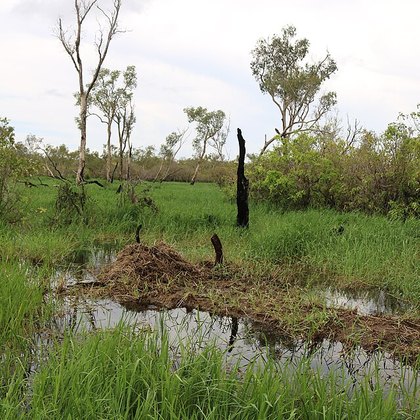

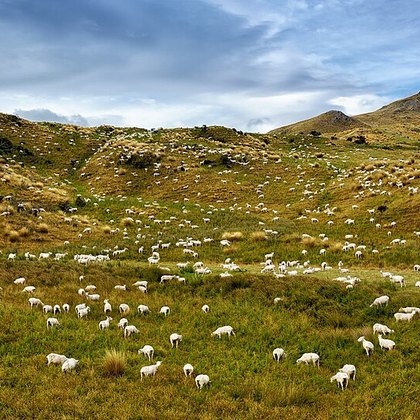
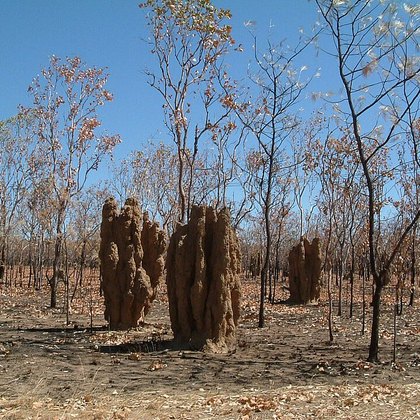
Range and movements
Patchily spread across northern and eastern Australia: from the Kimberley and the Top End — the subspecies colletti — along Cape York and the Queensland coast southward, and as subspecies victoriae through New South Wales, roughly from the Sydney region northwards, to eastern Victoria. It is absent from South Australia and Tasmania and does not reach New Zealand. Along the southern edge of its range it has declined sharply and is now very local.
- Resident
- dark = core range, pale = thinly spread
Where and when to look
Sit at the edge of a sedge swamp or a wet coastal grassland in the late afternoon and listen for the thin mournful whistle; that is usually the only way to record the species. Do not walk into the grass yourself — it sits tight until you are almost on top of it and then flies fifteen metres. On that short flight look at the wings: narrow, pointed and with no pale panel means this species; broad wings with a pale panel mean a button-quail.
Conservation
Least Concern (LC) worldwide — the range runs from southern China and South-East Asia to Australia — but along the southern edge of that range things go badly. In Victoria it is listed as endangered; the wet coastal grasslands and sedgelands it depends on there have almost all been drained, cleared or heavily grazed. In Queensland, the Northern Territory, Western Australia and New South Wales it is considered secure. It is also one of the most widely kept aviary birds in the world, which lends an impression of abundance the wild population does not always bear out.
Scientific name
Synoicus chinensis | (Linnaeus, 1766)
Linnaeus described the species in 1766 as Tetrao chinensis, from a plate by Edwards; the later move to another genus puts author and year in parentheses. chinensis means 'of China', and the type locality is indeed Nanking, although the range in fact covers half of Asia and Australia. The species has long been placed in Excalfactoria and in Coturnix; since 2021 it sits again in Synoicus, the genus Gould introduced in 1843, from Greek sunoikos, 'living together'.