All species › Waders, gulls and terns › Sandpipers and allies › Latham's Snipe
Latham's Snipe | Gallinago hardwickii
Japanse snip | Agachadiza japonesa
Latham's Snipe is the snipe most Australians mean when they say snipe: the largest of the three species that reach the continent, and the only one that comes far south. The entire world population breeds in Japan and adjacent Russia and spends the southern summer in eastern Australia. You usually see it for one second only, as a brown, long-billed bird that explodes from under your feet with a rasping call and zigzags away over the reeds.
Voice
On the non-breeding grounds it is all but silent; the only sound most observers ever hear is the alarm call on flushing, a harsh, hoarse krek krek given once or twice and then stopped. A badly startled bird runs several notes together. The display repertoire, with the tail feathers humming in the dive, belongs to the breeding grounds in Japan and falls outside the map window of this guide.
No freely licensed recording has been found for this species yet; what to listen for is described below.
Identification
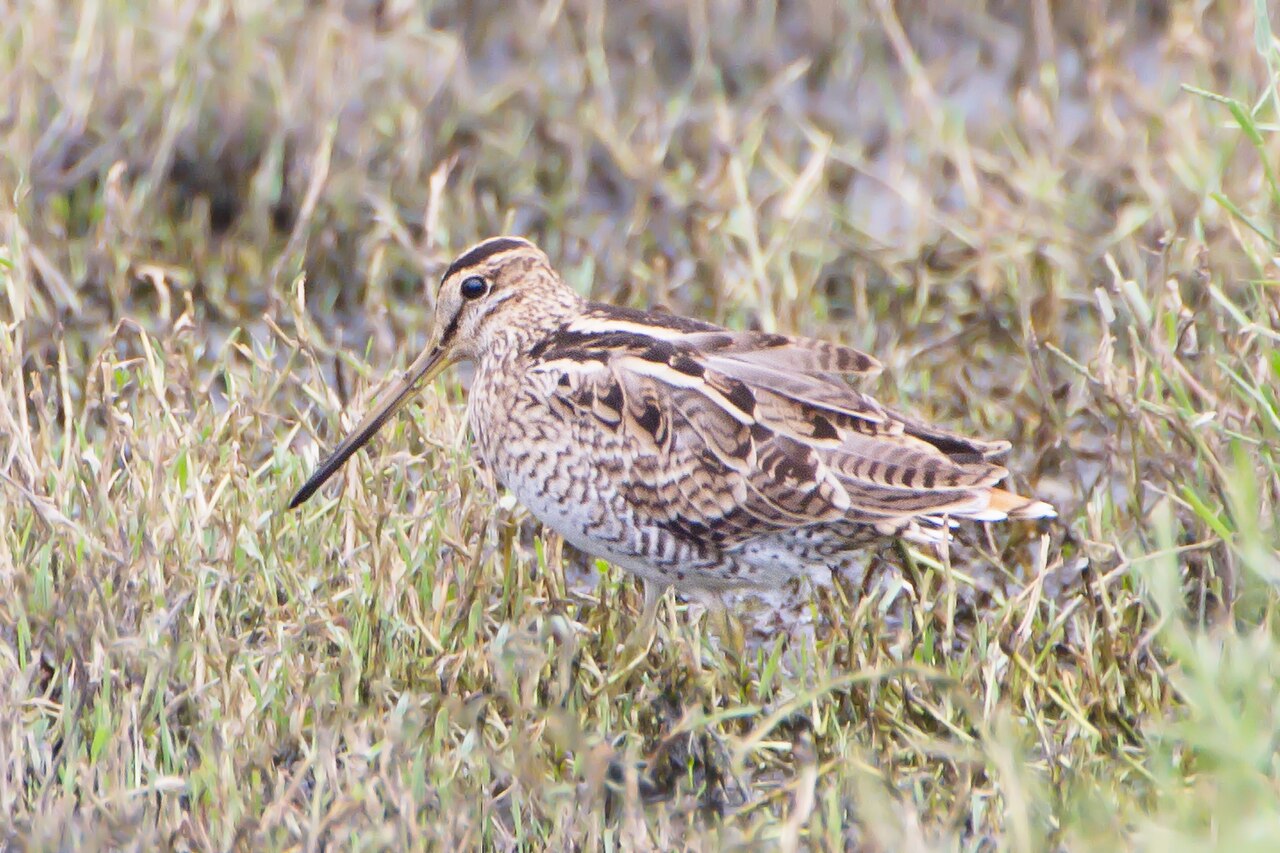
A squat, heavily built snipe of twenty-nine to thirty-three centimetres and about a hundred and ninety grams, with a strikingly large rounded head in which the eyes are set well back. The bill is straight, thick at the base and, at seven to eight centimetres, well over twice the length of the head, brown with a darker tip; the legs are short and olive-green. The crown is dark brown with a pale central stripe, below it a broad buff eyebrow and a dark loral stripe running on behind the eye. The back carries four long cream lines over a blackish, scaled ground. In flight it looks dark, broad-based and pointed in the wing, with a long tail and no white trailing edge to the secondaries.
Confusion species
The other two Australian snipes are the key. Swinhoe's Snipe (Gallinago megala) is smaller, shorter in the tail, less pointed in the wingtip and flushes lower and straighter with only one or two calls; in the hand it carries twenty to twenty-two tail feathers against eighteen broad ones on Latham's Snipe. Pin-tailed Snipe (Gallinago stenura), which this guide does not treat because it is not certainly recorded from Australia, has twenty-four to twenty-eight, the outer ones narrowed to needles. Outside the genus, the important confusion is with Australian Painted-snipe (Rostratula australis) of the same swamps: shorter and rounder, with a bill that broadens and droops at the tip, a white shoulder band, and a slow flight on rounded wings with dangling legs rather than an explosive zigzag. A practical rule for the east coast: anything south of Cape York is near enough certainly this species.
Habitat
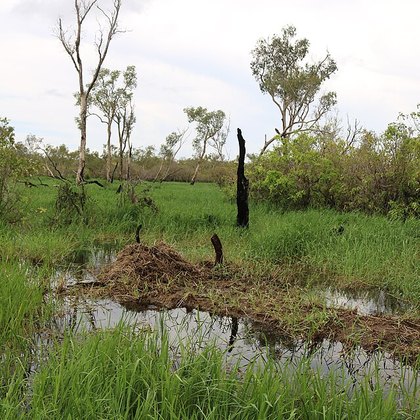
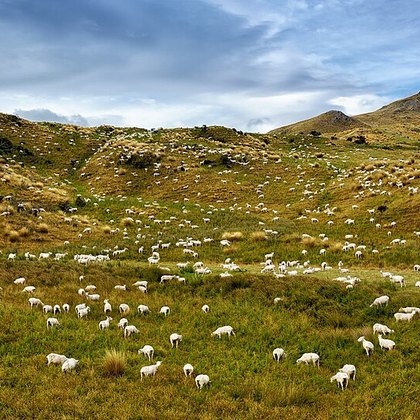
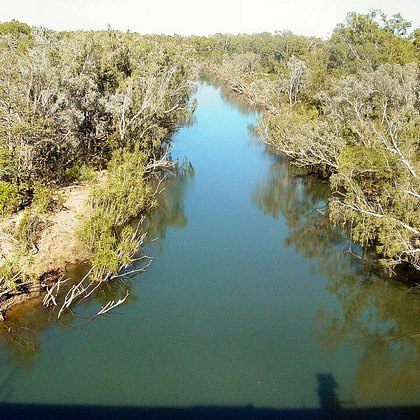
Shallow fresh and brackish swamp with cover within reach: wet tussock grassland, beds of sedge and rush, the choked tails of pools and creeks, damp pasture and sewage ponds. By day it rests in vegetation twenty to sixty centimetres high; by night it feeds on shallow open mud under less than ten centimetres of water, driving the bill up and down into it like a sewing machine. The join between cover and bare mud is exactly its ground.
Where the bird is most often found, arranged by main group and formation.

Range and movements
A non-breeding summer visitor to eastern Australia, from northern Queensland south through New South Wales and Victoria into Tasmania, with the largest numbers in the southeast; westward it becomes scarce fast. The first birds arrive in northern Queensland in late July and work south, so that the southern swamps are full by September. The southeast is left by late February, after which migration runs north along the east coast and Australia is empty by April. In New Zealand it is an exceptional stray, and on Norfolk Island no more than accidental.
- Breeding (summer)
- dark = core range, pale = thinly spread
Where and when to look
In December or January walk the wet margin of a small swamp or creek and watch the places where tall grass gives onto bare mud; the bird sits tight to the last and then flies up steeply with its call. To see it rather than flush it, sit off at a distance in the last hour before sunset with a telescope on the mud edge, because it will come out of cover by itself. Count the birds that get up from a patch: they do not scatter far and usually drop back in within a hundred metres.
Conservation
Near Threatened (NT) globally and, since January 2024, listed as vulnerable on the Australian federal list, with the same rating in Victoria. The population is put at about thirty-seven thousand birds in Japan and some twenty thousand in Australia. The pinch comes at both ends of the flyway: in Japan the damp meadows and rice-field margins where it breeds are going, and in Australia the shallow swamps and wet paddocks are drained, built over or grazed too short, often on private land where no management applies. Because it hides rather than flees, losses to drainage are rarely noticed.
Scientific name
Gallinago hardwickii | (Gray, 1831)
John Edward Gray described the bird in 1831 as Scolopax hardwickii; because of its later placement in another genus, author and year stand in parentheses. The epithet hardwickii honours Charles Browne Hardwicke, an English settler and collector in Tasmania, and Tasmania is the type locality as well. The genus name Gallinago is late medieval Latin for 'woodcock, snipe'. The English name honours the physician and ornithologist John Latham, who in fact had no traceable connection with this bird.