All species › Cuckoos › Cuckoos › Little Bronze-Cuckoo
Little Bronze-Cuckoo | Chalcites minutillus
Kleine bronskoekoek | Cuclillo menudo
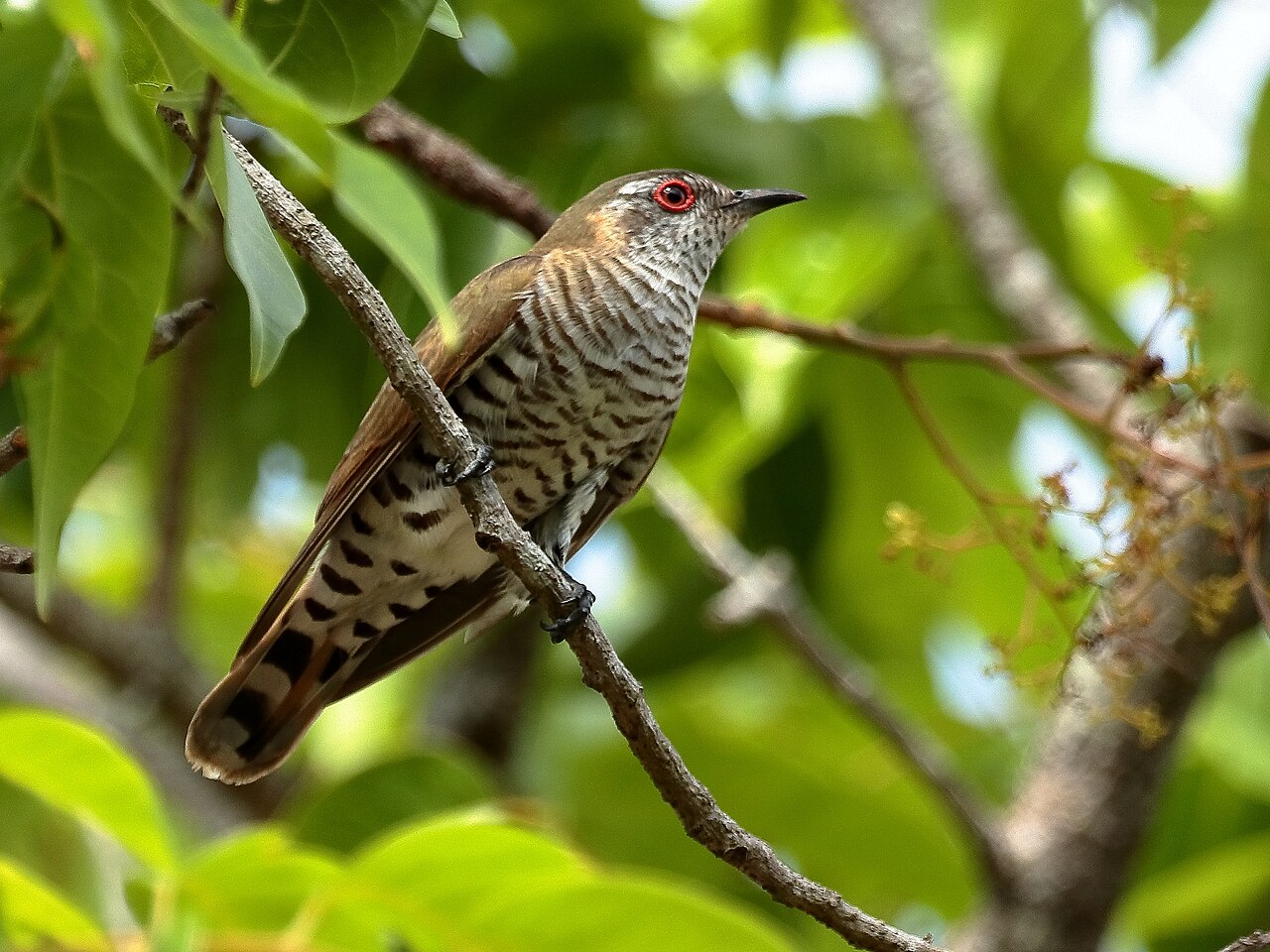
At fifteen to sixteen centimetres the Little Bronze-Cuckoo is the smallest cuckoo in Australia and, by many accounts, the smallest in the world: a tiny bronze-green bird of mangrove, monsoon forest and riverine forest in the north and east. The male wears a bright red ring around the eye, which settles the identification at close range. It is almost entirely specialised on gerygones as hosts.
Voice
A series of three to five short notes falling in pitch towards the end, together with a screeching, descending trill written as chreew or rew-rew-rew. The call varies between subspecies and districts, so identification by voice is only reliable in country you know.
No recording with a suitable Creative Commons licence has been found for this species yet; what to listen for is described below.
Identification
Fifteen to sixteen centimetres, slender-bodied with a proportionally long tail that lets it work through dense branches. The upperparts are bronze-green with metallic gloss, the underparts white with dark bars finer than those of Shining Bronze-Cuckoo and often broken across the centre of the belly. The key mark sits around the eye: the male has a conspicuous red eye-ring, the female a greenish-white to grey one. From below the tail shows rufous, especially on the outer feathers, and there is usually a small white spot behind the eye. Australian birds fall into two subspecies, minutillus in the north and barnardi in the east.
Confusion species
Shining Bronze-Cuckoo (Chalcites lucidus) is larger and heavier, with broad unbroken green bars running onto the cheek, no red eye-ring and little rufous in the tail, whistling in rising series; it parasitises thornbills mainly. Horsfield's Bronze-Cuckoo (Chalcites basalis) has the long white eyebrow with dark eyestripe, an ordinary dark eye-ring and a single long, falling whistle; it lays with fairywrens. Black-eared Cuckoo (Chalcites osculans) is much larger, plain creamy below without a single bar, with a broad black ear-stripe, and belongs to dry mulga (acacia scrub of the dry interior, dominated by Acacia aneura) rather than wet mangrove. Note also Gould's Bronze-Cuckoo, the form russatus that some authors split as a separate species: it differs in eye-ring and cheek colour and overlaps in north-east Queensland. In practice small size, a red or greenish-white eye-ring and mangrove or monsoon forest settle it almost every time.
Habitat
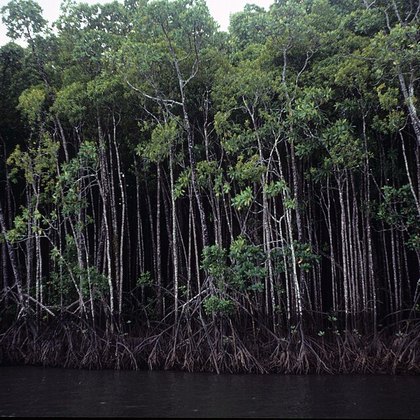
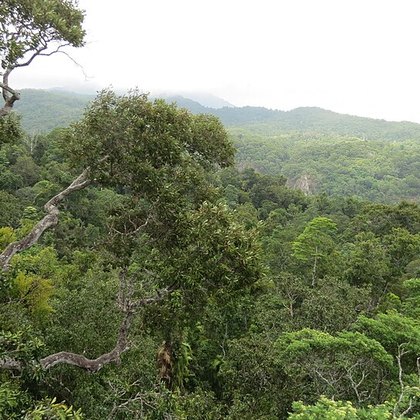
Mangrove above all, and beyond that monsoon forest and vine thicket, riverine forest along creeks and the edges of tropical rainforest; usually below five hundred metres, occasionally higher. It keeps to dense foliage and takes caterpillars and other insects in the canopy.
Where the bird is most often found, arranged by main group and formation.


Range and movements
Within the map window, the tropical and subtropical coastal belt of northern and eastern Australia: from the Kimberley through the Northern Territory and the Gulf of Carpentaria across Cape York to the Queensland coast and northern New South Wales. It thins out quickly towards the south and the dry interior. Beyond the window the species reaches New Guinea and South-East Asia; it does not occur in New Zealand.
- Resident
- dark = core range, pale = thinly spread
Where and when to look
In the north, take a mangrove track or boardwalk at high tide and listen for the screeching, descending trill among the leaves. Then look for gerygones: where a pair of Mangrove Gerygones is agitated, the cuckoo is often close by. Always try to see the eye-ring — that one red circle turns an awkward bronze cuckoo into a certain record.
Conservation
Least Concern (LC), with a stable population and common in most districts. It benefits from the extensive, little-disturbed mangrove belts of northern Australia. Where mangrove is cleared for ports, aquaculture or coastal development, the gerygones it depends on entirely go with it, and locally so does this cuckoo.
Scientific name
Chalcites minutillus | (Gould, 1859)
Gould described the species in 1859 as Chrysococcyx minutillus in the Proceedings of the Zoological Society of London, with Port Essington in the Northern Territory as the type locality; with the move to Chalcites, author and year stand in parentheses. The epithet minutillus is a double diminutive of Latin minutus, 'small', so something like 'very smallest' — exactly what the bird is. Chalcites (Lesson, 1830) comes from Greek khalkos, 'bronze'.