All species › Cuckoos › Cuckoos › Shining Bronze Cuckoo
Shining Bronze Cuckoo | Chalcites lucidus
Gouden bronskoekoek | Cuclillo broncíneo
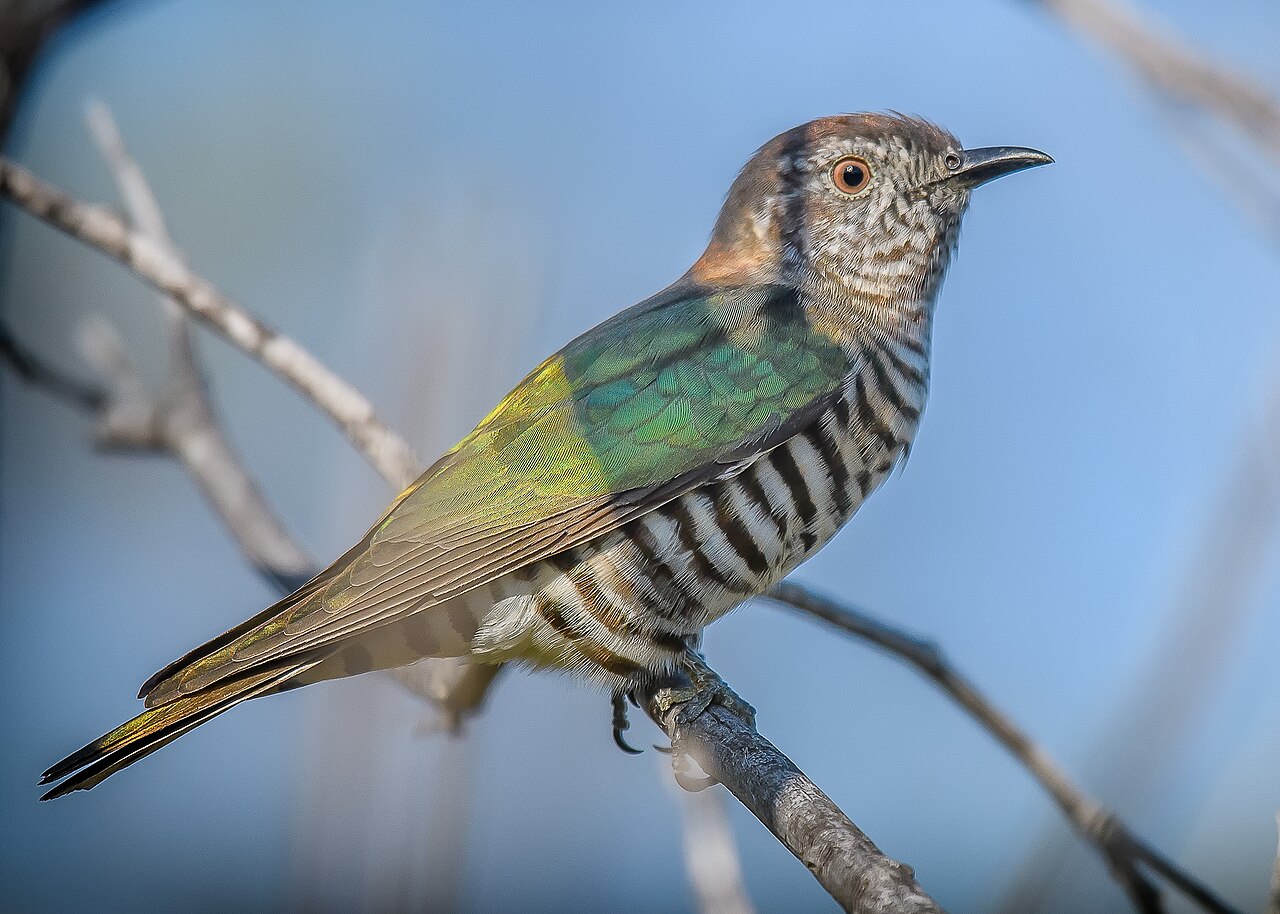
The showpiece among the bronze cuckoos: metallic golden-green to coppery above, white below with broad, unbroken dark green bars that continue right up onto the cheeks. In New Zealand it is the pīpīwharauroa, the bird whose rising whistle announces spring and which lays its egg with the Grey Warbler. Every autumn it vanishes from the map window altogether: a bird of sixteen centimetres that crosses thousands of kilometres of open ocean.
Voice
A clear, upward-slurred whistle repeated in series of four to eight, the sequence closed off with a single falling note: tswee-tswee-tswee-tswee … tsoo. Repeated downward notes usually mean several birds together, probably in courtship. From August to January it is the most-heard voice in New Zealand forest belonging to a bird almost nobody sees.
No freely licensed recording has been found for this species yet; what to listen for is described below.
Identification
A compact cuckoo of about sixteen centimetres and barely twenty-five grams. The upperparts are deep metallic green with gold or copper lustre depending on the light; the underparts white with sharp, broad, dark green bars that run from throat to lower belly without stopping in the middle. The face is strikingly white with fine dark mottling, with no white eyebrow and no dark eyestripe — that absence is precisely the mark here. There is little or no rufous in the tail. The sexes are alike; young birds are duller, with less barring on throat and chest.
Confusion species
Horsfield's Bronze Cuckoo (Chalcites basalis) is the main counterpart on the Australian mainland: it does have a long white eyebrow and a dark eyestripe, broken barring that leaves the centre of the belly clear, rufous tail bases, and a whistle that falls rather than rises; its hosts are mainly fairy-wrens. Little Bronze Cuckoo (Chalcites minutillus) is smaller, the male with a bright red eye-ring, with rufous in the outer undertail feathers and finer barring broken across the belly, calling in three to five descending notes or a screeching trill. Black-eared Cuckoo (Chalcites osculans) is larger, grey-brown without metallic gloss, plain creamy below without any bar at all, with a broad black ear-stripe and a low, mournful whistle; it belongs to dry mulga country. Remember above all: unbroken bars running onto the cheek plus a blank head is this species alone.
Habitat
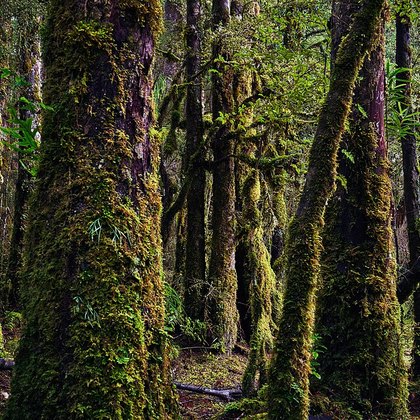
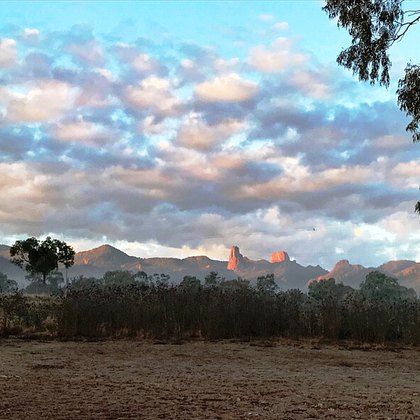
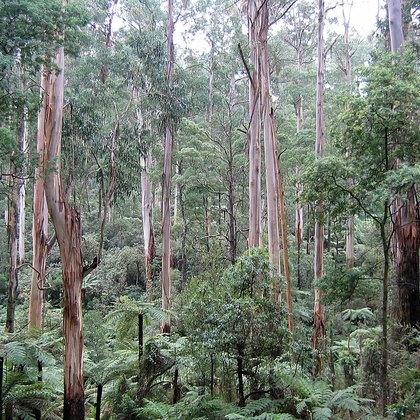
Wooded country of all kinds, from lightly timbered slopes to rainforest, usually high in the canopy. In New Zealand it uses podocarp-broadleaf forest, beech forest, manuka scrub and equally gardens and farmland — anywhere the Grey Warbler lives. In Australia the weight lies in eucalypt forest and woodland, where thornbills and gerygones breed.
Where the bird is most often found, arranged by main group and formation.


Range and movements
Two forms share the map window. The nominate breeds on both main islands of New Zealand plus Stewart Island and, in small numbers, the Chatham Islands. The Australian form plagosus breeds from south-western Western Australia through South Australia, Victoria, Tasmania and New South Wales to eastern Queensland and Cape York, and also occurs on Lord Howe and Norfolk. Both are true migrants: they leave the map window entirely in winter for the Solomon Islands, the Bismarck Archipelago, New Guinea and the Lesser Sundas. New Zealand birds return in mid-August and only become numerous in October.
- Resident
- Breeding (summer)
- dark = core range, pale = thinly spread
Where and when to look
Walk a forest edge in New Zealand in October or November and follow the rising whistle upward: the bird nearly always sings high in the canopy and gives itself away by sound alone. A second, indirect route is to find a Grey Warbler nest and watch for parents suddenly busy with a chick far too large for them. On a photograph or at close range the clincher is always the head: no eyebrow, no eyestripe, white face.
Conservation
Least Concern (LC) on the IUCN list; in New Zealand it is rated Not Threatened on the mainland, while the Chatham Islands population is critically rare. In Australia it is assessed as secure in every state. The most striking pressure is indirect: the migration of thousands of kilometres over open sea costs many birds each year, and on the Chathams the cuckoo stands or falls with the small population of the Chatham Island Warbler.
Scientific name
Chalcites lucidus | (Gmelin, 1788)
Gmelin described the species in 1788 as Cuculus lucidus in the thirteenth edition of Systema Naturae, from material taken at Queen Charlotte Sound in New Zealand on Cook's voyages; because the species has moved to Chalcites, author and year stand in parentheses. The epithet lucidus is Latin for 'shining, bright', after the metallic gloss. The genus Chalcites (Lesson, 1830) comes from Greek khalkos, 'bronze'. The Maori name pīpīwharauroa is in everyday use alongside the English one.