All species › Cuckoos › Cuckoos › Horsfield's Bronze Cuckoo
Horsfield's Bronze Cuckoo | Chalcites basalis
Horsfields bronskoekoek | Cuclillo de Horsfield
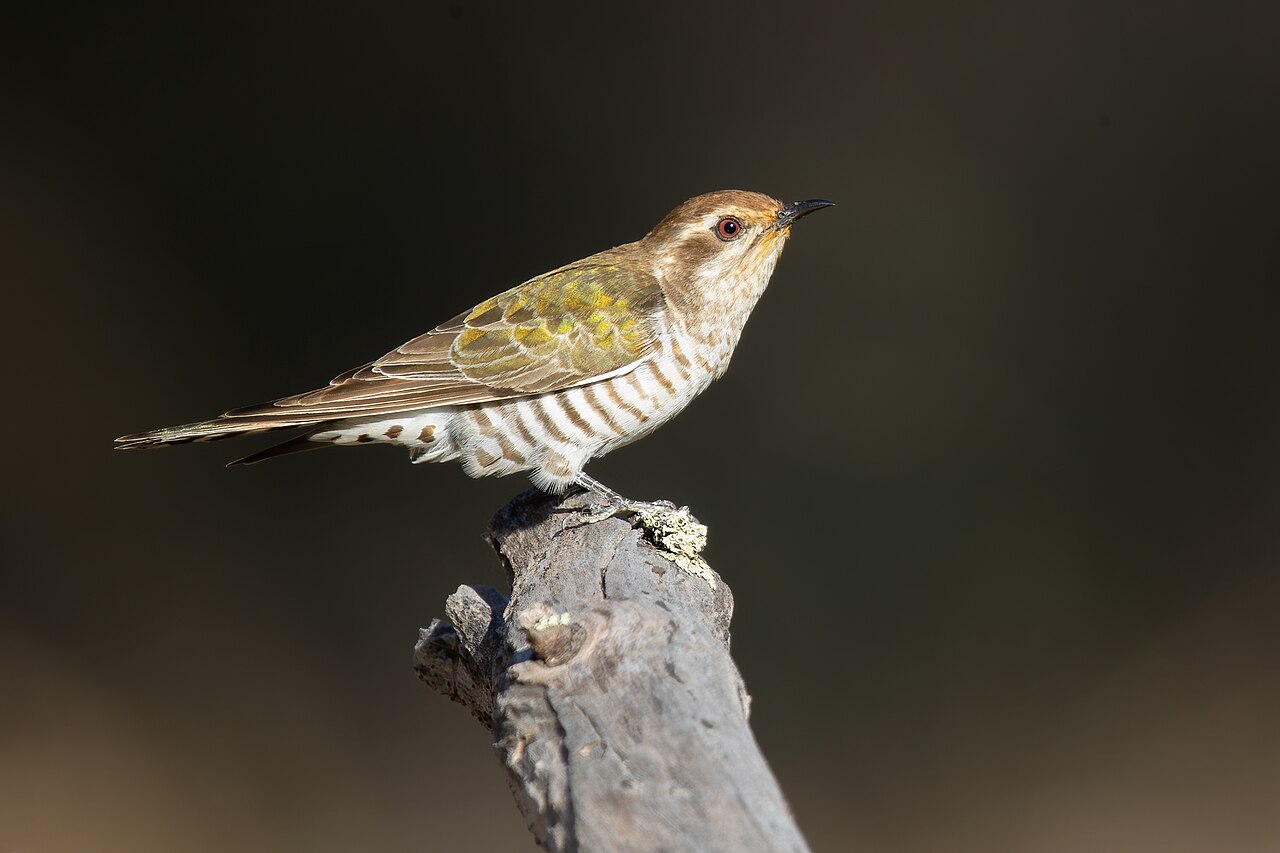
A small, unassuming cuckoo of barely eighteen centimetres that occurs across almost the whole of Australia and is still heard far more often than it is seen. The upperparts are olive-brown with a bronze to green sheen, the underparts white with dark bars that stop halfway across the belly, and a sharp dark line runs through the eye beneath a long white eyebrow. It lays its egg with pairs of fairy-wrens and thornbills, which raise the chick as their own.
Voice
A thin, high whistle that slides downward: tseeeeuw, also written fee-ew, repeated every few seconds and kept up for hours from a bare branch. There is also a short, sparrow-like chirrup. The direction of the note does half the identification: this one falls, while Shining Bronze Cuckoo rises.
No freely licensed recording has been found for this species yet; what to listen for is described below.
Identification
Seventeen to eighteen centimetres, about the bulk of a large sparrow, slender-bodied with a fairly long tail. Olive-brown above with bronze-green lustre, white to cream below with dark brown bars that begin on the flanks but leave the centre of the belly clear — the barring is broken, not continuous. The head carries the feature that matters here: a dark brown eyestripe under a clean white eyebrow that runs back onto the side of the neck. The throat is white with fine dark speckling, never barred. In the spread tail rufous feather bases flash, most obviously as the bird flies off. Young birds are duller and barely barred at all.
Confusion species
Shining Bronze Cuckoo (Chalcites lucidus) lacks the white eyebrow and dark eyestripe altogether, has a clean white face and underparts with broad, unbroken green bars right across the belly; its call rises instead of falling and its hosts are gerygones and thornbills. Little Bronze Cuckoo (Chalcites minutillus) is smaller still, the male with a bright red eye-ring, and shows rufous in the outer tail feathers from below, with a call of three to five descending notes or a screeching trill; it parasitises gerygones mainly in mangrove and monsoon forest. Black-eared Cuckoo (Chalcites osculans) is clearly larger (19–21 cm), lacks any barring below — the underparts are plain creamy buff — and has a broad black ear-stripe rather than a narrow brown eyeline; its call is a lower, mournful pee-o-weer and it lays with Speckled Warbler and Redthroat.
Habitat
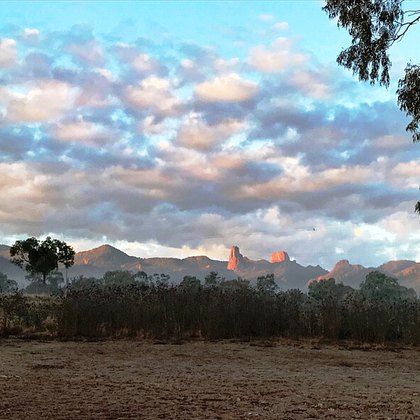
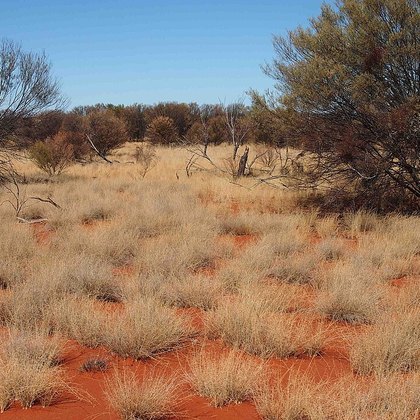
Open eucalypt forest and woodland, from dry mallee and mulga to damper forest edges, so long as there is a shrub layer in which fairy-wrens and thornbills build their domed nests. It also uses clearings, recently burnt or logged stands, farmland with scattered trees, orchards, vineyards and even town gardens with enough cover.
Where the bird is most often found, arranged by main group and formation.


Range and movements
Spread across virtually the whole of Australia, from the Great Dividing Range and the eastern states to Tasmania and South Australia, and on through the Northern Territory and Western Australia; only the driest cores are avoided. Southern birds move north in autumn, so the species is more numerous in the tropical north over winter. It does not breed in New Zealand.
- Resident
- Breeding (summer)
- dark = core range, pale = thinly spread
Where and when to look
Walk a stretch of open woodland holding fairy-wrens in spring and listen for the falling whistle; it keeps coming from the same direction, because the bird sings from a fixed, bare lookout twig. Then scan the highest dead twigs with binoculars rather than the canopy. As it flies off, look for the rufous in the tail — that rules out Shining Bronze Cuckoo at once.
Conservation
Least Concern (LC), and rated secure federally and in every Australian state. The species does well in half-open country and tolerates farmland and gardens, provided the hosts stay; where fairy-wrens and thornbills are lost with the shrub layer, the cuckoo follows in time.
Scientific name
Chalcites basalis | (Horsfield, 1821)
Horsfield described the species in 1821 as Cuculus basalis in the Transactions of the Linnean Society of London, with Java as the type locality. The epithet basalis means 'of the base' and refers to the rufous at the foot of the tail feathers. The genus Chalcites was introduced by Lesson in 1830 and is built on Greek khalkos, 'bronze, copper', after the metallic gloss of the plumage. The English name honours Thomas Horsfield, the American naturalist who collected for years on Java.