All species › Waders, gulls and terns › Sandpipers and allies › Little Curlew
Little Curlew | Numenius minutus
Kleine regenwulp | Zarapito chico
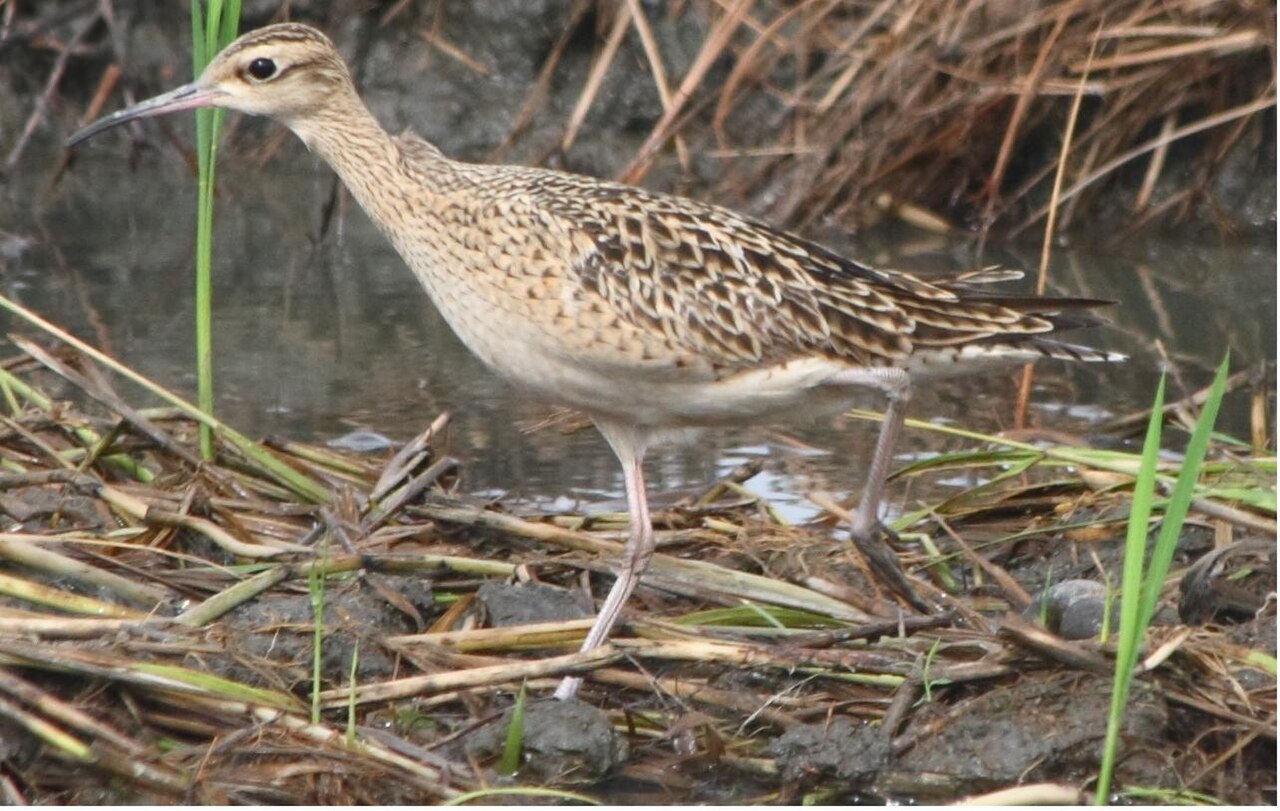
The Little Curlew is the smallest curlew in the world and the only one that spends its Australian season on dry grass rather than on tidal flats. It breeds in the open larch forest of northern Siberia and appears here in the Australian summer, in flocks that work the mown fields and freshly burnt plains of the north for grasshoppers. Its bill is short for a curlew and only slightly decurved, which at range gives it more of a plover's look than a curlew's.
Voice
The flight call is a sharp, quickly repeated chew-chew-chew, higher and drier than the rolling call of a Eurasian Whimbrel and usually the first sign of a flock overhead. Birds lifting off a field call over one another, so that a flock leaves as a clattering chorus. On the ground they are largely silent, with at most a soft yelping contact note between close neighbours. Calling peaks as the flocks lift at sunset.
No freely licensed recording has been found for this species yet; what to listen for is described below.
Identification
A small, compact curlew of 28 to 31 centimetres, grey-brown with finely patterned upperparts, a white belly and a warm buff breast with fine streaking. The bill is short for a curlew, dark, curved only towards the tip, with a flesh-coloured base to the lower mandible. The head is crisply marked with a dark crown, a pale central stripe and a clear pale eyebrow, as in the Eurasian Whimbrel but with more contrast for the size of the head. The legs are long and blue-grey, and in flight there is no white wedge on the back; the wing is evenly dark with a paler underwing. The sexes look alike; young birds are a shade warmer brown with clearer pale feather edges.
Confusion species
Eurasian Whimbrel (Numenius phaeopus) is the standing comparison: much larger, with a considerably longer bill curved along its whole length, cooler grey in tone and on tidal flats rather than in grass. Far Eastern Curlew (N. madagascariensis) is twice the length and carries an enormous bill. In a grass field it often mixes with Oriental Pratincole (Glareola maldivarum), which is shorter-legged, has a short red-based bill and flies on long pointed wings like a tern. At long range young godwits in the same fields can suggest it, but they have a straight bill and a heavier build.
Habitat
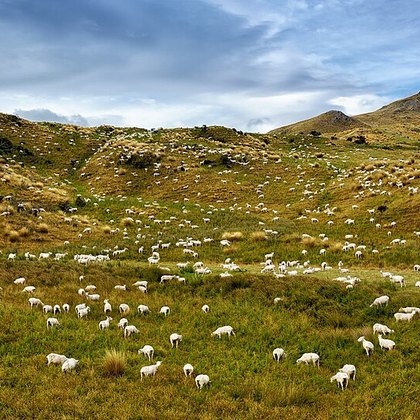
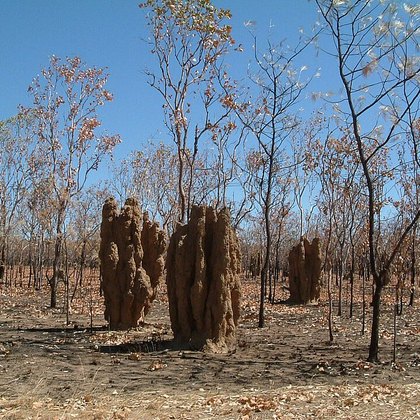
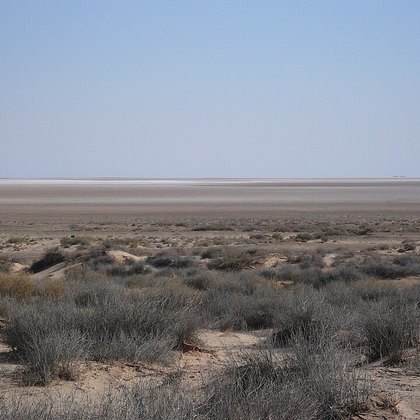
Short dry grass is the picture: grazed and mown pasture, playing fields and lawns, savanna just after a fire, the drying margins of claypans and the bare ground along airstrips. It takes grasshoppers, beetles and other prey by sight in the manner of a plover — a few steps, a snatch — and does not probe in mud. Tidal flats and saltmarsh it uses little, and then mostly to roost or drink. Water need not be close, provided the plain is short and open.
Where the bird is most often found, arranged by main group and formation.


Range and movements
Breeds patchily in northern Siberia, in clearings and on slopes within the larch forest of Yakutia and nearby, and moves south in autumn through eastern Asia and along the Yellow Sea. In Australia it arrives from late September and October, with the largest numbers in the Northern Territory, the Kimberley and northern Queensland, and smaller numbers south along the east coast. From February to April it leaves again, flocks of thousands gathering in northwestern Australia before the crossing. In New Zealand it is a vagrant; on the map of this region it is therefore a bird of the Australian summer and not of the winter.
- Resident
- Non-breeding visitor
- dark = core range, pale = thinly spread
Where and when to look
In November or December drive the mown verges, airfields and freshly burnt plains around Darwin or Broome and look for a party of small waders running about on the grass like plovers. Check the bill on every bird: short, nearly straight over its first half, and much shorter than the head is long. At sunset the flocks fly to a communal roost, and that is when they are easiest to count.
Conservation
Least Concern (LC), with a world population estimated at well over a hundred thousand birds and heavily concentrated in Australia. The weak point lies on the flyway: the tidal flats around the Yellow Sea where it refuels on migration have been reclaimed on a large scale in recent decades. Because it sits here in scattered, shifting flocks on dry grass, it is hard to count and its trends are uncertain.
Scientific name
Numenius minutus | Gould, 1841
Gould described the species in 1841 as Numenius minutus, and it has stayed in that genus, so author and year carry no parentheses. Numenius goes back to Greek noumenios, 'of the new moon', after the sickle shape of a curlew's bill; minutus is Latin for 'small'. The type locality is New South Wales, and there lies the oddity of the name: the species was described from a bird in its non-breeding range, while the breeding grounds in Siberia were mapped only much later. In Australian works it long went under the name Little Whimbrel.