All species › Waders, gulls and terns › Skimmers, noddies, terns and gulls › Little Tern
Little Tern | Sternula albifrons
Dwergstern | Charrancito común
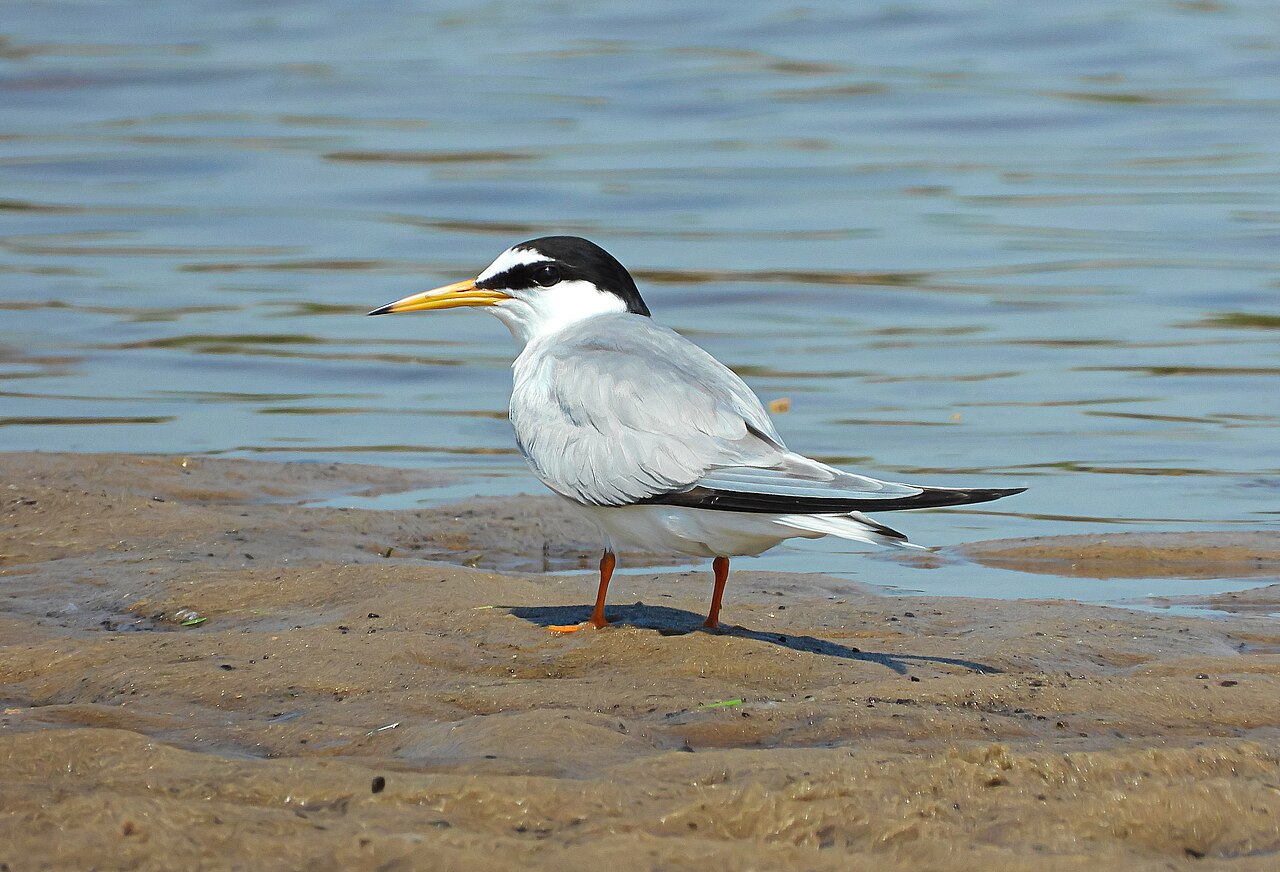
The Little Tern is the smallest tern of this region: barely bigger than a starling, with a flickering wingbeat and the habit of hanging on the hover above the surf until it drops. In breeding plumage it is known by its yellow bill with a black tip and a white wedge of forehead cut into the black cap. It nests on exactly the place people want as well: the bare upper part of the beach.
Voice
The call is a sharp, high kirrik kirrik, often in pairs of notes, carrying over the noise of the waves. A hunting bird gives a rasping kree-ik, usually just before the plunge. Come too near a breeding site and a shrill metallic chorus breaks over you, dozens of birds rattling at once. The voice is thinner and higher than that of any other tern here, and usually gives it away before you see it.
No freely licensed recording has been found for this species yet; what to listen for is described below.
Identification
A tiny, sharp-winged tern of about twenty-two centimetres, pale grey above and white below, with narrow wings and a shallowly forked tail. In breeding plumage the bill is yellow with a crisp black tip and the legs are orange-yellow. The head pattern is the one to learn: the white forehead wedge runs to a point above or just behind the eye, but the black of the lores carries on to the base of the bill, so cap and bill meet. In flight the outer two or three primaries form a clear black wedge along the leading edge of the wingtip, and the rump and tail show white against the grey mantle. Out of season the bill darkens, the crown becomes mottled and a dark carpal bar appears. The flight is fast and stiff, with a great deal of hovering over shallow water.
Confusion species
Fairy Tern (Sternula nereis) is the only real confusion, and the difference is mostly head and bill: the Fairy Tern's bill is wholly orange-yellow with no black tip, the lores stay white so the black cap does not reach the bill, and rump and tail are greyish rather than white against the mantle; in flight it shows only a narrow dark edge in the wingtip instead of a black wedge. It is also a shade larger and, at 72 against 57 grams, noticeably more solid. Out of season, when both have a dark bill, the head pattern remains the most useful character. Every other tern here is far bigger: Common Tern (Sterna hirundo) is half again as long, and Black-fronted Tern (Chlidonias albostriatus) is grey below with an orange bill.
Habitat
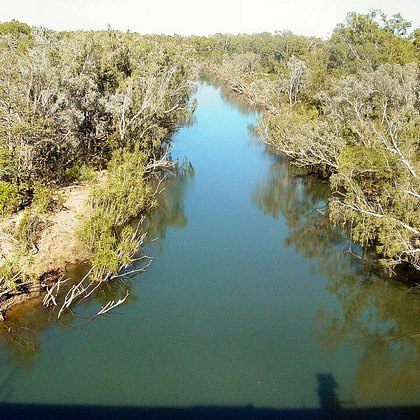
Sandy beaches, spits, shellbanks and the bare sand islets of river mouths and coastal lagoons; the nest is a scrape in sand or shell just above the tideline, sometimes on an open stretch of sandbank in an estuary. It hunts on the hover over shallow water: in the surf, in tidal channels, over estuaries and over the lower reaches of coastal creeks, taking small fish and shrimps from the top few centimetres.
Where the bird is most often found, arranged by main group and formation.


Range and movements
Two groups meet here. Australian breeders occupy the coasts of Queensland, New South Wales and eastern Victoria from October to February, and also the tropical coast of the Northern Territory and the Kimberley. Alongside them, Asian migrants reach northern and eastern Australia between September and April. In New Zealand it is a scarce but annual visitor, chiefly to the Firth of Thames and to Manukau and Kaipara harbours, with the occasional breeding attempt.
- Resident
- Breeding (summer)
- dark = core range, pale = thinly spread
Where and when to look
Look for the bird that hangs: no other tern here hovers so long and so low over shallow water. Then check the bill tip — a black tip on yellow settles it at once — and failing that, the lores: if the black reaches the bill, it is a Little Tern. Visit a fenced breeding beach on the New South Wales coast in December; stay outside the fence, because the eggs lie invisible in the sand.
Conservation
Least Concern (LC) globally, but that figure says little about the Australian east coast, where the species has become wholly dependent on fenced and wardened beaches. What threatens the colonies is familiar and immediate: four-wheel drives and dogs on the beach, foxes and feral cats, Silver Gulls taking eggs, and storm tides that wash out a whole colony. Where volunteers fence and count, breeding success usually recovers within a few years.
Scientific name
Sternula albifrons | (Pallas, 1764)
Pallas described the species in 1764 as Sterna albifrons; it now stands in Sternula, and so author and year go in parentheses. Sternula was introduced by Boie in 1822 and is a diminutive of Sterna, the classical word for tern — fitting for the smallest members of the family. albifrons is built from albus, 'white', and frons, 'forehead', after the white wedge in the black cap. The type locality is in the Netherlands: the material described came from the Hague catalogue of the bird dealer Vroeg. The Dutch and English names say the same thing: this is the small one.