All species › Passerines › Fairywrens, grasswrens and emu-wrens › Lovely Fairywren
Lovely Fairywren | Malurus amabilis
Roestflankelfje | Maluro amable
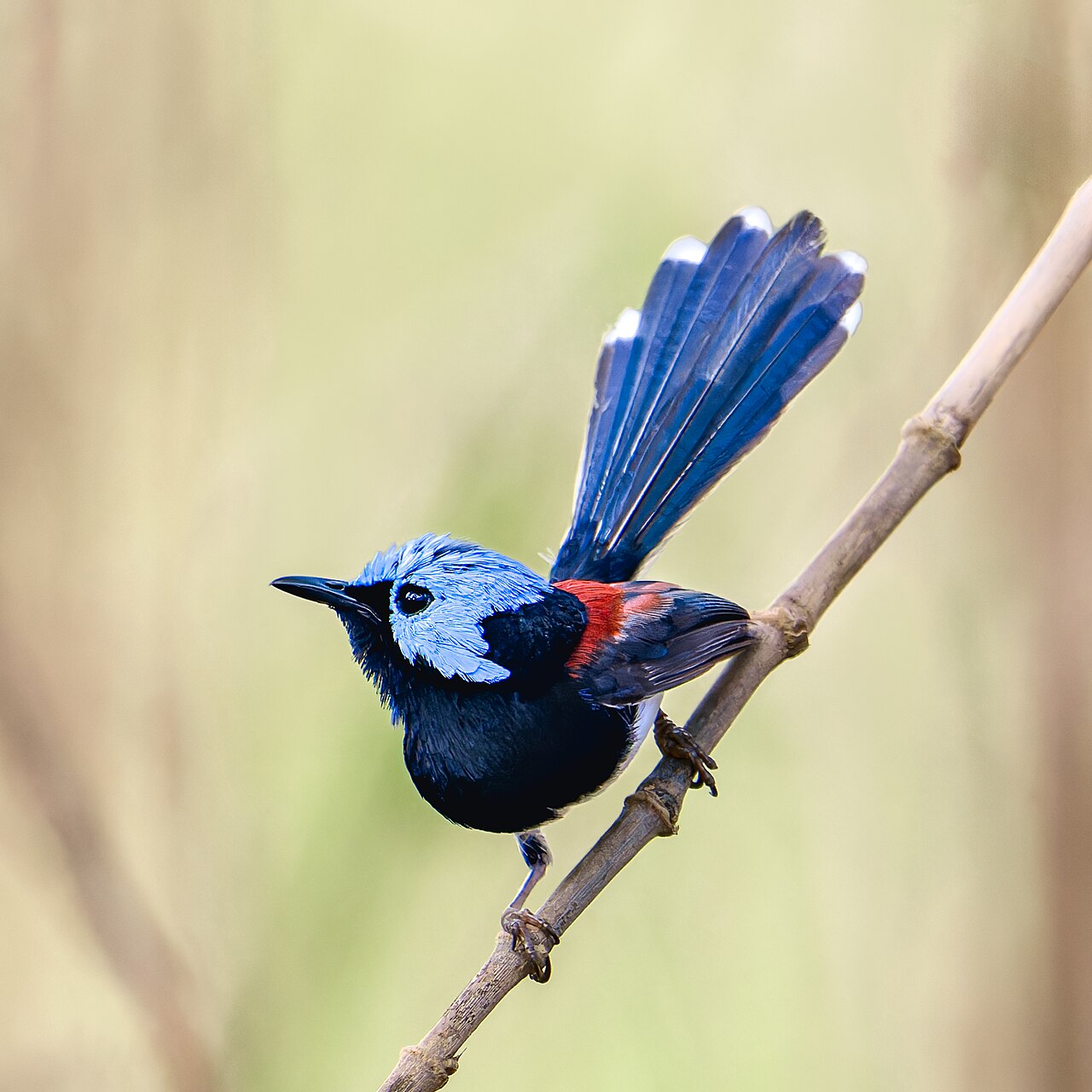
The Lovely Fairywren is the fairywren of Cape York Peninsula and the wet tropics below it, and the only one whose female is blue as well. It is the exception to the rule that fairywren females are brown and anonymous.
Voice
As in the other fairywrens, a high, fast reel, followed by thin contact notes by which group members follow one another through the scrub, and a short, sharp alarm note. Recordings of this species are scarce; little has been documented about how its song differs from that of its relatives, which is why what stands here stands in general terms.
No freely licensed recording has been found for this species yet; what to listen for is described below.
Identification
A small, short-tailed fairywren of an estimated twelve to fourteen centimetres. The male has azure ear coverts, crown and mantle, a black throat and nape, chestnut shoulders, black wings, a white belly and a white-tipped blue tail. The female is smoky blue above and on the tail, with turquoise ear tufts, dark grey wings and pure white from chin to vent; she is white around and in front of the eye, giving her a spectacled face. Both sexes have a black bill and flesh-grey feet; young birds resemble the female but have a brown bill.
Confusion species
This is the only blue fairywren in north-eastern Australia, which makes identification largely a matter of place. At its southern limit, along a line between Normanton and Townsville, it meets Malurus assimilis: males of that species are blue-purple on crown and mantle rather than azure and have a longer tail, and its females there are grey-brown with rufous lores instead of blue-grey with white spectacles. Note, however, that the north-western forms of Malurus assimilis, in Arnhem Land and the Kimberley, also have blue-grey females and partly white lores — but those are thousands of kilometres to the west. The female of Malurus lamberti is brown, and that species occurs only far to the south-east.
Habitat
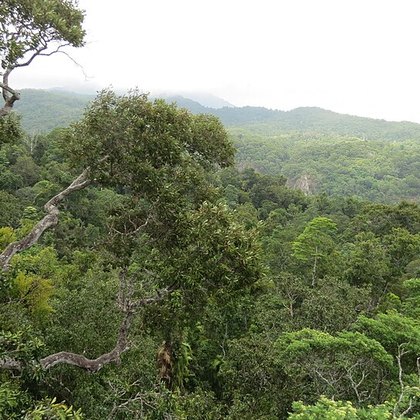
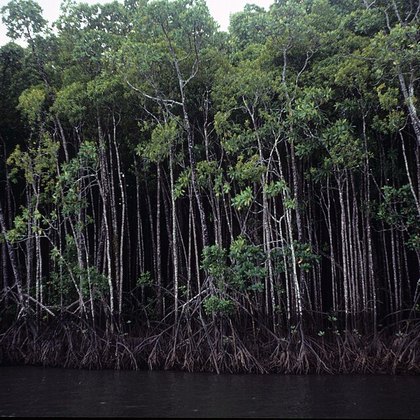
Rainforest edges, mangroves, monsoon forest and vine thicket, and any other dense shrub layer in the coastal country of far northern Queensland, including along creeks. It avoids open ground and stays in or close to cover.
Where the bird is most often found, arranged by main group and formation.


Range and movements
Endemic to north-eastern Australia: Cape York Peninsula south into the wet tropics around Cairns. The population has not been counted; the species is described as locally fairly common. Resident, in the small permanent groups that hold for the whole family.
- Resident
- dark = core range, pale = thinly spread
Where and when to look
Work the edge where rainforest meets open woodland, or a mangrove fringe, and watch for white: in this species the whole underside up to the chin is white, and the female's white eye-ring lights up in shade. A blue bird here need not be a male — the female is blue in her own right.
Conservation
Not threatened. Much of its range lies in tropical northern Queensland, where forest edges and mangroves are largely intact. It is parasitised by the Brush Cuckoo (Cacomantis variolosus), the first record of which was published only in 2017.
Scientific name
Malurus amabilis | Gould, 1852
John Gould described the species in 1852 from a male collected at Cape York by Captain Owen Stanley; amabilis is Latin for lovely. Gould expected the female to resemble that of the Red-winged Fairywren and accordingly described female specimens collected by John Jardine as a separate species, Malurus hypoleucos — a mistake that shows just how unusual the blue female plumage is in this genus.