All species › Passerines › Fairywrens, grasswrens and emu-wrens › Purple-backed Fairywren
Purple-backed Fairywren | Malurus assimilis
Roestschouderelfje | Maluro dorsimorado
The Purple-backed Fairywren is the fairywren of the dry interior: from western Queensland and New South Wales right across the continent to the coast of Western Australia. Until 2018 it counted as the same species as the Variegated Fairywren; the Great Dividing Range turned out to separate two old, genetically distinct lineages.
Voice
A high, fast reel of short elements, as in the other chestnut-shouldered fairywrens, lasting one to a few seconds and sung by both sexes. Group members keep in touch in cover with thin tsst notes, and a short, sharp tsit serves as the alarm.
No freely licensed recording has been found for this species yet; what to listen for is described below.
Identification
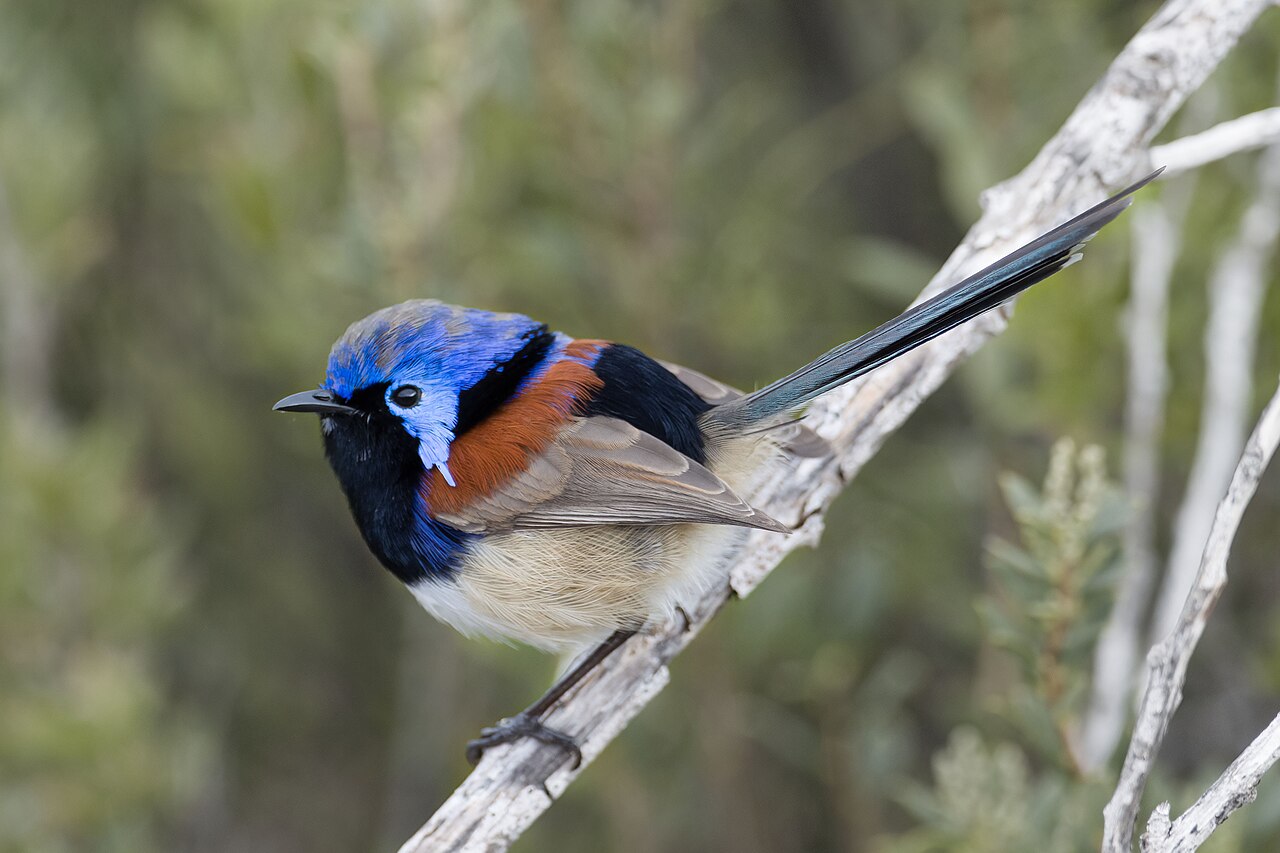
Twelve to fourteen centimetres, much of it tail. The breeding male has bright blue ear coverts, a blue-purple crown and forehead, a black throat and nape, a blue-purple mantle, chestnut shoulders, drab brown wings, a blue-grey tail and a white belly; birds grow paler from east to west, and paler still in the north-west. Females, young birds and eclipse males are grey-brown over most of the range, but mainly blue-grey in Arnhem Land and the Kimberley, with white rather than rufous lores in Arnhem Land. All males have a black bill and black lores; females of most forms have a red-brown bill and rufous lores.
Confusion species
From the Variegated Fairywren (Malurus lamberti) it is separable in the field almost only by place: that one east of the Great Dividing Range, this one west of it, with a broad band of intermediates in southern Queensland. In the south-west it is replaced by Malurus pulcherrimus, with a violet-blue breast, and by Malurus elegans, which is larger, silvery blue on the head and lives in wet karri forest. North of a Normanton to Townsville line Malurus amabilis takes over, shorter-tailed and with a blue female. The Splendid Fairywren (Malurus splendens) shares much of the same country but is entirely blue and has no chestnut shoulder. Females and eclipse males remain the hard part: brown, featureless, and usually placed only by the male in their company.
Habitat
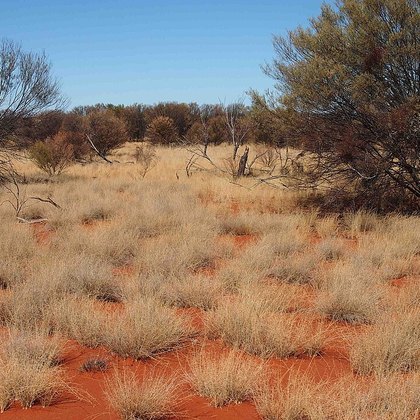
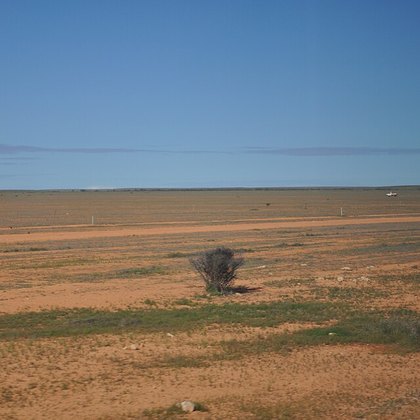
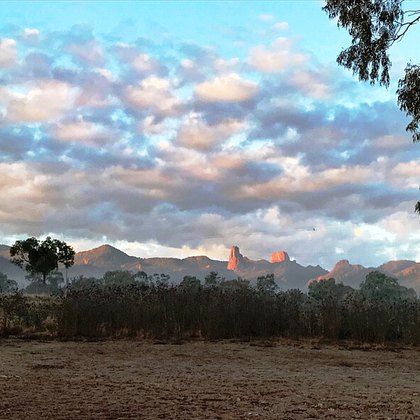
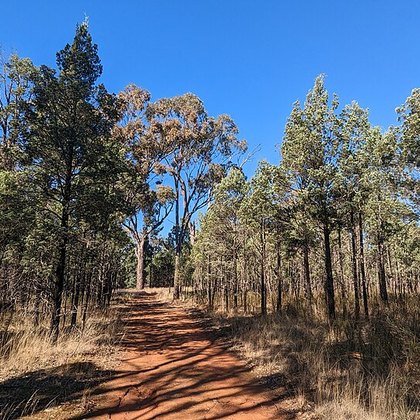
Scrub with dense cover, favouring rocky outcrops and patches of acacia, Eremophila or lignum. In the Northern Territory it prefers open woodland with thickets of lancewood and bullwaddy over eucalypt forest. Elsewhere chenopod shrubland with saltbush, bluebush and black roly-poly, with grass tussocks and an overstorey of black box and native cypress.
Where the bird is most often found, arranged by main group and formation.

Range and movements
Across most of the Australian continent west of the Great Dividing Range: from Queensland and western New South Wales to the coast of Western Australia, including Bernier and Dorre Islands offshore. Largely resident — early fieldwork suggested nomadism, but later and more careful work showed that pairs hold territories year-round. Little is known of the northern forms in this respect.
- Resident
- dark = core range, pale = thinly spread
Where and when to look
Inland this is often the only chestnut-shouldered fairywren you will see; on a male watch for the purplish cast over crown and mantle, clearest in low morning light. Breeding may happen at any time: the birds go to work after heavy rain, usually raising one brood a year, in a domed nest larger than those of the other fairywrens — measured at Shark Bay at nine to eleven centimetres tall.
Conservation
Not threatened, but locally hit hard by clearing of native vegetation in the Western Australian wheatbelt and the Murray-Mallee of Victoria, and by stock eating out the saltbush in which the bird finds its cover.
Scientific name
Malurus assimilis | North, 1901
Alfred John North described the species in 1901 in The Victorian Naturalist, from material taken at Mossgiel in inland New South Wales, and proposed calling it the purple-backed superb warbler; Edward Pierson Ramsay had noted a quarter of a century earlier that inland birds differed from coastal ones. assimilis is Latin for similar, for its likeness to Malurus lamberti. Mathews sank it as a subspecies of that bird, and so it stood until the genetic study by McLean and colleagues in 2017, after which the world list restored it as a species in 2018.