All species › Waterfowl › Ducks, swans and geese › Mallard
Mallard | Anas platyrhynchos
Wilde eend | Anade azulón
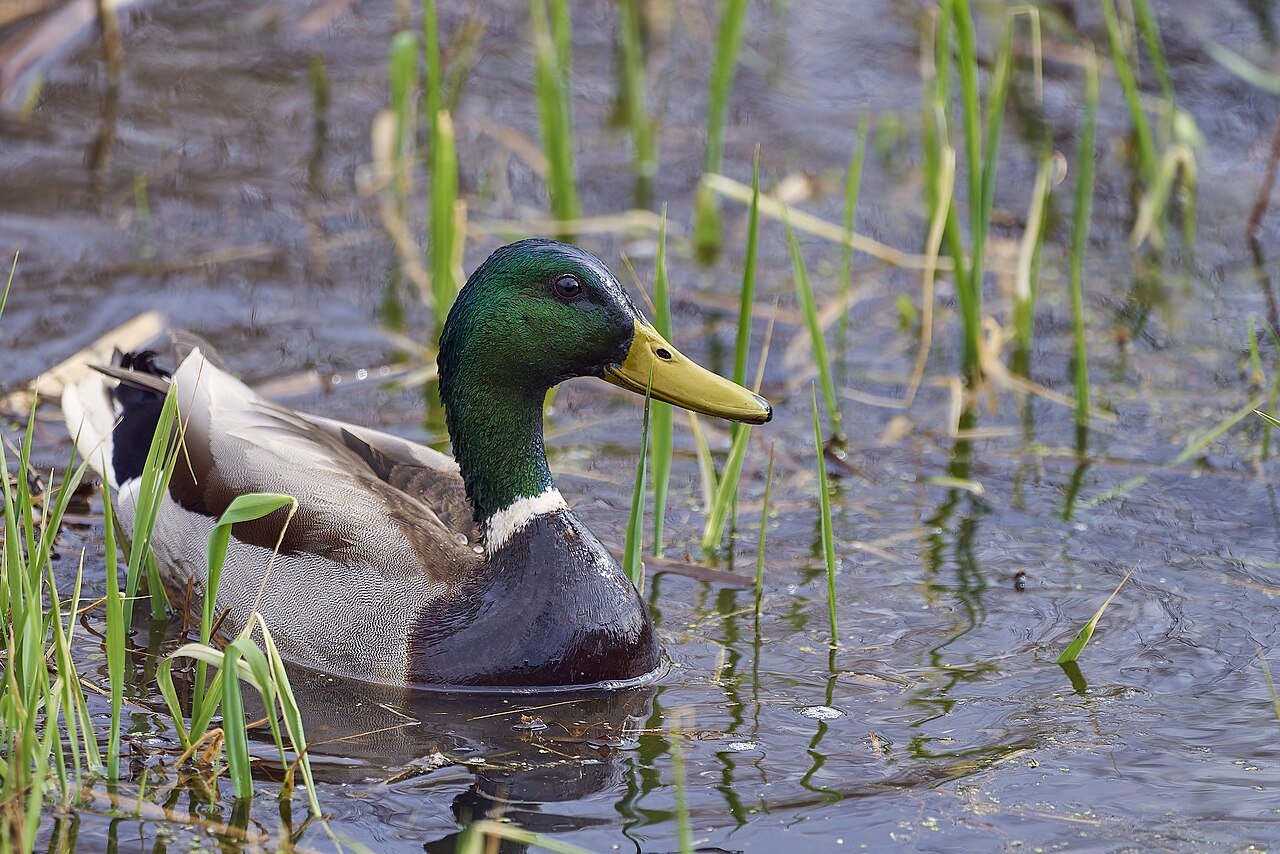
The Mallard is not a native bird in Australia and New Zealand but an import: the duck of the European park pond, released here for shooting and now the most numerous and widespread waterfowl in New Zealand. The drake with his glossy green head, white neck ring and chestnut breast is known to everyone — and that very familiarity hides the fact that he is swallowing the native ducks genetically.
Voice
The female is the loud one: a run of six to eight hard quacks falling away in pitch, QUACK-quack-quak-quak-quak, the sound most people simply call 'duck'. The drake does not quack but gives a soft, rasping raeb, and in display a short whistle followed by a jerk of the head. In town parks you hear both all day long.
No freely licensed recording has been found for this species yet; what to listen for is described below.
Identification
A solid duck of half a metre to well over two-thirds. The breeding drake has a glossy bottle- to emerald-green head and neck, cut off by a narrow white ring from a chestnut breast, with a grey back, black rump and a curled black tail feather, a yellow-green bill and orange legs. The female is brown with pale feather edges, a dark eye-stripe and an orange bill with a dark saddle. Both sexes show a blue-purple speculum bordered white on each side. New Zealand birds are often blotched or irregularly marked through crossing with native ducks and escaped park stock.
Confusion species
Pacific Black Duck (Anas superciliosa) — the grey duck or pārera of New Zealand — is the big problem: darker, with a cream face crossed by two sharp black stripes, a green rather than blue-purple speculum and a grey bill. Crosses between the two are so common in New Zealand that they dominate the picture; they show a half-erased face pattern, green gloss on an otherwise brown head, or orange in a grey bill, and are hard to place without experience. Grey Teal (Anas gracilis) is much smaller with a white throat; Brown Teal (Anas chlorotis) is smaller, darker and has a white eye-ring.
Habitat
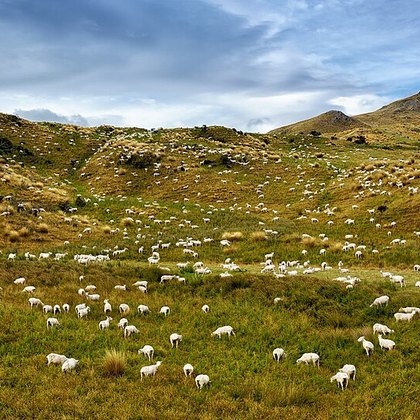
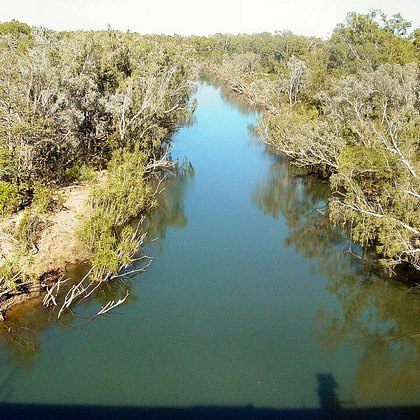
Almost any still or slow fresh water, but with a clear preference for the man-made landscape: town canals and park ponds, pasture drains and stock ponds, slow rivers, reservoirs and estuaries. It also grazes on lawns and on stubble with spilt grain. That very ease with human country is what gives it the advantage in Australasia over the native ducks, which want swampier, less disturbed ground.
Where the bird is most often found, arranged by main group and formation.



Range and movements
Throughout New Zealand, from Northland to Stewart Island and on most inhabited offshore islands, most numerous in pastoral country and in and around towns; it has become the commonest waterfowl there. In Australia the picture is much narrower: feral populations in the parks and ponds of the south-eastern and south-western cities, from Melbourne and Sydney to Perth, plus Tasmania and Lord Howe, with only local spread into natural wetland. Outside this area it breeds naturally right across Europe, Asia and North America.
- Resident
- dark = core range, pale = thinly spread
Where and when to look
Treat every 'grey duck' in New Zealand as suspect and check three things at once: the face stripes, the colour of the speculum and the colour of the bill. A bird with sharp black face stripes, a green speculum and an evenly grey bill is pārera; any mixed picture points to a cross. The same applies around the city ponds of Melbourne and Perth: a 'black duck' with a greenish sheen on the head or a yellow wash in the bill is almost certainly part Mallard.
Conservation
Least Concern (LC) worldwide, and in this guide's area not a worry but a cause of worry. Between 1870 and 1930 seventeen small shipments of gamefarm Mallards came to New Zealand from England, later followed by birds from Connecticut; the acclimatisation societies bred and released more than thirty thousand until 1974. The species has displaced the native grey duck from almost all urban and farmed wetlands and crosses with it so thoroughly that the Department of Conservation ranks pārera as Nationally Critical and doubts whether any pure birds are left. Crosses with Brown Teal (Anas chlorotis) occur too, which complicates the recovery work there. In Australia the same story runs with Pacific Black Duck around the cities. Some half a million Mallards are shot in New Zealand each year in the May–June season.
Scientific name
Anas platyrhynchos | Linnaeus, 1758
Linnaeus described the species in 1758 as Anas platyrhynchos, and it has stayed in that genus, so author and year carry no parentheses. Anas is the Latin word for duck. platyrhynchos is built from Greek platus, 'broad', and rhunkhos, 'bill', hence 'broad-billed'. The type locality is Sweden. In New Zealand the bird is rakiraki in Maori, a name used there for domestic ducks as well.