All species › Waterfowl › Ducks, swans and geese › Campbell Teal
Campbell Teal | Anas nesiotis
Campbell-taling | Cerceta de la Campbell
Campbell Teal is the smallest and rarest of the three New Zealand brown teals: a dark, flightless duck of forty-three centimetres that lives only on Campbell Island and two small neighbours. For close to ninety years it was taken for gone, until in 1975 a handful of birds turned up on Dent Island, a rat-free rock stack offshore. Only after the rats were cleared from Campbell Island itself could it go home.
Voice
The male has a soft, thin trill and a piping whistle, used in alarm and in defence of his stretch of bank; it suggests a wader rather than a duck. The female answers with a rasping growl and a high, fast rattling quack-quack-quack. The birds are nocturnal and sparing with sound, so on Campbell Island you are far more likely to hear a rustle in a tussock than a call.
No freely licensed recording has been found for this species yet; what to listen for is described below.
Identification
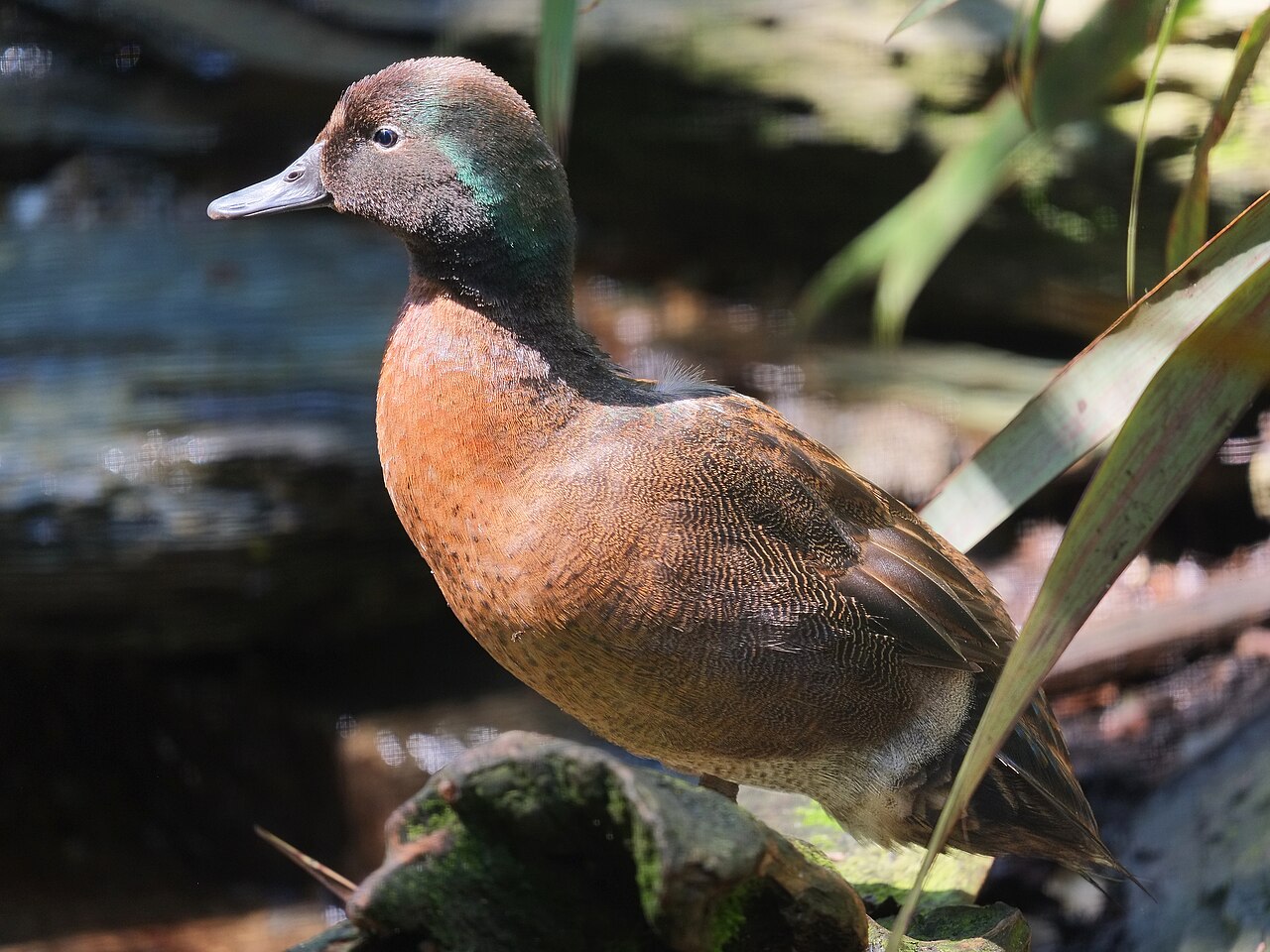
A small, dark teal of forty-three centimetres; the male weighs about 400 g, the female only 310 g. The male is dark sepia with green iridescence over head and back, a dark chestnut breast, a paler brown belly and a white patch at the base of the tail. The female is uniformly dark brown with a paler belly. Both sexes show a crisp white eye-ring in an otherwise dark head, a dark grey bill, dark grey legs and a dark brown eye. The clincher is the wing: so short and slack that the tips reach only about halfway along the back — this duck cannot get off the ground.
Confusion species
Brown Teal (Anas chlorotis) is larger at 48 cm, more colourful in breeding dress and has full-length wings reaching past the tail base; it flies, and it lives some two thousand kilometres to the north in Northland and on Great Barrier Island. Auckland Island Teal (Anas aucklandica) is the hard one: also flightless and almost identically marked, but slightly larger at 45 cm and paler, and confined to the Auckland Islands five hundred kilometres to the north-west. The three overlap nowhere, so place alone settles it. The only other duck on Campbell Island is Pacific Black Duck (Anas superciliosa), far bigger and paler, with two black lines across a cream face.
Habitat
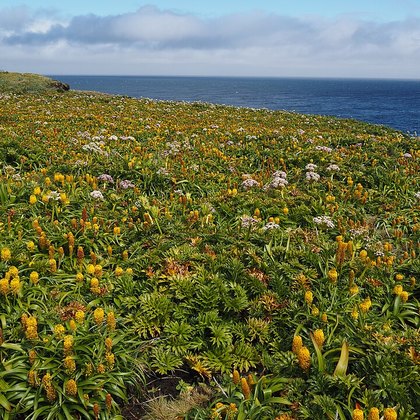
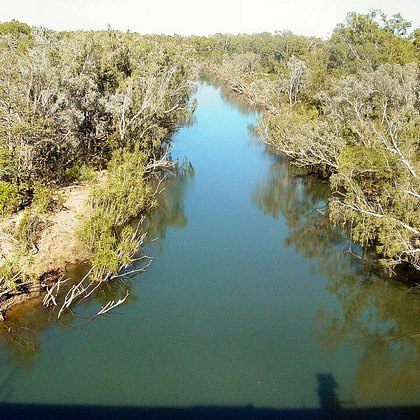
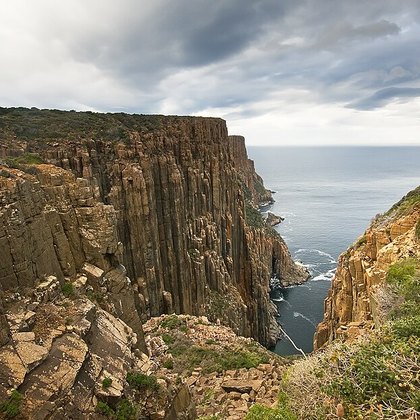
The shoreline zone of a subantarctic island: rocky coasts with stranded kelp, peaty streams, boggy ground under sedge and tussock, and the margins of the island lakes. By day it stays hidden beneath overhanging vegetation and in burrows under tussock pedestals; only after dark does it come out onto open water and the weed line. The diet is largely animal — invertebrates from the peat and the beach — with seed stripped from rushes and grasses alongside.
Where the bird is most often found, arranged by main group and formation.

Range and movements
Endemic to the Campbell Islands, some six hundred kilometres south of Bluff, and native nowhere else on earth. The last remnant survived on Dent Island, a twenty-three-hectare stack off the west coast of Campbell that the rats never reached. Since the releases of 2004 to 2006 the species is again on Campbell Island (Motu Ihupuku) itself, and an insurance population sits on Codfish Island (Whenua Hou) off Stewart Island. It occurs neither in Australia nor on the New Zealand mainland.
- Resident
- dark = core range, pale = thinly spread
Where and when to look
Only on a subantarctic cruise, and then only with a landing on Campbell Island: walk the track past Beeman Cove and Tucker Cove and scan the peaty creeks and sedge edges close to the water at first light or last light. Look for a low, near-black shape with a white ring round the eye; the bird sits motionless until you are almost on top of it and then runs off without ever taking wing. Without an island landing you will not see this species.
Conservation
Vulnerable (VU), still one of the rarest ducks in the world, though the line now points up: New Zealand rates it 'nationally increasing'. Norway rats, brought ashore by sealers, wiped it from the main island in the nineteenth century, and after 1886 there was no confirmed record for nearly ninety years. From the relict population on Dent Island eleven birds in all were taken in the 1980s and in 1990 to found a captive flock. In 2001 the rats were cleared from Campbell Island, at over eleven thousand hectares the largest rat eradication attempted at the time, and from 2004 to 2006 about a hundred and fifty captive-bred birds went back. A survey in 2009 found at least a hundred and two birds on Campbell; Dent and Codfish probably hold under thirty each. The weak point is hereditary: almost the whole captive line descends from a single female, and the genetic variation is among the lowest ever measured in a wild bird.
Scientific name
Anas nesiotis | (Fleming, 1935)
J.H. Fleming, a curator in Toronto, described the species in 1935 as Xenonetta nesiotis, in the first number of the Occasional Papers of the Royal Ontario Museum of Zoology; because it was later moved to Anas, author and year carry parentheses. The genus name Xenonetta is built from Greek xenos, 'strange', and netta, 'duck'. nesiotis comes from Greek nesiotes, 'islander', after the minute island world on which the whole species rests. The type locality is Campbell Island. For a long time the bird was held to be a race of the Auckland Island Teal; only in the 1990s was it recognised as a species in its own right on size, plumage and genetic work.