All species › Passerines › Fantails › Northern Fantail
Northern Fantail | Rhipidura rufiventris
Streepborstwaaierstaart | Abanico de timor
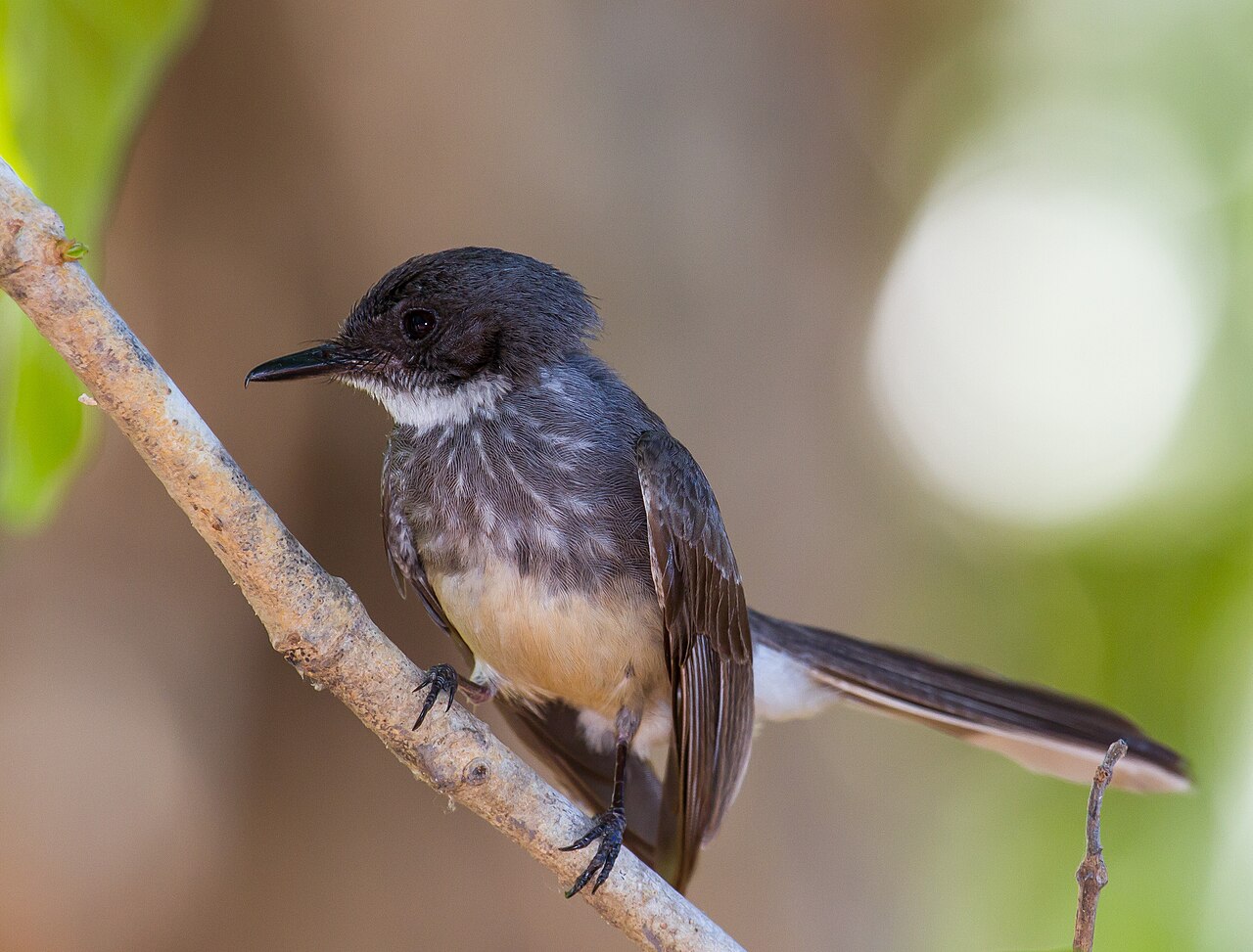
The Northern Fantail is the quiet one of the family. Where its relatives never sit still for a second, this bird hangs upright on a branch in half shade, tail closed, and waits for an insect to pass. It is a bird of the wet north: mangrove, creekside woodland and monsoon forest, and hardly ever far from water.
Voice
A short run of clear descending whistles, chee-chee-chew-chew, much fuller and more musical than the thin squeaking of a Grey Fantail and with longer gaps between. There is also a hard metallic chek used as a contact and warning note, often given several times over. It sings little and softly, so the bird is usually seen before it is heard.
No freely licensed recording has been found for this species yet; what to listen for is described below.
Identification
A big fantail, around twenty centimetres with the tail, but only eleven to fourteen grams of body. The upperparts are plain grey, the wings dark grey with a brown wash. The throat is white and that white patch runs sideways under the ear coverts. A single broad grey band crosses the breast with faint pale streaking; belly and undertail coverts are white to buff. The tail is dark grey with white edges to the outer feathers and is usually carried closed.
Confusion species
Grey Fantail (Rhipidura albiscapa) is smaller and restless, fans its tail constantly, has two white wingbars and a thin white brow, and lacks the broad breast band. Arafura Fantail (Rhipidura dryas) has an orange rump and breast. Mangrove Fantail (Rhipidura phasiana) is paler and much smaller. Leaden Flycatcher (Myiagra rubecula) sits as upright and as still but has a blue-grey gloss and quivers its tail instead of fanning it.
Habitat
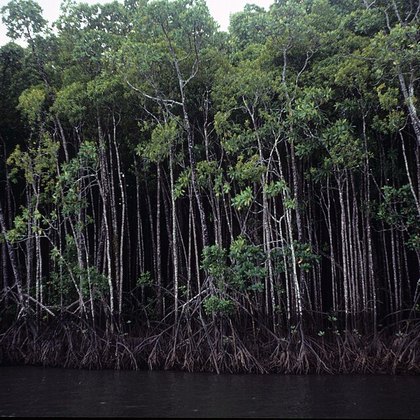
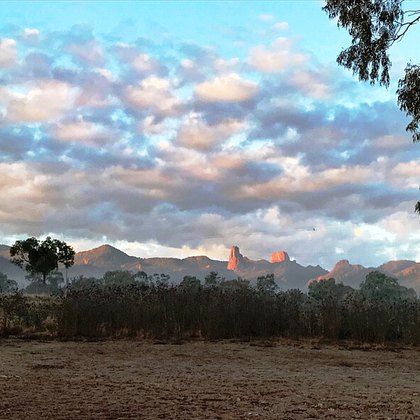
Mangrove, monsoon forest and vine thicket, paperbark swamp forest and the woodland along creeks and billabongs; also the damper margins of eucalypt woodland. It hunts in the middle storey, two to eight metres up, from open branches under the canopy, and needs forest with space between the stems for that. Water nearby is nearly always part of the picture.
Where the bird is most often found, arranged by main group and formation.


Range and movements
Northern Australia, from Port Hedland and the Kimberley in Western Australia through the Top End of the Northern Territory and along the Gulf of Carpentaria to Cape York Peninsula, with scattered records south to Townsville. Beyond that New Guinea, the Moluccas and the Lesser Sundas as far as Timor, in some twenty subspecies; Australian birds belong to the form isura. Resident, with local shifts at most.
- Resident
- dark = core range, pale = thinly spread
Where and when to look
Walk a mangrove boardwalk or a creek bank and watch not for movement but for stillness: this fantail stands out precisely because it reacts to nothing. Note the white throat patch running back behind the eye, and the closed tail. In the dry winter, June and July, it often keeps to fixed perches along a shrinking billabong.
Conservation
Least Concern (LC). The species has an enormous range from Timor to Cape York and is reasonably common in suitable forest, though nowhere numerous. In Australia its ground lies largely outside the farming belt; mangrove and monsoon forest are nonetheless under pressure from coastal development and from altered fire regimes around the creek forests. Pigs and water buffalo damage the swamp forest understorey locally.
Scientific name
Rhipidura rufiventris | (Vieillot, 1818)
Vieillot described the bird in 1818 as Platyrhynchos rufiventris; because it later moved to another genus, author and year stand in parentheses. The genus Rhipidura was introduced by Vigors and Horsfield in 1827, from Greek rhipis, rhipidos, fan, and oura, tail. rufiventris means red-bellied, after the Timor birds the description rests on; Vieillot wrongly believed his specimen came from Australia, and the Australian birds have a white belly.