All species › Passerines › Honeyeaters › Orange Chat
Orange Chat | Epthianura aurifrons
Oranje schijnpaapje | Eptianuro naranja
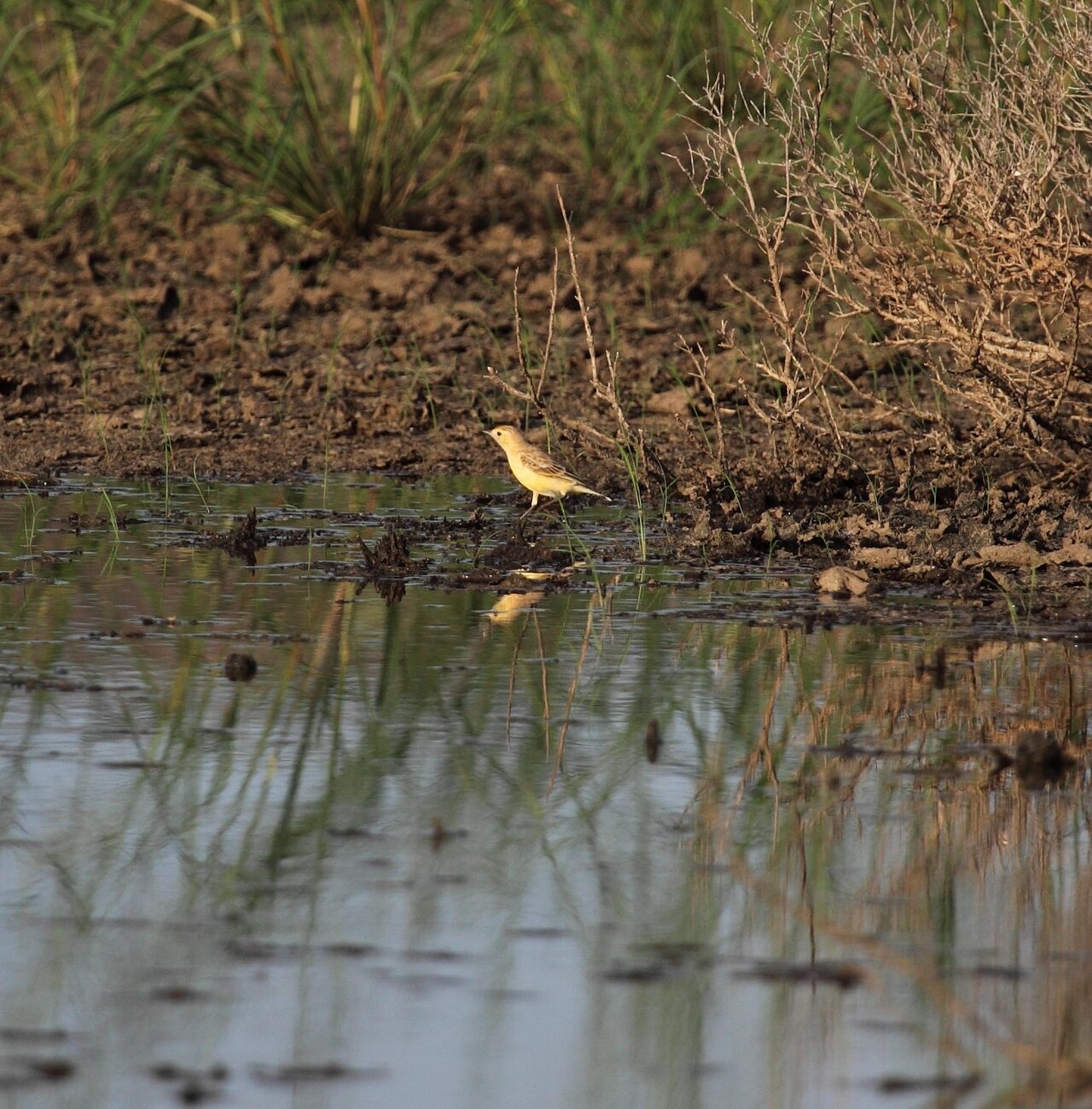
The Orange Chat is the bird of the salt flat. Where saltbush (salt-tolerant dwarf shrubland of saline plains) and bluebush (blue-grey salt-tolerant shrubland of the semi-arid interior) spread their grey-green cushions over a bare, saline basin, a male of barely eleven centimetres will sometimes sit on top of one looking as though an orange had been dropped into the landscape: deep yellow with a warm orange glow over crown and breast, and a black mask running down onto the throat. The female is a pale greyish-yellow bird. Both wander with the rain, and where rain has fallen there may be hundreds at once.
Voice
The voice is small, high and metallic. The contact call is a thin, sharp rasp — often rendered as a high metallic chik or tzeng — repeated constantly by parties as they move low over the salt from bush to bush. In the breeding season the male adds a short, soft, slightly squeaky song, usually from the top of a saltbush or during a brief display flight. In open country without any cover that small sound is often the first sign a flock is present, before you notice the orange specks moving.
Recording: Mike Letnic — CC BY-NC-SA 4.0 · Fowlers Gap, Australia · xeno-canto
Identification
A tiny, rotund bird of ten to twelve centimetres with thin legs, a short square-cut tail and a slender, straight, pointed bill. The breeding male is deep cadmium yellow with an orange overtone, strongest on crown and breast; the lores and throat are black, the rump golden orange and the tail white-tipped. Out of the breeding season the male is duller and the black throat may partly fade. The female is far paler: mottled grey-brown above, a pale yellow eyebrow, a whitish throat, mottled grey-brown breast and soft fawn-yellow underparts. Decisive in both sexes is the eye, which is red-brown to red — a character no other chat shares. The birds walk on the ground and seldom go higher than half a metre.
Confusion species
Four chats and a gibberbird share much the same build and the same dry country, and the separation rests on colour and on the eye. Yellow Chat (Epthianura crocea) is the nearest problem: its male is pure golden yellow with a yellow throat and a black crescent across the breast, whereas Orange Chat has an orange cast and carries its black on the throat rather than the breast. For the pale females of both, the eye is the key: dark red-brown in E. aurifrons, pale in E. crocea. Crimson Chat (Epthianura tricolor) has a red rather than yellow crown, breast and rump and a black mask around the eye above a white throat; White-fronted Chat (Epthianura albifrons) is white with a black band and shows no yellow. The closely related Gibberbird (Ashbyia lovensis) also has a yellow forehead and yellow underparts, but lacks the black mask and black throat entirely, has a grey crown and a pale eye, and keeps to stony gibber rather than saltbush. Habitat helps too: E. crocea chooses damp ground, E. aurifrons the dry saline basin.
Habitat
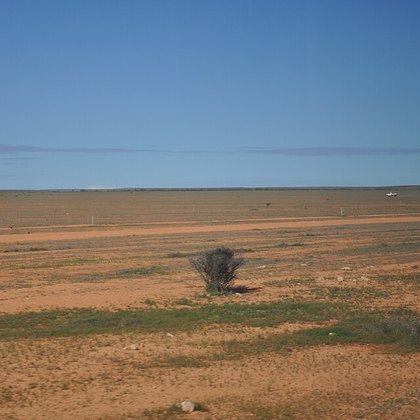
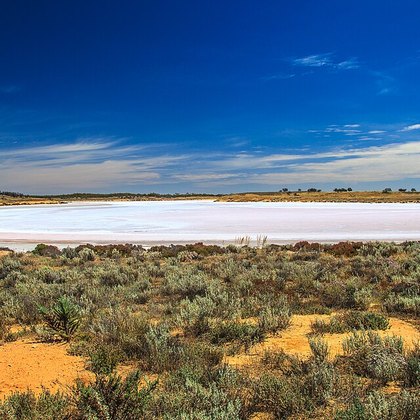
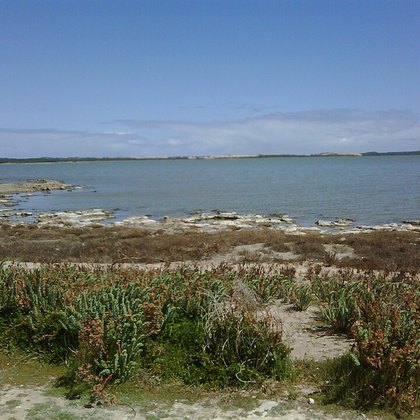
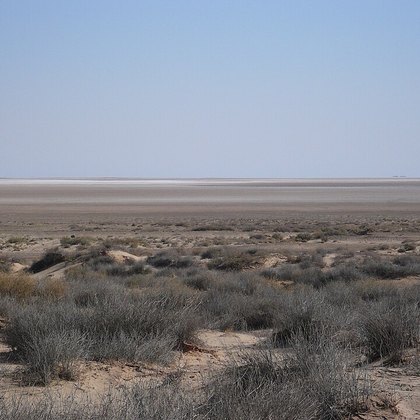
Low, treeless shrub plains of the arid and semi-arid interior, almost always on saline soil: saltbush and bluebush, samphire (low, succulent saltmarsh shrubland on tidal mud) around salt pans and salt lakes, and sparsely vegetated clay flats. Occasionally the species reaches the tropics or the coast. The birds forage on foot on the ground or from low shrubs and eat almost entirely invertebrates, chiefly insects and spiders. They are strongly nomadic and gregarious: usually in pairs or small parties, but after good rain flocks of more than four hundred birds have been recorded, often mixed with other chats. Breeding is opportunistic, centred on August to November but possible year-round in favourable conditions; the female builds a neat cup low in a shrub, there are three or four speckled eggs, both parents incubate for about eleven days and the young fledge in about ten. Three broods in a year are not exceptional.
Where the bird is most often found, arranged by main group and formation.
Range and movements
Endemic to Australia and confined to the arid and semi-arid interior: from central and south-eastern Western Australia east to western Queensland and south to north-western Victoria, with its core in the inland salt-lake basins. Because of its strong nomadism the picture shifts from year to year: in dry years the birds concentrate at the few places still holding life, after rain they scatter widely. The species is absent from Tasmania and does not occur in New Zealand.
- Resident
- Breeding (summer)
- dark = core range, pale = thinly spread
Where and when to look
In the interior, drive slowly along a saltbush or samphire flat and watch the tops of the bushes: an orange male gives itself away from a distance against the grey-green, while the female only shows when it moves. Where there is one there will be more, because the species is almost always in company. If torn between Orange and Yellow Chat, do not weigh the shade of colour but check two things: is the black on the throat or lower, on the breast, and is the eye red or pale. Chances are best after inland rain; in a dry year a familiar flat can be completely empty.
Conservation
Least Concern (LC), with a large range and no worrying population trend. This species' habitat — saline shrub plain of little agricultural value — is less damaged than most Australian country, though overgrazing by stock, goats and rabbits and the spread of exotic herbs locally thin the shrub layer it nests in. Because the birds nest on or just above the ground, cats and foxes remain a standing risk. The greatest uncertainty is the water regime of the interior: the species depends on irregular rainfall and responds to it fast, which makes it resilient but also exposed to long droughts.
Scientific name
Epthianura aurifrons | Gould, 1838
John Gould described the species in 1838 as Ephthianura aurifrons, from a bird from interior New South Wales; author and year stand without parentheses, because it has never left this genus, which Gould erected in the same year. The genus name Epthianura is generally explained from Greek oura, 'tail', with a prefix read either as 'refined' or as 'shrunken' — a reference to the short tail. The epithet aurifrons comes from Latin aurum, 'gold', and frons, 'forehead'. The English name, the Dutch oranje schijnpaapje and the Spanish eptianuro naranja all choose the field colour rather than the golden forehead of the scientific name. The Dutch 'schijnpaapje' recalls the chats of Eurasia, to which these honeyeaters are not related.