All species › Parrots › Old World parrots › Red-winged Parrot
Red-winged Parrot | Aprosmictus erythropterus
Roodvleugelparkiet | Cotorra de alas rojas
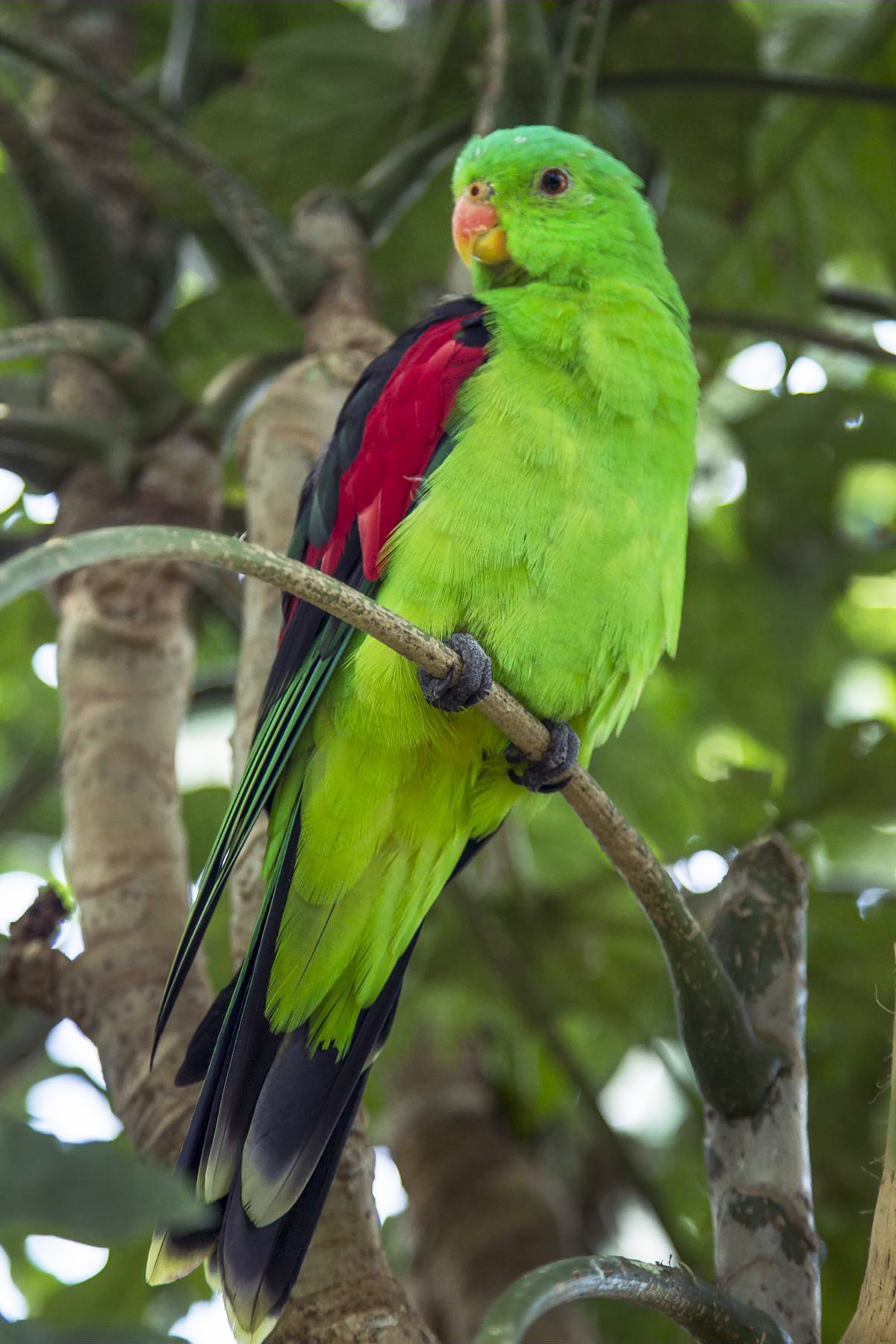
The Red-winged Parrot is the green parrot of the tropical savanna and the dry inland woodlands, known by the large red wing panel that flashes at every beat. The male adds a velvet-black mantle and a deep blue rump; the female is plainer green. Its flight is unmistakable: slow, deep, slightly loose-limbed beats in which the wings swing well below the line of the body.
Voice
The flight call is a sharp, metallic krillik, krillik that carries far across open woodland and usually announces the bird before it comes into view. Alarm brings a harsh, grating chik-chik-chik, rapidly repeated. Feeding birds, by contrast, are strikingly silent; a party in a flowering eucalypt gives itself away only by moving leaves and falling blossom. Around the nest hollow male and female exchange soft, throaty notes.
No freely licensed recording has been found for this species yet; what to listen for is described below.
Identification
A medium-sized parrot of just over thirty centimetres with a fairly broad, rounded tail and a heavy head. The male is bright apple green with a large, deep red panel across the whole of the wing coverts, a velvet-black mantle and back, a deep blue rump and a yellow-green tail tip; the bill is orange-red, the iris yellow-orange. The female is duller green with a green rather than black back, a pale blue-green rump and only a narrow, dull red edge along the wing. Young birds resemble the female. The best mark at range is the flight: slow, deep and undulating, with the wings swinging through below the body, giving the bird a languid, floppy action quite unlike the fast, straight travel of most parrots.
Confusion species
Australian King Parrot (Alisterus scapularis) is the main pitfall where the two meet in eastern Queensland: it is considerably larger, with a longer and broader tail, and its male is red from head to belly with no red wing panel. On females it comes down to where the red sits: the Red-winged female carries it as a narrow edge in the wing and has a pale blue-green rump, while the King Parrot female has red on the belly and none in the wing. The three Polytelis parrots match it for size but have a much longer, narrower, tapering tail and no red wing panel: Superb Parrot (Polytelis swainsonii) has a yellow face and a red breast band, Regent Parrot (Polytelis anthopeplus) is deep yellow, and Princess Parrot (Polytelis alexandrae) is pastel with a pink throat.
Habitat
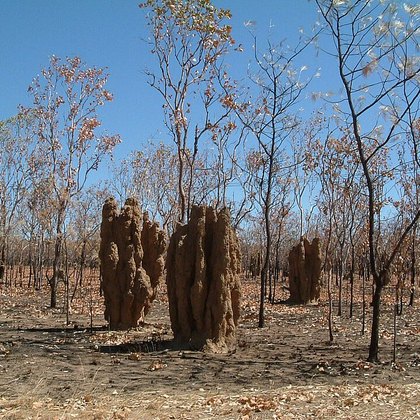
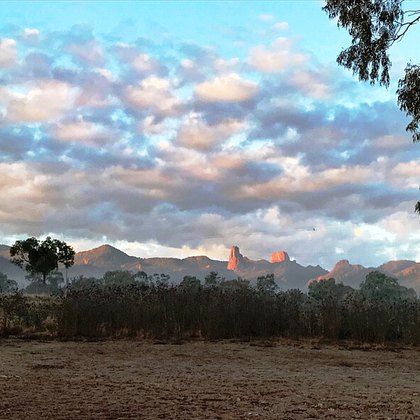
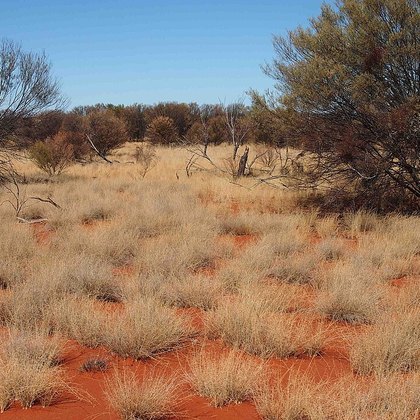
Open, dry woodland and eucalypt savanna make up its main country, along with the timber lining creeks and rivers, mulga and acacia scrub, brigalow, and in the north mangroves on the coast. It eats seed of grasses, acacias and eucalypts, blossom, nectar, berries and insect larvae, largely in the canopy and far less on the ground than most parrots. The nest is in a deep hollow in an old tree, often strikingly low down and almost always close to water.
Where the bird is most often found, arranged by main group and formation.


Range and movements
Northern and eastern Australia, over a large area: from the Kimberley in Western Australia across the Top End and the Gulf Country of the Northern Territory through nearly all of Queensland, and inland south to about the Darling catchment in northern New South Wales. It is absent from Victoria, southern South Australia, south-western Western Australia and Tasmania, and does not occur in New Zealand. Beyond this map frame it also lives in southern New Guinea.
- Resident
- dark = core range, pale = thinly spread
Where and when to look
In the north, drive along a creek lined with big eucalypts at first light and watch for birds crossing the water: the red wing panel flashes at every beat and shows even against the sun. It can be done without colour at all — the slow, deep, swinging beat is distinctive at long range in itself. Through the hottest hours they sit motionless and silent in the shade of the crown and are almost impossible to find; look for them in the morning or late afternoon at a waterhole.
Conservation
Least Concern (LC) and common to locally numerous over most of the tropical savanna. At the southern edge of the range, in inland New South Wales and southern Queensland, it has declined with the wholesale clearing of brigalow and riverine woodland and the loss of old hollow-bearing trees, for which it must in any case compete with cockatoos and honeybees. Young birds are still occasionally taken from nests for the bird trade. In the north, altered fire regimes that damage the seed-bearing understorey are the main uncertainty.
Scientific name
Aprosmictus erythropterus | (Gmelin, 1788)
Gmelin described the species in 1788 as Psittacus erythropterus; because it later moved to another genus, author and year stand in parentheses. The genus Aprosmictus was introduced by Gould in 1842, from the Greek aprosmiktos, 'unapproachable' or 'unsociable'; this species is its type. The epithet erythropterus is built from erythros, 'red', and pteron, 'wing' — exactly what the English and Dutch names say as well. The original description gives no locality; Mathews later fixed it on New South Wales.