All species › Passerines › Thrushes and allies › Russet-tailed Thrush
Russet-tailed Thrush | Zoothera heinei
Papoeagoudlijster | Zorzal de heine
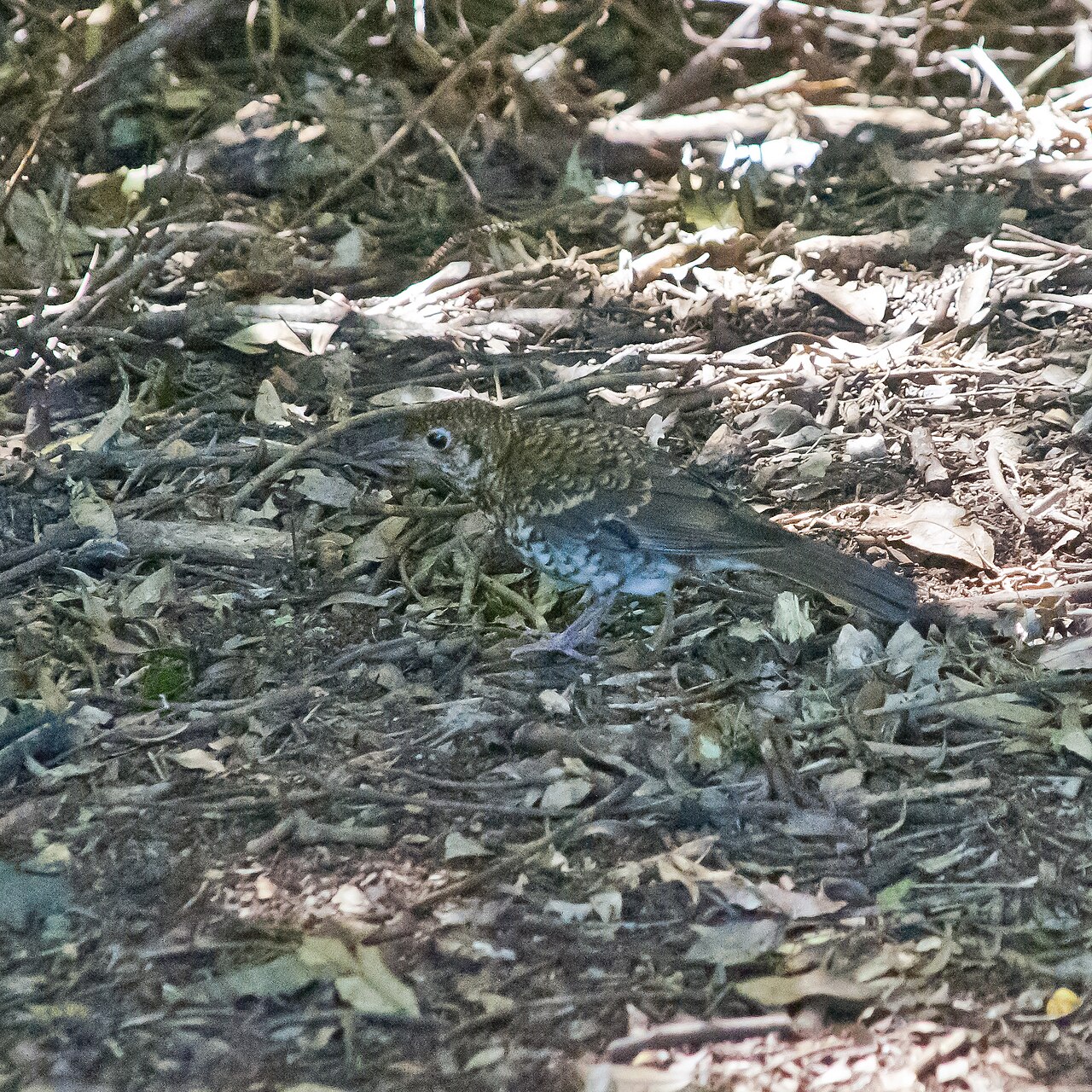
The Russet-tailed Thrush is the native thrush of the eastern Australian rainforest: a quiet brown bird with fine dark scaling on the underparts, which works the forest floor in the leaf litter all day without a sound and, when approached, walks away rather than flying. It resembles its larger relative the Bassian Thrush so closely that into the twentieth century the two were treated as one species; where they occur together, voice is the only thing that really tells them apart.
Voice
A bird that says little but carries far. The song consists of clear drawn-out whistles at two different pitches, repeated in a sustained, even rhythm with long silences between; it sings chiefly at first light and at dusk, from low in the forest, and on overcast days during the day as well. The song of the Bassian Thrush is slower, lower and more irregular in rhythm, with notes that come less in fixed pairs — that difference in rhythm is the only reliable field character in the zone of overlap. There is besides a thin high contact call and a soft clucking in alarm; the bird is seldom loud.
No freely licensed recording has been found for this species yet; what to listen for is described below.
Identification
Twenty-two to twenty-five centimetres: a compact, short-tailed thrush with a fairly large head and a straight stout bill. The upperparts are warm olive to rusty brown, with the warmest, most russet tone on the rump and the outer tail feathers — the colour from which the English name is taken. The underparts are white to cream and, over the breast and flanks, covered with fine continuous dark scaling, each feather carrying a dark crescent-shaped edge. The face is dull brown with a pale eye-ring and two faint dark lines; the legs are flesh-coloured. The outer tail feathers carry broad white tips, most conspicuous as the bird flies off. The sexes look alike. The carriage is low and forward-leaning, and the bird moves in short dashes with long pauses.
Confusion species
Bassian Thrush (Zoothera lunulata) is the real problem: it overlaps in the rainforest of south-eastern Queensland and north-eastern New South Wales, wears the same scaling, and can be separated only on size (noticeably larger and heavier), on the longer tail with narrower white tips, on the cooler, less rusty upperparts, and above all on song, which is slower and more irregular than the even two-pitched whistling of this species; where both occur, the Russet-tailed usually sits lower and nearer the coast. Just as important is the contrast with the introduced Song Thrush (Turdus philomelos), which in Australia holds on only around Melbourne: that bird is set below with separate, crisply defined teardrop spots in rows rather than continuous scaling, is plain olive-brown above without a rusty rump, and lives in gardens and parks instead of on the rainforest floor. Spotted and in the garden is the introduction; scaled and in the forest the native bird. Spotted Quail-thrush (Cinclosoma punctatum) of drier forest is spotted rather than scaled, and the male has a black throat.
Habitat
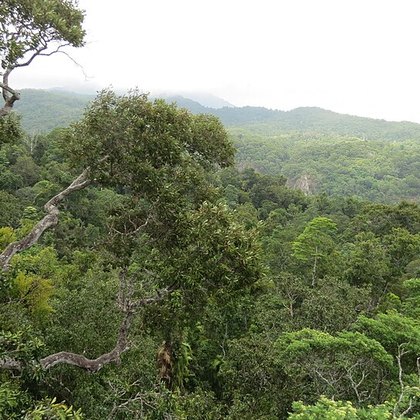
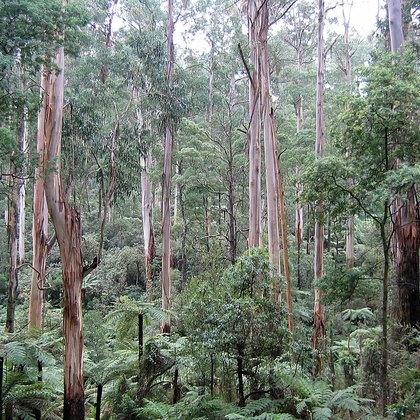
Tropical and subtropical rainforest, vine thicket and wet eucalypt forest with a rainforest understorey, each time with a dense canopy and a deep, moist litter layer. There the bird forages on the ground: it pushes leaves aside with its bill and digs in the humus for earthworms, beetles, centipedes and snails. Its scaling against the dappled light of the forest floor is so effective that the bird is usually noticed only when it moves. It favours the edges of tracks and creeks, where the ground stays damp longest. In the southern part of the range birds drop to lower, warmer forest in winter.
Where the bird is most often found, arranged by main group and formation.

Range and movements
Eastern Australia, from Cape York Peninsula and the wet tropics around Cairns along the coast and the eastern ranges south to north-eastern New South Wales, roughly as far as the Hunter. Outside Australia the species occurs in New Guinea and on some neighbouring islands; it is from that part of the range that the Dutch name papoeagoudlijster derives, even though for most users of this guide the bird is first of all an Australian species. In south-eastern Queensland and north-eastern New South Wales it shares the forest with Bassian Thrush. There is no true migration, but there is an altitudinal shift to lower forest in winter.
- Resident
- dark = core range, pale = thinly spread
Where and when to look
Work by ear and at first light. Stand still on a rainforest track before sunrise and wait for the even two-pitched whistling with its long silences; it is the one moment at which the species gives itself away, and it is at the same time the character that separates it from Bassian Thrush. Then scan the forest floor for movement rather than colour, for the bird stands quite still most of the time. If it flies, look for the russet rump and the broad white tail tips — often that is all one gets. With every record in the overlap zone, note whether song was heard: without voice, a Zoothera thrush in south-eastern Queensland is strictly speaking not identifiable.
Conservation
Least Concern (LC). The species is widespread across its range and locally common, and benefits from the fact that much of the eastern rainforest lies in national parks and World Heritage areas. It is, however, strictly tied to continuous forest with a dense, moist litter layer and disappears from fragmented patches, which become too dry and too bright. Feral pigs turn over the litter layer in which it feeds, and cats and foxes hunt birds that spend so much time on the ground. The severe bushfires of 2019 and 2020 damaged rainforest margins in the southern part of the range. None of these factors currently produces a national decline. Because the species was lumped with Bassian Thrush for so long, older counts for both are unreliable and the actual population trend is less well known than for comparable forest birds.
Scientific name
Zoothera heinei | (Cabanis, 1851)
Jean Louis Cabanis described the species in 1851 in the Museum Heineanum, the catalogue of Ferdinand Heine's bird collection, as Oreocincla heinei; the epithet honours that collector. The description gave Japan as the locality, which proved to be an error: Cabanis himself corrected it in 1872 to northern Australia, Queensland. The genus name Zoothera is formed from Ancient Greek zoon ('animal') and theras ('hunter'), after the habit of hunting out ground-living animals. The English Russet-tailed Thrush names the rusty tail, the Spanish zorzal de Heine the collector. The Dutch papoeagoudlijster refers to the New Guinea part of the range and is somewhat misleading for a bird that in this guide appears chiefly as an Australian forest species.