All species › Passerines › Thornbills, scrubwrens, gerygones and allies › Southern Whiteface
Southern Whiteface | Aphelocephala leucopsis
Zuidelijke witgezicht | Cariblanco meridional
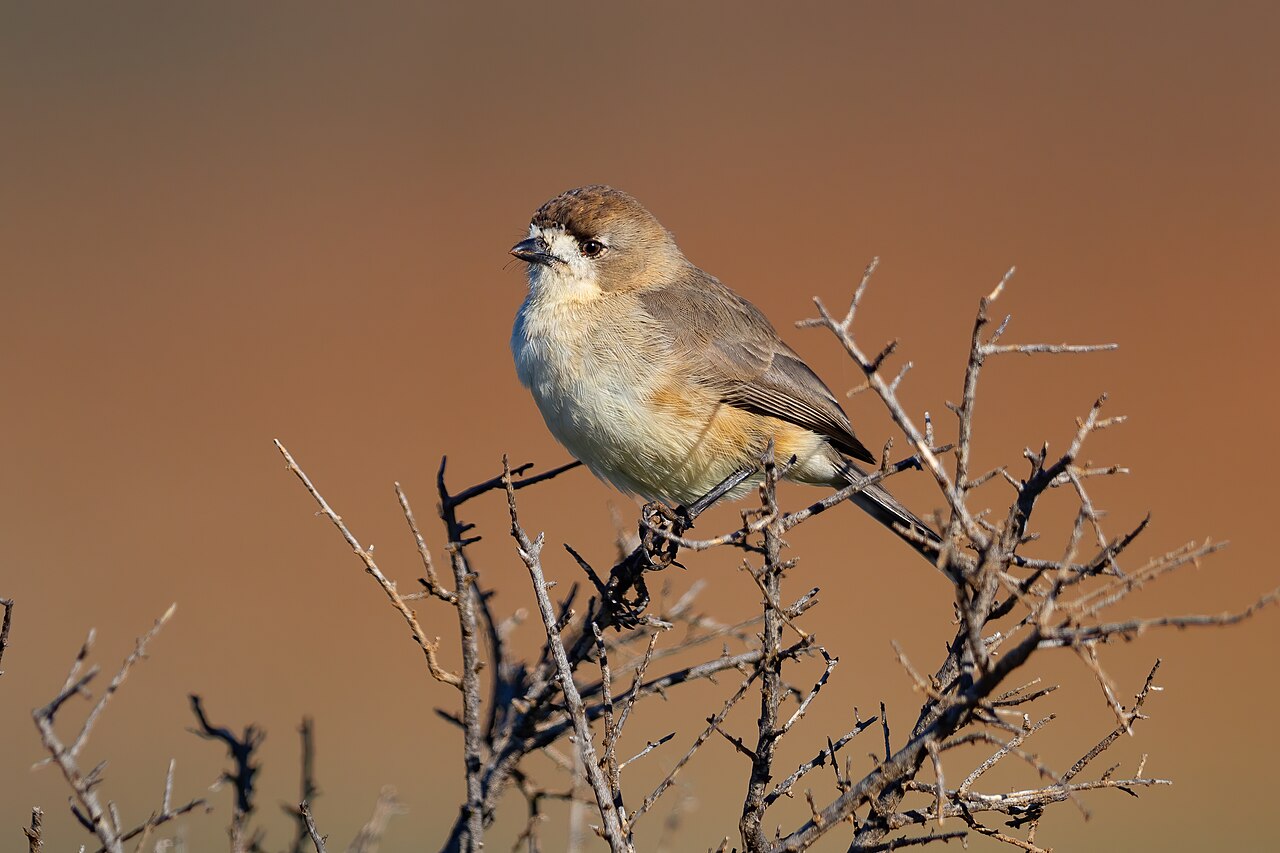
The Southern Whiteface is the commonest of the three whitefaces and at the same time the one in the most trouble: a stocky grey-brown bird of eleven centimetres with a white band across the forehead, a pale eye and a short finch-like bill. It feeds in parties of ten to fifteen on the ground under open woodland, and in forty years it has vanished from large parts of its former range.
Voice
A continual rapid twitter on one note, by which a feeding party keeps in touch; it sounds busier and flatter than the song of the thornbills it often travels with. The flight call is a brisk wit, wit-a-wit. In alarm comes a harsher grating kzzurrk.
No freely licensed recording has been found for this species yet; what to listen for is described below.
Identification
Ten to twelve centimetres, about twelve grams, and so more solidly built than a thornbill. Grey-brown above, pale grey below with olive-buff flanks; in southwestern Australia those flanks are mottled cinnamon-chestnut. A white band crosses the forehead with a dark margin above it. The tail carries a broad black band with white tips that flashes as the bird flits up. The eye is cream, the bill dark grey, short and finch-like.
Confusion species
Banded Whiteface (Aphelocephala nigricincta) shares the same country across much of the interior and wears a crisp black breast band that this species lacks entirely, along with a whiter face and a rufous flank patch. Chestnut-breasted Whiteface (A. pectoralis) carries a chestnut band in that place and occurs only in the gibber country of South Australia. All the thornbills of the same woodland, and Chestnut-rumped Thornbill (Acanthiza uropygialis) and Yellow-rumped Thornbill (Acanthiza chrysorrhoa) in particular, have a thin pointed bill rather than the short finch-like one, and lack the white forehead band. At range, feeding parties on the ground are separable by the whiteface's half-hopping gait.
Habitat
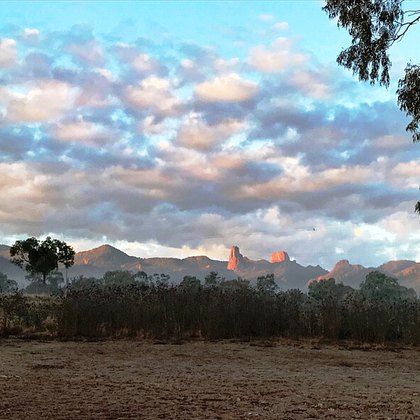
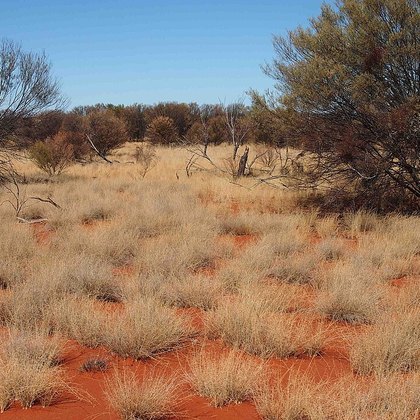
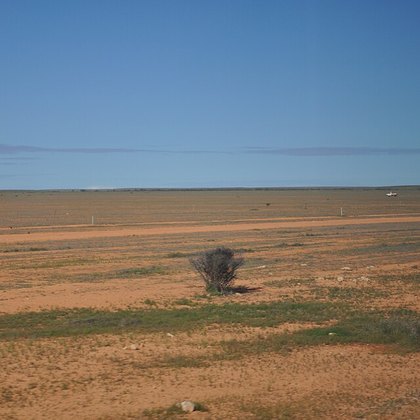
Dry open forest, woodland and inland scrub: mallee, mulga and saltbush, by preference where fallen branches and dead trees lie about. Hollow limbs, stumps, fence posts and even nest boxes serve as nest sites, which explains why the species goes as soon as dead wood is tidied away. It always wants an open or grassy ground layer it can forage on.
Where the bird is most often found, arranged by main group and formation.

Range and movements
Across the southern half of Australia apart from Tasmania and the mainland coastal belt: Queensland north to Birdsville and east to the Darling Downs, New South Wales east to Tenterfield, the drier inland of Victoria, South Australia south to the Eyre Peninsula, southern Northern Territory and southern Western Australia. Two subspecies: the nominate form in the east and centre, and A. l. castaneiventris in the southwest, with a rufous wash to the flanks.
- Resident
- dark = core range, pale = thinly spread
Where and when to look
Look for open woodland with plenty of dead wood on the ground and watch for a party of small birds working over the surface in a half-hopping, half-walking gait. The white tail tips flash as they flit up. If you get one still, check the bill: short and finch-like means whiteface, thin and pointed means thornbill. Then check the breast: no band means this species.
Conservation
Vulnerable (VU). That is a striking status for a bird still locally common, but the atlas data show a decline of about 43 per cent and it is continuing. The causes are woodland clearing, overgrazing that removes the herb layer and its seed supply, and the tidying away of fallen branches and dead trees it nests in; mining plays a local part as well. Several Australian jurisdictions have by now added the species to their own threatened lists. Anyone wanting to keep it on their own land leaves the dead wood where it lies.
Scientific name
Aphelocephala leucopsis | (Gould, 1841)
John Gould described the species in 1841 as Xerophila leucopsis; the type locality is Adelaide, South Australia. The move to another genus puts author and year in parentheses. The genus Aphelocephala is from Greek apheles, 'simple, plain', and kephale, 'head'. The epithet is Greek as well, from leukos, 'white', and opsis, 'face': the white face that gives all three species their name.