All species › Passerines › Fairywrens, grasswrens and emu-wrens › Variegated Fairywren
Variegated Fairywren | Malurus lamberti
Bont elfje | Maluro variegado
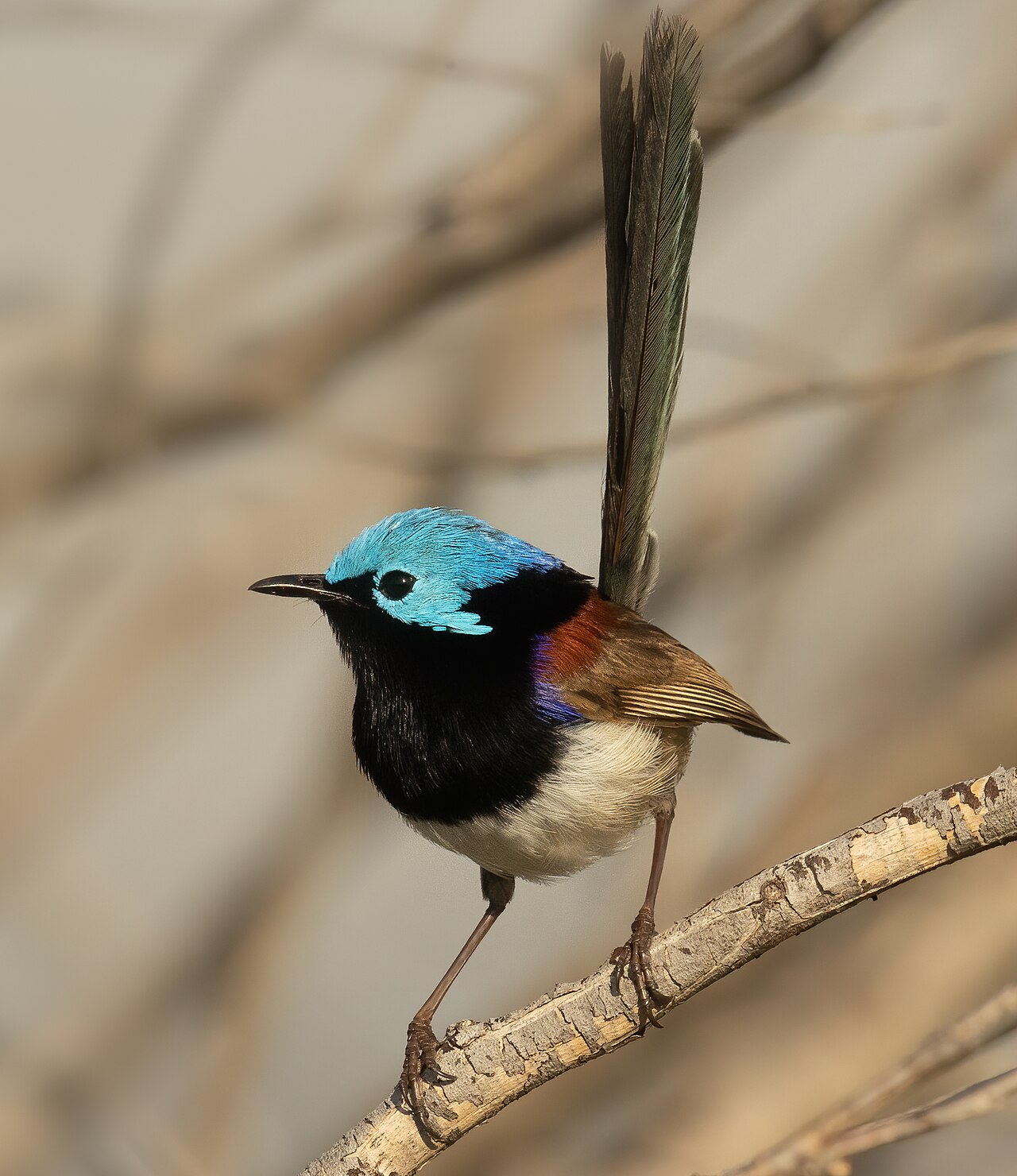
The Variegated Fairywren is the eastern member of the chestnut-shouldered group: a small, long-tailed bird whose breeding male is sky blue, black and chestnut. Since 2018 only the population east of the Great Dividing Range counts as this species; everything further west is now Malurus assimilis.
Voice
A high, fast reel of ten to twenty short elements a second, lasting one to four seconds; of all the fairywrens this is the softest. Both sexes give it, especially in boundary disputes. The contact note is a thin tsst or seeee, by which the group keeps together in cover; the alarm call is a short, sharp tsit.
No freely licensed recording has been found for this species yet; what to listen for is described below.
Identification
Fourteen to fifteen centimetres, of which nearly half is tail, carried cocked. The breeding male has bright blue ear coverts with a slightly darker crown, a black throat and nape, a deep blue mantle, chestnut shoulders, grey-brown wings, a blue-grey tail and a creamy white belly. Females, young birds and males outside the breeding season are predominantly grey-brown. All males have a black bill and black lores, females a red-brown bill and bright rufous lores. Young males have a black bill by six months.
Confusion species
The main difficulty is Malurus assimilis, the same species until 2018: its males have a blue-purple crown and mantle rather than sky blue and deep blue, but in the field range decides — this species stays east of the Great Dividing Range, with a broad band of intermediates in southern Queensland between Goondiwindi, Wide Bay, Rockhampton and Emerald. The Superb Fairywren (Malurus cyaneus) lacks chestnut shoulders and is smaller and shorter-tailed; its female is plain brown, while this one has a faint grey-blue wash. Females and eclipse males of all the fairywrens are largely brown and can often only be placed by company and district; a brown bird with a black bill and black lores is a male in eclipse, not a female.
Habitat
Scrub and woodland edges with a dense, continuous low layer: dry eucalypt woodland with a shrub storey, eastern heathland and rank growth along creeks. It holds on in the suburbs of Sydney, where survey work suggests it goes for plant diversity rather than sheer density of cover. Pine and eucalypt plantations are unsuitable because they lack undergrowth. It forages deeper inside the shrubs, below two metres, and less on open ground than the Superb Fairywren.
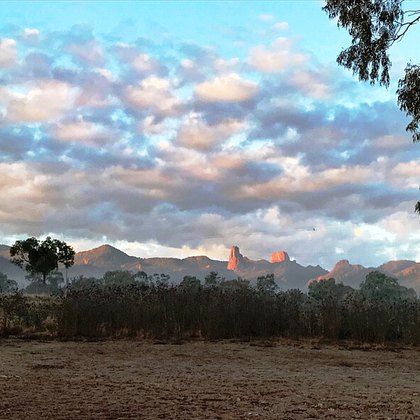
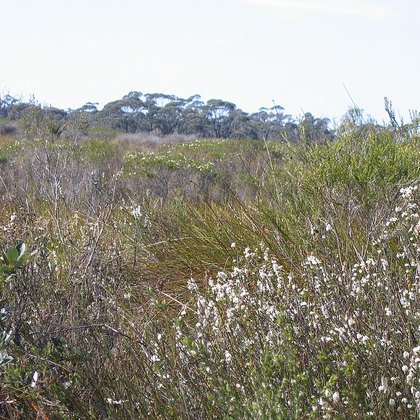
Where the bird is most often found, arranged by main group and formation.


Range and movements
Eastern Australia east of the Great Dividing Range, from about Gladstone in south-eastern Queensland south to north-eastern New South Wales. Resident: a pair or small group defends the same small territory year-round. In extreme heat birds have been recorded sheltering in mammal burrows.
- Resident
- dark = core range, pale = thinly spread
Where and when to look
Look low and watch for movement along a shrub edge; the soft reel does not carry, so get close and stand still. In spring and summer a displaying male sometimes carries a yellow petal in his bill to offer a female — yellow in this species, pink, purple or red in the others. At a nest with young a bird may perform the rodent run: head lowered, wings held out and feathers fluffed, it runs off like a mouse while calling continuously.
Conservation
Not threatened. Nest predators include Australian magpies, butcherbirds, kookaburras, currawongs, crows and ravens and shrike-thrushes, as well as the introduced fox, feral cat and black rat. The main local cause of disappearance is clearing of the shrub layer; where dense planting returns, so does the bird.
Scientific name
Malurus lamberti | Vigors & Horsfield, 1827
Nicholas Aylward Vigors and Thomas Horsfield described the bird in 1827 in the Transactions of the Linnean Society of London, from a specimen without a locality later assigned to New South Wales. The epithet lamberti honours the British collector Aylmer Bourke Lambert. The genus Malurus was introduced by Vieillot in 1816, from Greek malos (soft) and oura (tail). Until 1978 the bird was called the variegated wren.