All species › Passerines › Fairywrens, grasswrens and emu-wrens › Red-winged Fairywren
Red-winged Fairywren | Malurus elegans
Roodvleugelelfje | Maluro elegante
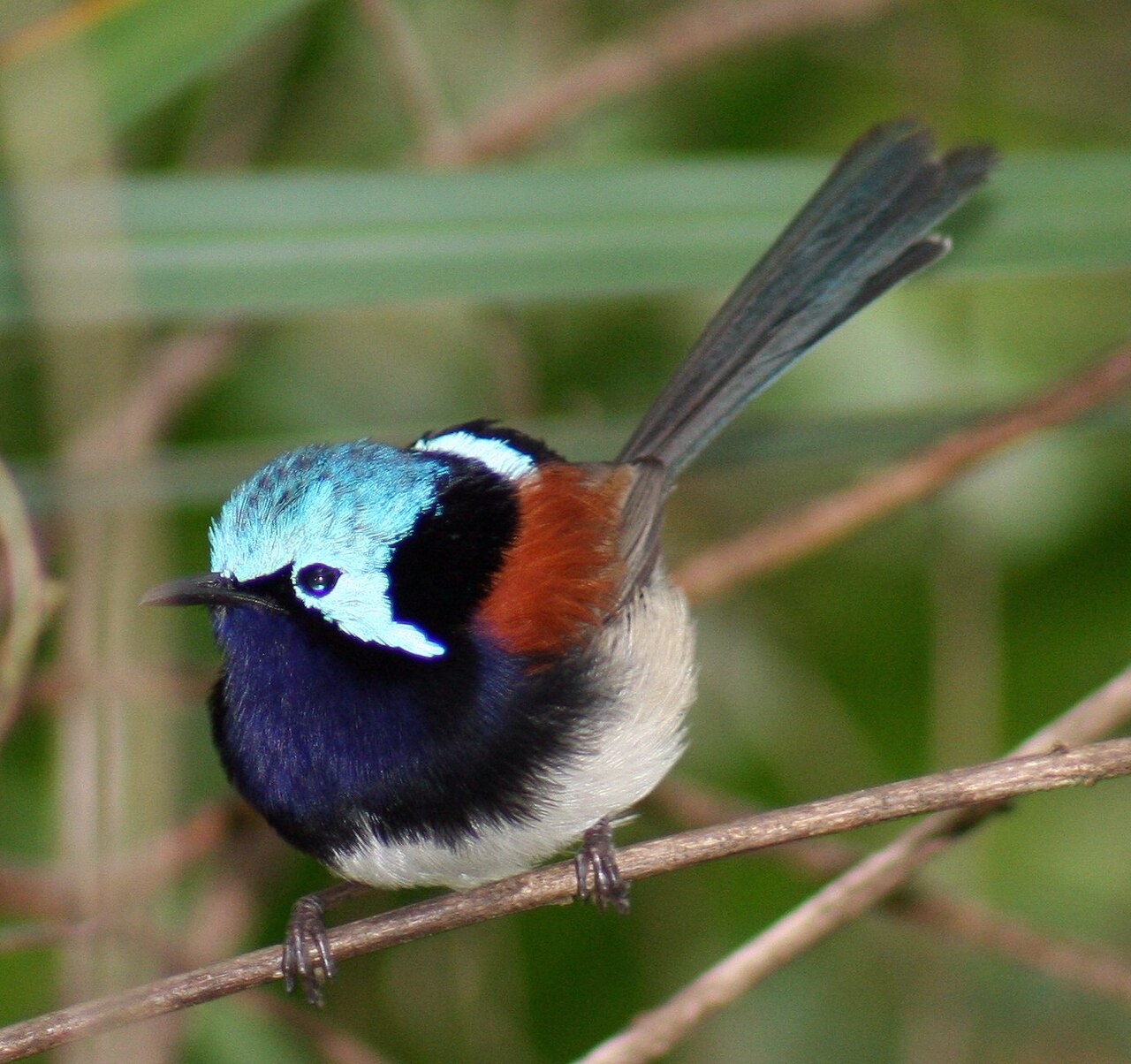
The Red-winged Fairywren is the longest of the fairywrens and the only one that lives in wet forest: it is confined to the karri and jarrah country of the south-western corner of Western Australia. The breeding male is silvery blue where his relatives are deep blue, with fiery red shoulders.
Voice
A high reel of one to four seconds, with ten to twenty short elements a second; both sexes sing it, especially in boundary disputes, and most often just before and after dawn. The birds recognise one another by song alone, which has been shown experimentally for this species. Foraging birds keep in touch with soft, descending see-see-see notes; the alarm is a loud, sharp tsit.
No freely licensed recording has been found for this species yet; what to listen for is described below.
Identification
Fifteen centimetres, seven and a half of them tail. The breeding male has a silvery blue crown, ear coverts and mantle, a black throat and nape, bright red-brown shoulders, a long grey-brown tail and wings and a greyish-white belly. The eclipse male is not plain brown but patchy: grey with scattered blue feathers on the head, grey and black on the breast. The female is grey-brown with rufous lores and a pale grey eye-ring — and unlike most fairywrens her bill is black, not red-brown. Young males have black lores by six weeks.
Confusion species
In the south-west it shares the country with two relatives. Malurus pulcherrimus is the closest, holding the drier scrub along the eastern edge of the range; it is smaller and has a violet-blue breast. Malurus assimilis meets it at the northern limit and likewise keeps to drier ground. No intermediates have been recorded anywhere, which confirms the three as separate species; in practice the damp forest understorey of karri and jarrah is the best mark. The Splendid Fairywren (Malurus splendens) occurs in the same corner of the country but is entirely blue and has no red shoulder. For brown birds the female's black bill is a useful hold, since the females of Malurus splendens and Malurus assimilis have a red-brown one.
Habitat
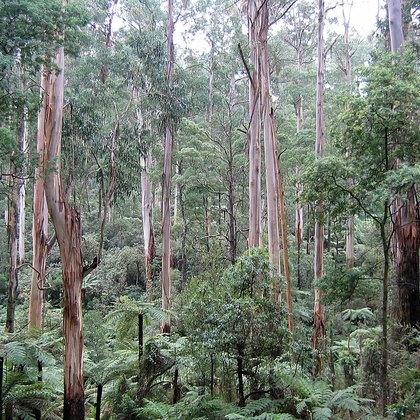
The understorey of karri and jarrah forest, favouring damp gullies and sword sedge along the water. Old forest is less favoured than younger, disturbed forest: after logging the birds are drawn to the dense regrowth. Fire clears them out, and they return after about two years. Pine and eucalypt plantations are unsuitable for want of undergrowth.
Where the bird is most often found, arranged by main group and formation.

Range and movements
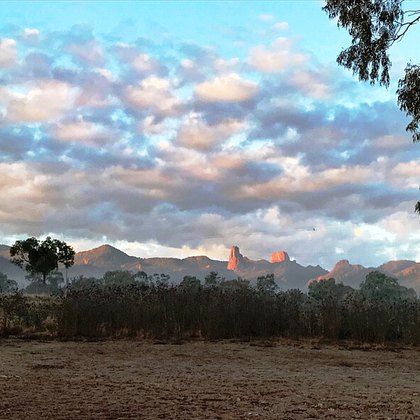
Only the wetter south-western corner of Western Australia, from the Moore River north of Perth south to the Margaret River district and east to Albany. Resident, in groups that defend their territory year-round. BirdLife International identifies Araluen-Wungong, Jalbarragup, Mundaring-Kalamunda, North Dandalup, the Stirling Range, Two Peoples Bay and Mount Manypeaks, among others, as key sites.
- Resident
- dark = core range, pale = thinly spread
Where and when to look
Search the understorey of karri forest along a stream, and watch for groups: this species has, more than the others, female helpers at the nest, so several adults are often together. More than one male in a group may be in breeding plumage at the same time. A patchily coloured male in eclipse is normal here and is not a sick or immature bird.
Conservation
Not threatened and locally common, but there is evidence of decline from the draining of swampy ground within the forest. Fire management matters directly for this bird: a fire empties an area of them and it takes two years before they are back.
Scientific name
Malurus elegans | Gould, 1837
John Gould described the species in 1837 and gave its locality as the east coast of Australia, an error he corrected once John Gilbert sent material from the south-west; the type locality is the Swan River. elegans is Latin for elegant. In 1916 Mathews described the birds of the southern karri forests as a separate subspecies on the strength of darker females, but that difference has not been found since and the species is now treated as undivided; there is remarkably little variation in size or colour within it.