All species › Birds of prey › Kites, Old World vultures, eagles and hawks › Whistling Kite
Whistling Kite | Haliastur sphenurus
Wigstaartwouw | Milano silbador
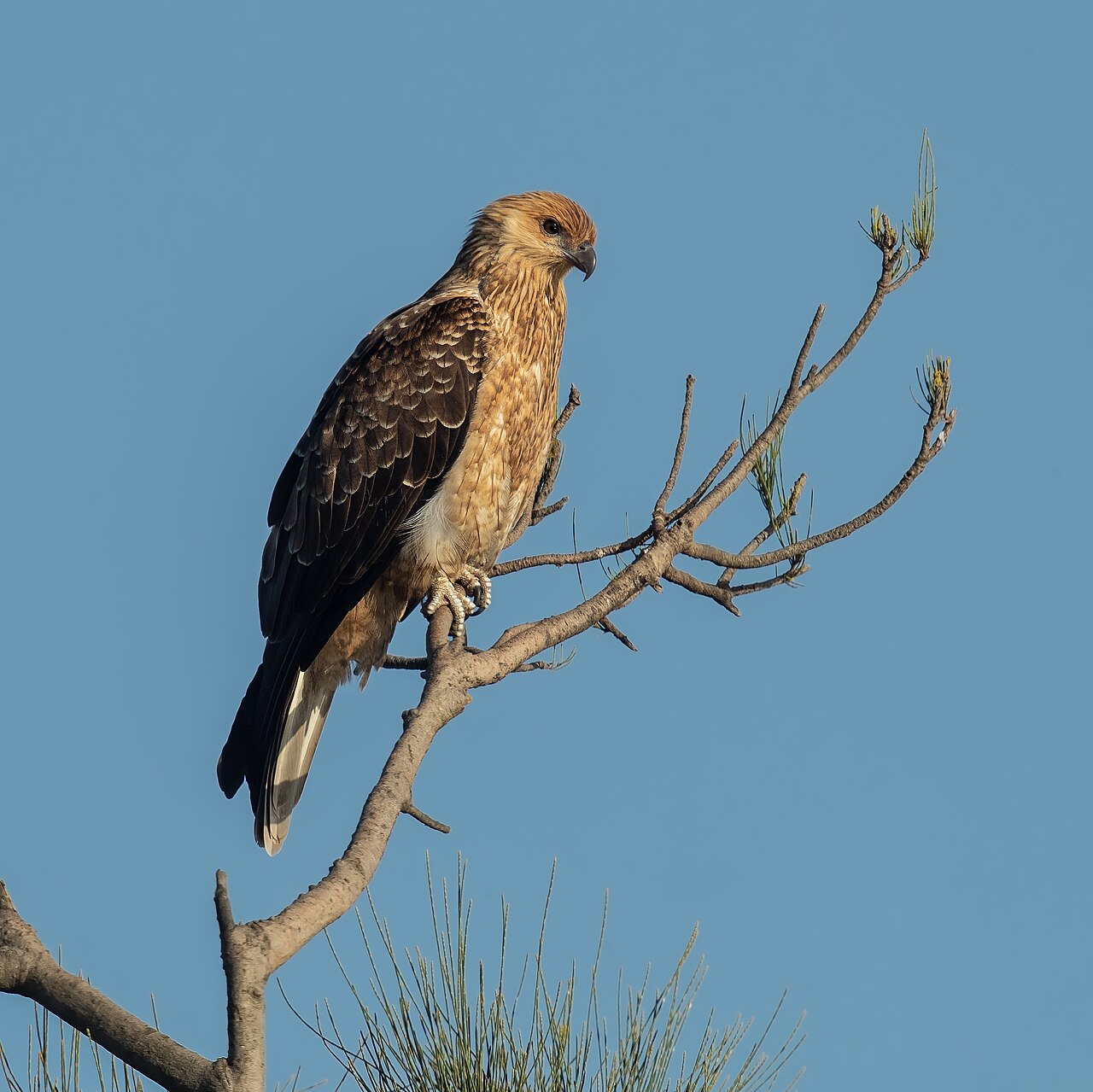
The Whistling Kite is Australia's commonest large kite and the bird you see sailing over almost any watery landscape: a scruffy-looking, light brown raptor with long roomy wings, a shaggy head and a long tail ending in a rounded wedge. It usually announces itself before you see it.
Voice
The best field character the species has, and the source of its name. It gives a clear descending whistle — cheeoo — nearly always followed by a fast rising series of short notes: cheeoo-ti-ti-ti-ti. Sometimes the series comes first. It calls freely, all year, from a post, a dead branch or high in flight, and the sound carries across a whole lake or plain.
No freely licensed recording has been found for this species yet; what to listen for is described below.
Identification
A large, loose-limbed kite of over half a metre with a wingspan approaching a metre and a half. Head, neck and underparts are light brown with pale streaks, the wings a darker sandy brown with black flight feathers. The head looks shaggy and uncombed, as though the feathers would not lie down, and the legs are short and bone-coloured. The decisive mark is under the wing: a large pale M or double patch across the underwing, showing the moment the bird banks overhead. The tail is long and rounded to wedge-shaped, never forked. Young birds are more rufous and more heavily streaked, with conspicuous pale wing patches. The female is noticeably larger.
Confusion species
Black Kite (Milvus migrans) is the chief rival: darker, smaller-headed, and with a clearly forked tail that it twists like a rudder while soaring — the tail end settles it. Juvenile Brahminy Kite (Haliastur indus) is very like it but smaller, stockier and far shorter in the tail, and stays on the coast. Square-tailed Kite (Lophoictinia isura) has a white face and a cut-off square tail and drifts along the canopy rather than circling high. Black-breasted Buzzard (Hamirostra melanosternon) is much heavier and darker, with a very short tail and white bull's-eyes in the wing. Swamp Harrier (Circus approximans) shares the wetland ground but has a white rump and holds its wings in a sharp V.
Habitat
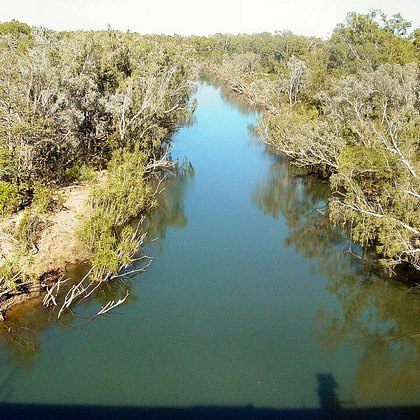
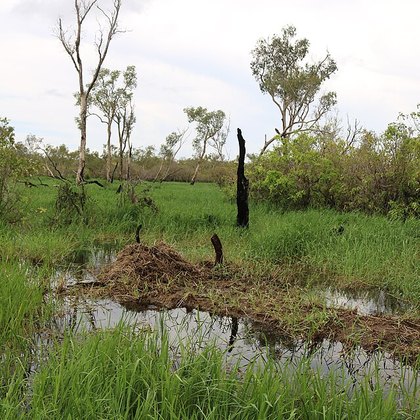
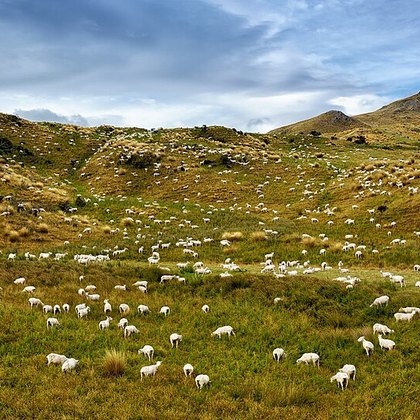
Mostly near water: lakes, reservoirs, rivers and creeks, freshwater marsh and reed, and estuaries. It also hunts over open country and lightly wooded plains, and is a fixture around farmland, vineyards, abattoirs, rubbish tips and roadsides where carrion lies. To breed it needs a tall tree; the bulky stick nest is reused and built up year after year.
Where the bird is most often found, arranged by main group and formation.



Range and movements
Widespread over almost the whole Australian mainland, from the tropical north coast to the southern coastal plains and far inland wherever water stands; in Tasmania it is uncommon. Beyond Australia it occurs in New Guinea and New Caledonia. It is absent from New Zealand. Within Australia it is not truly migratory, but it shifts with drought and flood and gathers in dozens at a drying lake or a large supply of carrion.
- Resident
- dark = core range, pale = thinly spread
Where and when to look
Listen first. The descending whistle followed by the rising trill is unique and places the bird over a lake or along a river before you have it in view. Then check the underwing for the pale M and the tail end: rounded and wedge-shaped, not notched. At a drying billabong or a sheep carcass by the road several birds often gather, which is the ideal way to compare young and adult.
Conservation
Not threatened (LC), with a broad range and numbers that are stable at continental scale; the species even benefits from grazing, roadside carrion and waste streams. Regionally the picture is poorer: in parts of the south-east it has declined with the draining of wetlands, the loss of old nest trees and the reduction of flooding in the Murray-Darling basin. Beyond that, collisions at roadside carrion and secondary poisoning from rabbit and mouse control take a toll.
Scientific name
Haliastur sphenurus | (Vieillot, 1818)
Vieillot described the bird in 1818 as Milvus sphenurus; the later move to another genus puts author and year in parentheses. The genus Haliastur was introduced by Selby in 1840, from Greek hals 'sea' and Latin astur 'hawk'. sphenurus is formed from sphen 'wedge' and oura 'tail' and describes exactly what the Dutch name says. The type locality is Australia, later restricted to New South Wales; the English name cites the whistled call instead of the tail.