All species › Waders, gulls and terns › Skimmers, noddies, terns and gulls › White-winged Tern
White-winged Tern | Chlidonias leucopterus
Witvleugelstern | Fumarel aliblanco
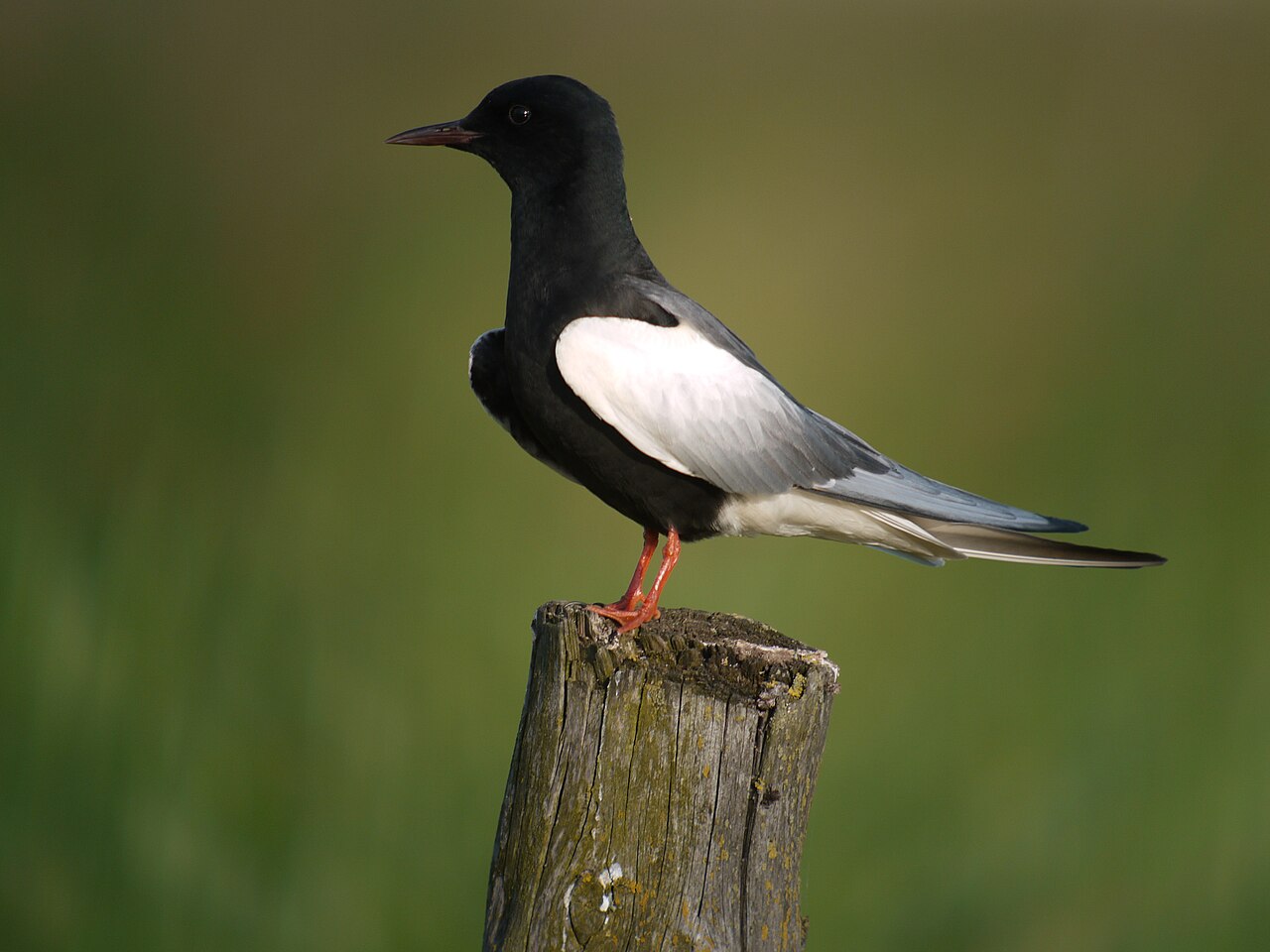
The White-winged Tern is a small marsh tern that reaches Australia each southern summer from Siberia and eastern Europe. In breeding dress it is the most sharply marked of its group: a jet-black body with black underwing coverts against a chalk-white upperwing, rump and tail. In the months we see it here it has usually already moulted into a pale silver-grey bird that flutters low over shallow water and picks insects from the surface without ever diving.
Voice
On the wintering grounds it is far quieter than at the breeding marsh, but over good wetland a short, harsh and dry kesh or kreek comes regularly, louder and more rasping than the note of the Whiskered Tern. On disturbance, or as a flock lifts, a rattling kek-kek-kek follows. Otherwise the main sound is the muffled clatter of wings as a party passes just above the water.
No freely licensed recording has been found for this species yet; what to listen for is described below.
Identification
A tern of twenty to twenty-three centimetres with a short, wholly black bill barely two and a half centimetres long and strikingly short red legs. In breeding plumage the head, neck, breast, belly and underwing coverts are black while the upperwing coverts, rump and tail are white and the primaries silver-grey: a contrast that works like a black-and-white beacon at range. In non-breeding dress the upperparts are pale grey, the underparts white, and the white rump stands out against the grey mantle and grey tail. The head is then white with a blackish-brown flecked hindcrown and an isolated dark ear patch; there is no dark patch on the breast side. Young birds have a dark saddle contrasting sharply with pale wings and white rump. The flight is light and rocking, with much dipping to the surface.
Confusion species
Whiskered Tern (Chlidonias hybrida) is the standing confusion and shares the same marshes: larger and heavier, with a longer, stouter red bill, and in non-breeding dress without the white rump contrast — on that bird mantle, rump and tail run through in one even grey. The dark crown marking of Whiskered is also more extensive and more joined to the eye-stripe, while White-winged keeps a separate ear patch that reads like a headphone. Black-fronted Tern (Chlidonias albostriatus) is the guide's third marsh tern, but is larger, has an orange bill and orange legs and occurs only in New Zealand, where White-winged Tern amounts to a handful of birds a year. Little Tern (Sternula albifrons) is as small but has a yellow black-tipped bill and a white forehead, and plunges under; Common Tern (Sterna hirundo) is longer in bill and tail, greyer, and likewise throws itself into the water rather than picking from the surface.
Habitat
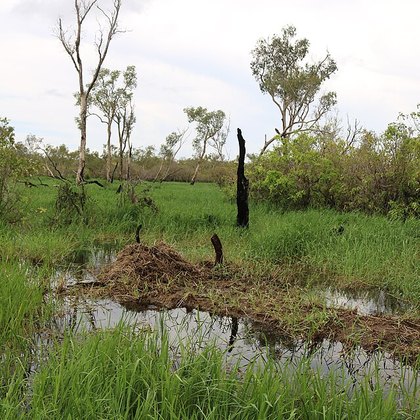
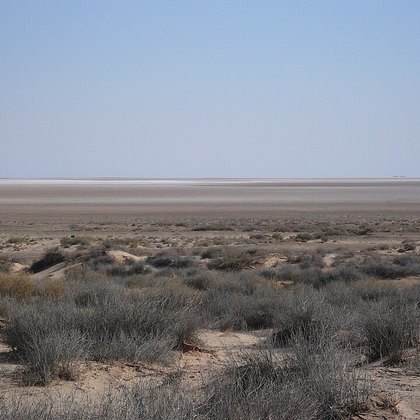
Shallow freshwater marshes with reed and sedge, flooded plains, claypans and ephemeral lakes after rain, the margins of reservoirs and farm dams. Beyond that it has a marked liking for sewage ponds and saltworks, where parties shuttle back and forth above the water. On the coast it uses estuaries, mudflats and shallow lagoons, but it stays close to shallow, quiet water and does not go out to open sea.
Where the bird is most often found, arranged by main group and formation.



Range and movements
Within the map window it is a regular summer visitor, roughly from September or October to April. The largest numbers are in northern and eastern Australia: the Top End, the Kimberley, the Queensland coast and the Murray-Darling basin, with smaller parties reaching the south-west and the odd bird in Tasmania. In New Zealand it appears annually but in small numbers, mainly on North Island estuaries and along the Canterbury coast. On Norfolk it has been recorded only exceptionally. It breeds nowhere in the region; every bird here comes from Eurasia.
- Resident
- Breeding (summer)
- dark = core range, pale = thinly spread
Where and when to look
Look for it over sewage ponds and flooded plains in the southern summer, among the Whiskered Terns it readily joins. On every bird that lifts, check the rump first: white standing out against a grey mantle and grey tail is the quickest key to this species. Birds still carrying black on belly and underwing in March are certain at once.
Conservation
Least Concern (LC). The species breeds across an enormous area from eastern Europe to the Russian Far East and has a world population in the hundreds of thousands, with Australia and New Zealand only part of the wintering range. Locally, the draining or fouling of inland marshes costs it roosting water, but elsewhere it gains from sewage ponds and rice fields, so numbers here move mainly with the rainfall.
Scientific name
Chlidonias leucopterus | (Temminck, 1815)
Temminck described the bird in 1815 as Sterna leucoptera; because it was later placed in another genus, author and year stand in parentheses. The genus Chlidonias was introduced by Rafinesque in 1822 and is a corrupted rendering of Greek khelidonios, 'swallow-like', from khelidon, 'swallow' — a reference to the light, rocking flight of the marsh terns. leucopterus is formed from leukos, 'white', and pteron, 'wing', after the white upperwing of the breeding bird. The type locality lies on the Mediterranean coast.