All species › Passerines › Munias, parrotfinches, waxbills and allies › African Silverbill
African Silverbill | Euodice cantans
Zilverbekje | Capuchino picoplata africano
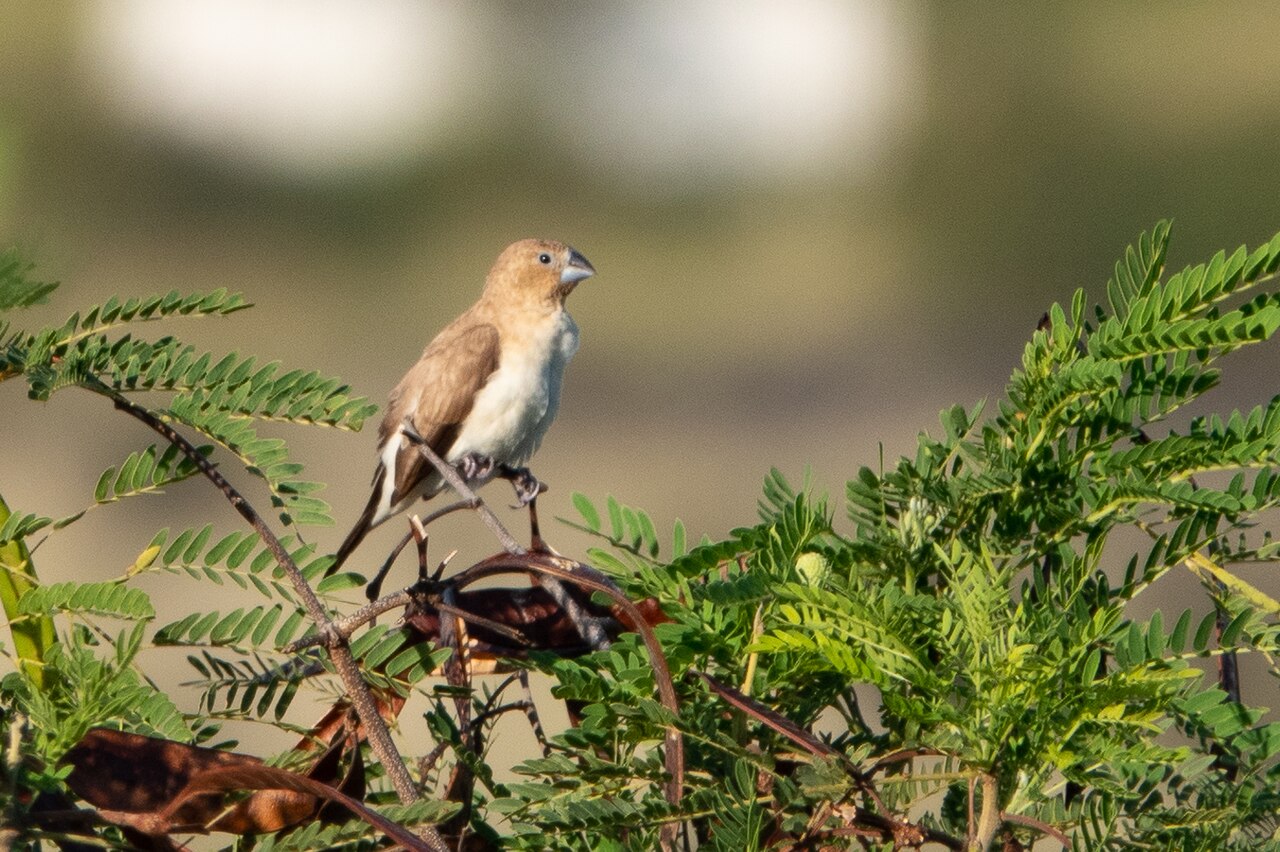
The African Silverbill is a small, sand-coloured estrildid finch of the Sahel that has lived in Hawaii since the 1960s. The heavy silver-blue bill, the black rump and the long pointed black tail identify it in the field. Within the guide area it occurs only on the Hawaiian Islands, in dry open country from the coast to high on the volcanic slopes.
Voice
The call is a thin, high tseep, given almost continuously by a flock in flight and serving to keep the birds together. Males call with single notes, females more often with a double tsip-tsip. The song is a soft rattling trill of the same thin notes strung into a longer series; it carries only a few metres and is delivered close to a perched female, often with a grass stem held in the bill.
Recording: Stanislas Wroza — CC BY-NC-SA 4.0 · Mudayy, Dhofar Governorate, Oman · xeno-canto
Identification
Upperparts pale sandy brown with a fine wavy barring visible only at close range; underparts dingy white to cream and unmarked. The rump and uppertail coverts are black and the tail is long, narrow and sharply pointed — the clearest mark in flight. The bill is short, deep and silver-blue to lead grey; the legs are flesh-coloured. The sexes are alike. Juveniles lack the fine barring and have a shorter tail.
Confusion species
In Hawaii the Scaly-breasted Munia is the main problem: young munias are also plain pale brown, but they have a brown rump and tail, a heavier dark bill and a shorter, blunter tail. Chestnut Munia is more compact and darker, and juveniles show a reddish rump. Java Sparrow is half again as long and has a red bill. The Asian Indian Silverbill is similar but has a white rump and does not occur in North America.
Habitat
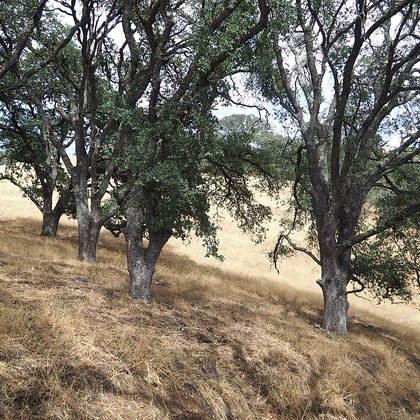
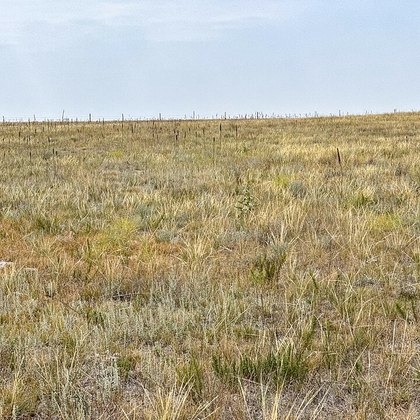
Dry open ground with scattered shrubs and seeding grasses: thorn savanna and semi-desert edge in the native range; in Hawaii lava fields with pioneer shrubs, overgrazed cattle pasture, roadsides, hotel lawns and dry coastal flats. It avoids closed forest and permanently wet ground. Water is visited daily, usually in flocks. In Hawaii it ranges from sea level to above 3000 metres on Mauna Kea.
Where the bird is most often found, arranged by the USNVC — the vegetation classification of the United States and Canada — and CMECS for sea and coast.




Range and movements
Originally a bird of the Sahel belt, from Mauritania, Senegal and Gambia east through Sudan to Somalia and northern Tanzania, plus southwestern Arabia. In the guide area it is present only as an introduced population: released or escaped around 1965 at Puʻu Waʻawaʻa on Hawaii Island, with the first confirmed specimen in 1972. It then spread to all the main islands — Hawaii, Maui, Lanaʻi, Kahoʻolawe, Molokaʻi, Oʻahu, Kauaʻi and Niʻihau. Numbers are highest on Hawaii Island; the Oʻahu population remains small.
- Resident
Where and when to look
Look for it on the dry western side of Hawaii Island, along the Kona coast and on the old lava flows near Puʻu Waʻawaʻa. Small parties flush low and fast from the verge; watch the silhouette with its long pointed tail and listen for the continuous thin tseep. Early morning at a water source or a sprinkler gives the best chance of perched birds.
Conservation
In Africa the species is widespread and numerous, with a range of millions of square kilometres and no known decline; the Red List lists it as Least Concern (LC). The Hawaiian birds fall outside that assessment: as an introduced species they have no protection. They feed mainly on the seeds of equally introduced grasses in already altered dry lowland, and there is no evidence that they displace native honeycreepers; like other alien seed-eaters they can, however, carry diseases of poultry and songbirds.
Scientific name
Euodice cantans | (Gmelin, 1789)
Gmelin described the species in 1789 as Loxia cantans; because it was later moved to another genus, author and year stand in parentheses. The species name cantans is Latin for 'singing', from canere 'to sing'. The genus name Euodice is taken to derive from Greek eu 'good' and ōidē 'song', hence 'sweet-singing'. The type material came from Africa; the type locality was later restricted to Dakar in Senegal. Both the Dutch and the English name refer to the silvery bill.