All species › Nightjars › Nightjars and nighthawks › Buff-collared Nightjar
Buff-collared Nightjar | Antrostomus ridgwayi
Ridgways nachtzwaluw | Chotacabras Tucuchillo
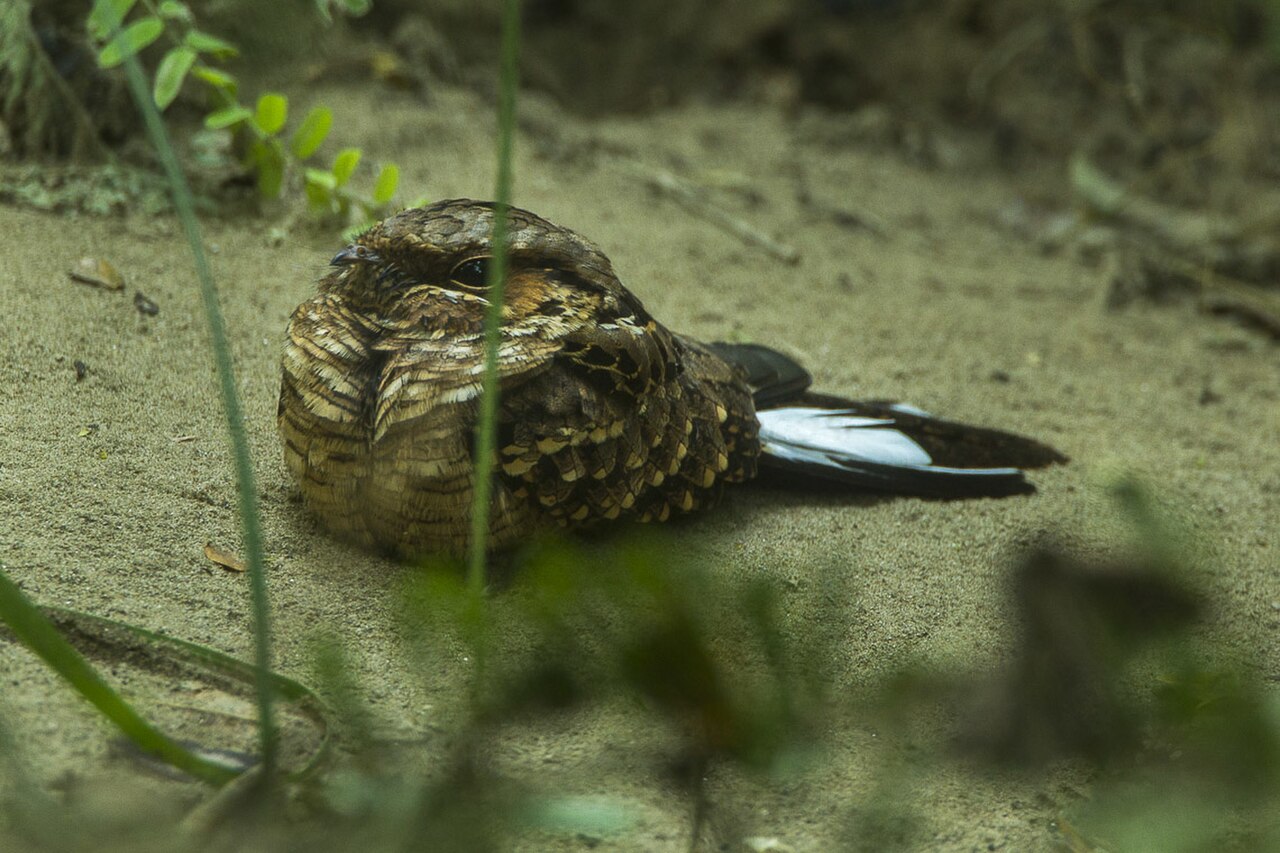
Buff-collared Nightjar is the nightjar of the rocky canyons along the Mexican border: a small, grayish-brown bird with a pale, tawny collar that gives it its name. In the United States it breeds at fewer than twenty known sites, all in the far south of Arizona.
Voice
The song is a series of four to six short, accelerating cuk notes that rise in pitch and then break off abruptly into a falling final syllable: cuk-cuk-cuk-cuk-cukacheea. Each series lasts only a few seconds and is repeated many times in quick succession after dark, given from a low branch or shrub. It also gives short clucking and croaking notes, along with a soft wing-clap.
Recording: Paul Marvin — CC BY-NC-SA 4.0 · Box Canyon Rd, Pima County, Arizona, United States · xeno-canto
Identification
A small nightjar finely patterned in grey-brown and black, with a distinct tawny band across the hindneck — the feature that gives it its name — and a relatively long tail for its size. The male shows white corners to the outer tail feathers, buffy and less obvious in the female. Like other nightjars it sits flat and motionless by day, often on bare ground in a dry wash or among low scrub.
Confusion species
Mexican Whip-poor-will (Antrostomus arizonae) is somewhat larger, lacks the tawny collar, and gives a completely different chanted, repeated song rather than the Buff-collared's short, accelerating series. Lesser Nighthawk (Chordeiles acutipennis) is told by its long, pointed wings with a white bar and its active hawking flight, unlike the compact, perch-hunting Buff-collared Nightjar. Within its own range, the smaller Common Poorwill is the most likely confusion species, with an even, non-accelerating trilled song.
Habitat
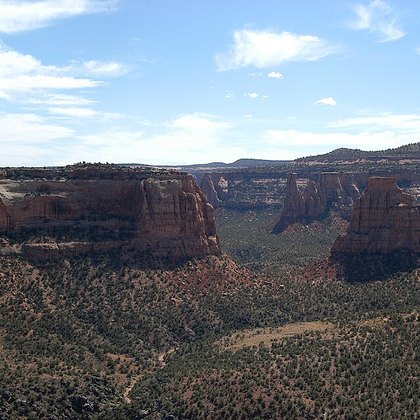
Dry canyons and washes with a dense low layer of shrubs and small trees, often along a channel that carries water only after rain, and the transition into open, thorny scrub. In Mexico it also reaches into deciduous tropical forest and dry oak woodland, up to considerable elevation. It avoids both bare, vegetation-free desert and closed forest.
Where the bird is most often found, arranged by the USNVC — the vegetation classification of the United States and Canada — and CMECS for sea and coast.



Range and movements
In the United States it breeds only in southern Arizona, where it was first confirmed as recently as 1960; it has not since been re-found breeding in New Mexico. Southward the range runs through western and central Mexico to Chiapas, with a largely resident population in the western lowlands and migratory birds in the northern mountains that withdraw south for the winter. Further south the species is also resident in Guatemala and Honduras.
- Resident
- Breeding (summer)
- Winter
- Passage
- dark = core range, pale = thinly spread
Where and when to look
Look along a dry, shrub-lined canyon in southern Arizona shortly after sunset in May or June and listen for the short, accelerating series — it is far more often heard than seen, and is almost never visible by day. In Mexico the odds improve along forest trails in dry oak woodland just after dark.
Conservation
The global population is estimated at around two million birds, with a trend assessed as stable; the status is Least Concern (LC). Almost the entire, minute United States range lies within protected land, giving the small border population some measure of security.
Scientific name
Antrostomus ridgwayi | Nelson, 1897
Nelson described the species in 1897 as Antrostomus ridgwayi, already in its current genus, naming it for the American ornithologist Robert Ridgway. The type locality is Tlalkisala in the Mexican state of Guerrero. The species was for a time placed in the genus Caprimulgus, but was later restored to Antrostomus.