All species › Passerines › New World sparrows › Canyon Towhee
Canyon Towhee | Melozone fusca
Bruine towie | Rascador pardo
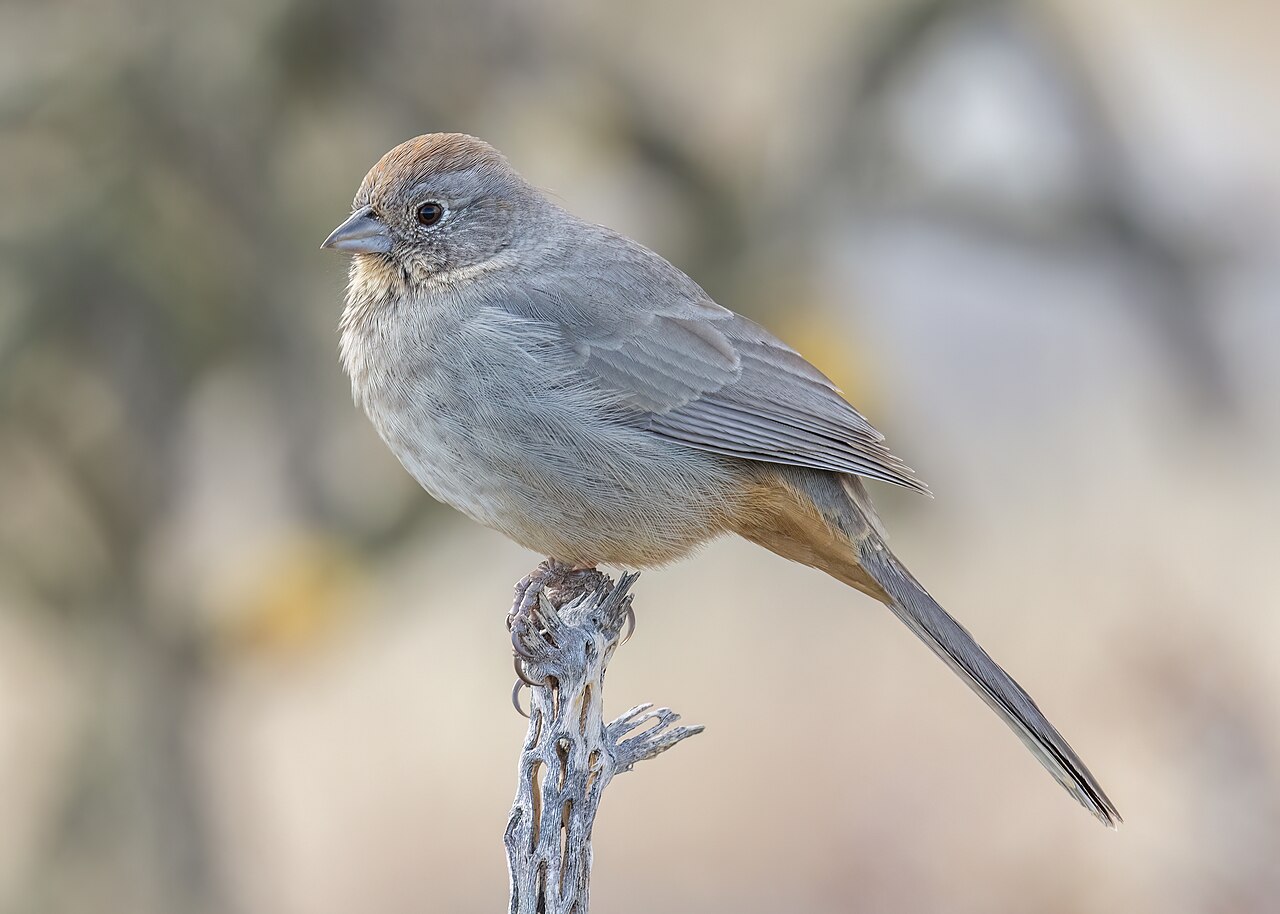
The Canyon Towhee is the towhee of dry, stony hills in the American Southwest and on the Mexican plateau. It is a large, plain brown ground bird with a long tail that stays in one territory all year and is heard more often than seen.
Voice
The song is a series of six to eight two-parted syllables, chili-chili-chili, lasting one to two seconds and often introduced by a call note; pace and pattern vary a good deal between birds. The usual call is a low, two-parted she-dup. A pair keeps in touch with a high, thin seep that also serves as alarm: nestlings fall silent at the sound. Foraging pairs sometimes face each other exchanging strings of those notes, bobbing their heads and fluffing their feathers.
Recording: Pat Goltz — CC BY-NC-SA 4.0 · Proctor Road, Madera Canyon, Arizona, United States · xeno-canto
Identification
A large, long-legged, long-tailed sparrow, earth brown above and slightly paler below, with a rufous crown that stands out from the back. The throat is pale and ringed with fine dark streaks, and below it sits a single dark spot in the centre of the breast. Under the tail is a rusty patch. Male and female look alike. The bird walks and hops over the ground, scratching backwards with both feet at once.
Confusion species
California Towhee does not overlap in range and lacks the rufous crown, the clear necklace of throat streaks and the breast spot; that species is more uniformly grey-brown with only an orange throat border. Abert's Towhee is darker, has a black patch around the bill base and chin, and keeps to riparian growth of the low desert rather than stony slopes. Spotted Towhee is black with white spots and rufous flanks and cannot be confused once you see it.
Habitat
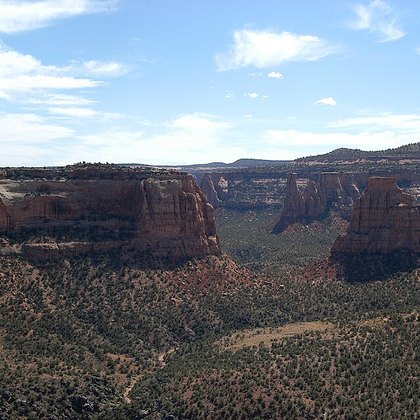
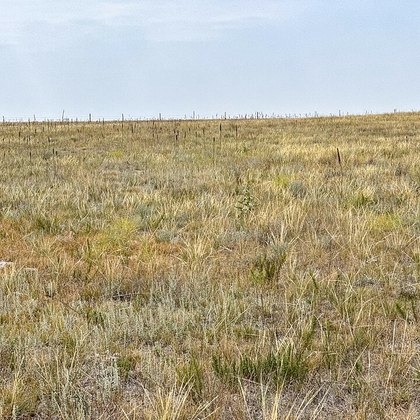
Rocky slopes, arroyos (dry, steep-sided gullies that carry water only after rain), desert grassland with scattered shrubs, mesquite thickets along streams, and the edges of towns and cities. Higher up, especially in Mexico, it reaches pinyon (a low-growing pine of the dry south-western foothills)-juniper woodland and pine-oak forest. It forages almost always on the ground, under shrubs or on open sand, taking seeds of grasses, sorrel, chickweed and lupine, together with berries and with insects, millipedes, snails and spiders.
Where the bird is most often found, arranged by the USNVC — the vegetation classification of the United States and Canada — and CMECS for sea and coast.




Range and movements
Resident in Arizona, New Mexico, western and central Texas, southern Colorado and the western tip of Oklahoma, and south across the Mexican plateau to Michoacán, Puebla and northwestern Oaxaca. About 41 per cent of the world population is in the United States and 59 per cent in Mexico. There is no migration, at most a shift of a few hundred metres in elevation in winter.
- Resident
- Breeding (summer)
- Winter
- Passage
- dark = core range, pale = thinly spread
Where and when to look
Look for it on car parks, campgrounds and picnic sites in desert parks, where it walks in the open away from cover. Go by the low, two-parted she-dup, then check the combination of rufous crown, streaked throat necklace and single dark breast spot — those three together rule out every other towhee.
Conservation
Partners in Flight puts the world population at ten million birds and scores the species 9 out of 20 on the Continental Concern Score. Between 1966 and 2015 the trend was stable, with local declines in the middle of the range. Clearance of streamside growth in the Southwest cost habitat, but the species uses field edges and suburbs. Near housing, domestic and feral cats are the main source of mortality.
Scientific name
Melozone fusca | (Swainson, 1827)
Swainson described the species in 1827 as Pipilo fusca; because it later moved to Melozone, author and year stand in parentheses. The genus Melozone was introduced in 1850 by Ludwig Reichenbach, from Greek mēlon 'cheek' and zōnē 'girdle, band', after the head pattern of the Central American ground sparrows in the genus. The species name fusca is Latin for 'dusky brown'. The specimen described came from Temascaltepec in the Mexican state of México. The English name refers to the canyons of the Southwest; until 1989 this bird and the California Towhee were treated as one species, the Brown Towhee.