All species › Passerines › New World sparrows › Cassin's Sparrow
Cassin's Sparrow | Peucaea cassinii
Cassins gors | Gorrión de Cassin
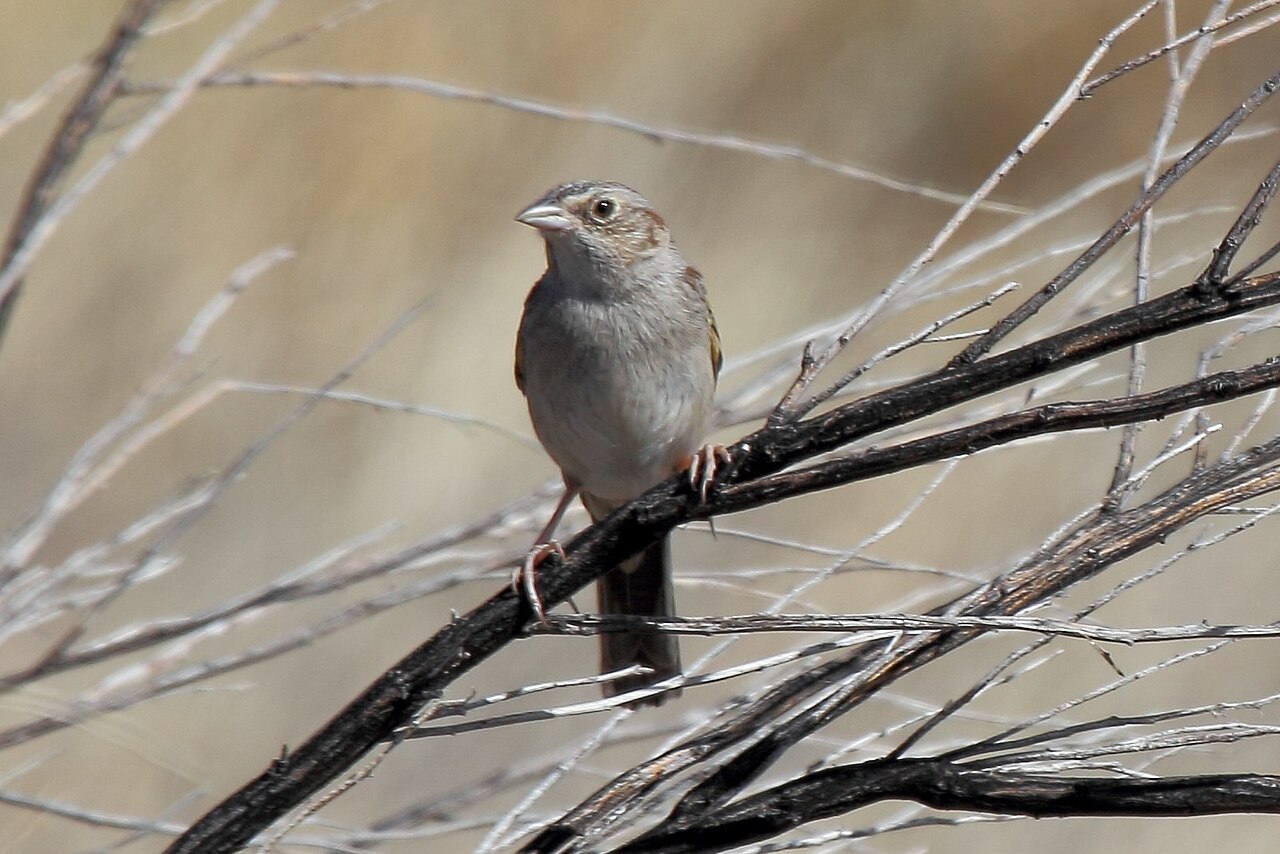
Cassin's Sparrow is a grey-brown, unmarked sparrow of the dry grasslands of the southern Great Plains and the southwestern United States. The male sings from a climbing, then gliding, song flight above the grass; outside that display the species is rarely seen in the field.
Voice
The song is one or two soft introductory notes, then a long, high, musical trill on one pitch, and usually two lower, well-spaced closing notes: tsi — tseeeeee — tchoo tchee. There is also a spluttering chitter song of rapid notes. The male sings from February to September, at night as well, delivering the song in a flight five to ten metres up before gliding down with flat wings and raised tail. The call is a thin tsip.
Recording: Ken Hall — CC BY-NC-SA 4.0 · Hereford, United States · xeno-canto
Identification
A fairly large, slim sparrow with a long, rounded tail, a flat forehead and a fairly large, long bill. The plumage is grey-brown with a low-contrast head pattern: a pale supercilium, a thin dark malar stripe and, in fresh plumage, a pale eyering. The back feathers carry dark arrowhead marks on a grey ground. There is fine streaking on the flanks, and the outer tail feathers have pale grey to whitish tips that show as vague corners in flight. Male and female are alike.
Confusion species
Botteri's Sparrow shares the range and the habitat and is the most similar: it has a plain brown tail without pale tips, unstreaked flanks, warmer brown back feathers without arrowhead marks and a heavier bill, and sings a bouncing, accelerating series instead of the sustained trill. Brewer's Sparrow is smaller, finely streaked on the crown, and lacks the heavy build and the pale eyering. Bachman's Sparrow overlaps only in east Texas and is redder on crown and back with a grey face.
Habitat
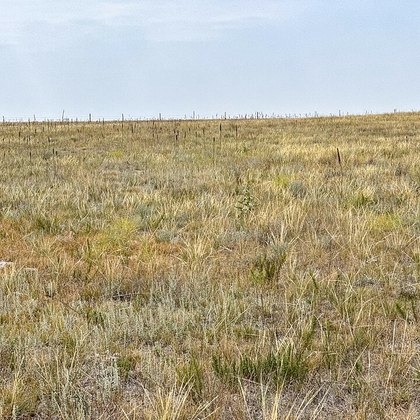
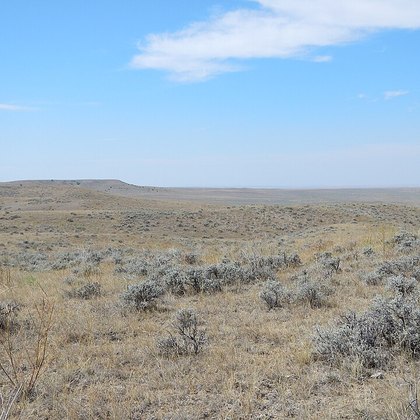
Dry grassland with scattered shrubs and cactus: mesquite (a thorny pod-bearing shrub of the Southwest that forms dense thickets), sagebrush, hackberry, rabbitbrush (a dry western steppe shrub), shinnery oak, yucca and prickly pear. Both layers must be present — it avoids dense brush without grass, and bare short grass without shrubs. It prefers ungrazed or lightly grazed native grassland and occurs from sea level up to about 2100 metres.
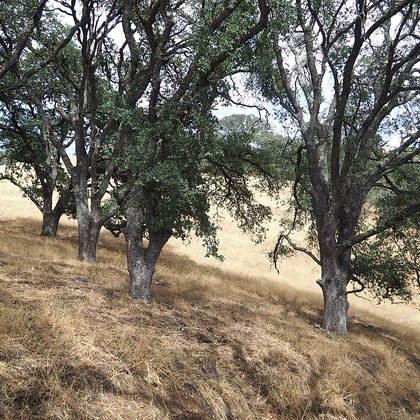
Where the bird is most often found, arranged by the USNVC — the vegetation classification of the United States and Canada — and CMECS for sea and coast.


Range and movements
It breeds from western Nebraska, southeastern Colorado and western Kansas south through Oklahoma, Texas, New Mexico and southeastern Arizona into northern Mexico; in the north of that area it is irregular and absent in some years. It winters in southern Arizona, southern New Mexico, western and southern Texas and in northern and central Mexico, with records from Sonora, Chihuahua, Coahuila, Sinaloa, Nayarit, Zacatecas, San Luis Potosí and Guanajuato among others. The species is markedly nomadic: after rainfall breeding birds appear in areas where they were absent the year before.
- Resident
- Breeding (summer)
- Winter
- Passage
- dark = core range, pale = thinly spread
Where and when to look
Drive a prairie road in west Texas or eastern New Mexico at sunrise or in the last hour of light in May or June and look for a bird climbing out of the grass in song and then gliding down. The song flight shows from a distance; a silent bird on a wire cannot be told from Botteri's Sparrow without a view of the tail tips and flanks.
Conservation
Partners in Flight puts the world population at about 14 million birds. The Breeding Bird Survey shows a stable to slightly declining trend between 1966 and 2015, with large year-to-year swings tied to rainfall. Partners in Flight calculates that on the current trend the population would halve by about 2086. The pressure is conversion of native grassland to cropland and development and, locally, heavy grazing.
Scientific name
Peucaea cassinii | (Woodhouse, 1852)
Samuel Washington Woodhouse described the species in 1852 as Zonotrichia cassinii, from a specimen taken near San Antonio, Texas; because it was later moved to Peucaea, author and year stand in parentheses. The species name honours John Cassin (1813–1869), ornithologist at the Academy of Natural Sciences in Philadelphia, who described a large share of the birds arriving from the western surveys. The genus name Peucaea is from Greek peukē 'pine'; the genus was brought back into use in 2010 after genetic, morphological and vocal work showed that these species do not belong in Aimophila.