All species › Waterfowl › Ducks, swans and geese › Common Goldeneye
Common Goldeneye | Bucephala clangula
Brilduiker | Porrón osculado
Common Goldeneye is the diving duck with the golden eye ring that gives it its English name, and the loudly whistling wingbeat that earned it the nickname 'whistler'. It breeds in tree cavities deep in the boreal forest of Canada and Alaska and in winter turns up on almost any large, open water body on the continent. Its courtship display, in which the male snaps its head back against its own back, is among the best known of any North American duck's.
Voice
In courtship the male throws its head back against its back while giving a harsh, buzzy zzeeat, followed by a short series of lower notes as the head comes forward again. Outside courtship the species is largely silent. What stands out most is the loud, whistling sound of the wings in flight, which gives away a passing flock from far off and earned the species its English nickname 'whistler'.
Recording: Stanislas Wroza — CC BY-NC-SA 4.0 · Paksumaa, Finland · xeno-canto
Identification
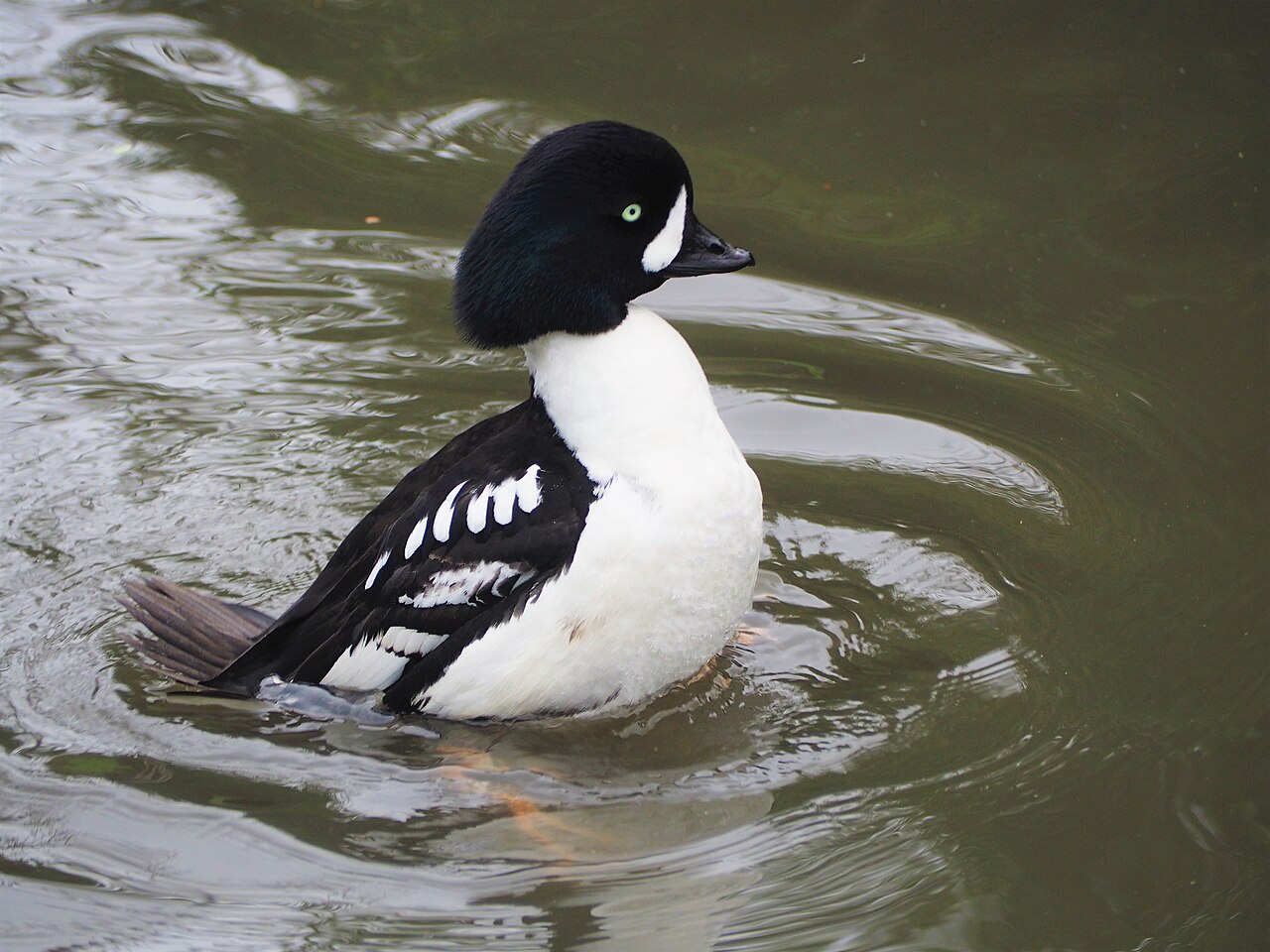
The male is black and white with a glossy green head, a round white patch just in front of the eye, and a mostly white back panel crossed by a few black bars. The female is grey with a chocolate-brown head and a dark bill tipped yellow, which can turn brighter yellow during the breeding season. Juveniles resemble the female but lack the yellow bill tip. In every plumage the bare, bright yellow eye ring gives a sharp contrast against the rest of the head, and the angular, triangular head shape gives the species away even at a distance.
Confusion species
Barrow's Goldeneye (Bucephala islandica) is the only real confusion species: on the male, check the colour of the head gloss (green versus purple), the shape of the white cheek patch (round versus crescent-shaped), and the back pattern (a solid white panel versus separate spots), and on both sexes check Common Goldeneye's flatter crown and longer bill. The much smaller Bufflehead has a triangular rather than round head patch running from behind the eye into the nape. Females of the two goldeneyes are most alike at a distance, and head shape remains the best mark then.
Habitat
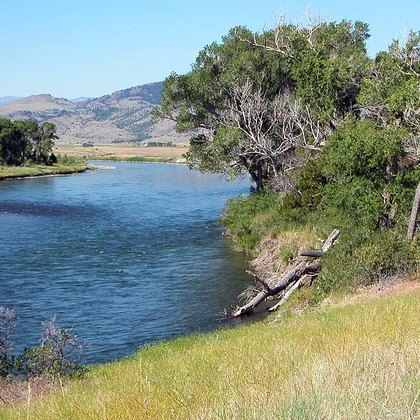
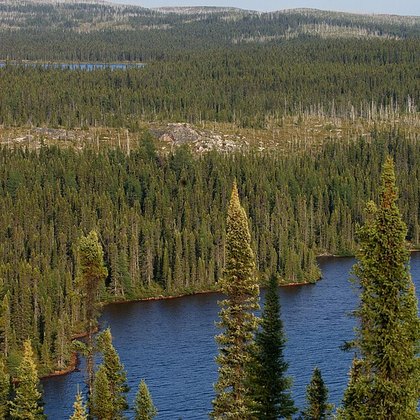
Breeds at clear lakes, rivers and marshes in the boreal forest, where it depends for nesting on cavities excavated in old trees by large woodpeckers, especially Pileated Woodpecker, and where it also readily takes to nest boxes. Outside the breeding season it seeks out large, open waters: lakes, broad rivers, and sheltered coastal bays and estuaries, as long as they stay ice-free. It avoids small, densely vegetated pools and fast-flowing streams.
Where the bird is most often found, arranged by the USNVC — the vegetation classification of the United States and Canada — and CMECS for sea and coast.


Range and movements
Breeds across nearly the entire boreal forest of Canada and Alaska, with small, isolated breeding populations just across the border in the northern United States, including Maine and northeastern Minnesota. It winters across nearly the whole continent to the south: along both coasts, on the Great Lakes, and on major rivers and lakes throughout the interior, south to the Gulf coast; it reaches Mexico only exceptionally. It is one of the last ducks to migrate south in autumn and one of the first to return in spring, often as soon as open water appears.
- Resident
- Breeding (summer)
- Winter
- Passage
- dark = core range, pale = thinly spread
Where and when to look
Look for it in late autumn and winter on a large lake or a broad river, and watch for the characteristic courtship display: a male snapping its head back against its back well before most other ducks have even started courting. The whistling sound of the wings is often audible before the flock comes into view.
Conservation
Not threatened, with a stable to slightly increasing population, helped in part by the use of nest boxes in places where old trees with suitable cavities have become scarce. Both breeding and wintering grounds suffer from water pollution and the degradation of riparian forest; lake acidification has so far, in parts of the range, brought this species more benefit than harm, by reducing fish as competitors for invertebrate prey.
Scientific name
Bucephala clangula | (Linnaeus, 1758)
Linnaeus described the species in 1758 as Anas Clangula, among the ducks; because it was later placed in another genus, author and year stand in parentheses. The genus Bucephala was introduced in 1858 by Spencer Fullerton Baird, from the Greek bous, 'ox', and kephale, 'head' — 'ox-headed', after the rounded head of these ducks. The species name clangula is a diminutive of Latin clangere, 'to resound' or 'to clang', referring to the loud, whistling sound of the wings in flight. Linnaeus gave 'Europe' as type locality; in 1761 he himself restricted it to Sweden.